EN
Teeth straightening (orthodontics)

Why choose FrankoLab:

  1. 01 In-house aligners — a clear path to straight teeth
  2. 02 Modern braces (self-ligating, ceramic, sapphire)
  3. 03 Digital modelling of tooth movement

Teeth straightening (orthodontics) in Ivano-Frankivsk

Orthodontics is a branch of dentistry that deals with the diagnosis, prevention and treatment of dental and jaw disorders: malocclusion, crowded teeth, abnormalities in the position of certain teeth and jaw development disorders. Orthodontic treatment for children and adults at FrankoLab Clinic is carried out by experienced orthodontists according to a personalised treatment plan.

The main benefit of orthodontics at our clinic is not just a beautiful smile, but also good health: a correct bite reduces strain on the joints, makes oral hygiene easier and lowers the risk of tooth decay and gum disease. Orthodontic treatment includes braces, clear aligners (trays), retainers and other appliances — depending on the patient’s age, diagnosis (including the complexity of the case) and preferences. We treat patients of all ages — from children aged 6 to adults. We draw up a personalised treatment plan only after a comprehensive diagnosis — including an orthopantomogram, a CT scan, a 3D scan of the dental arches and a functional assessment of the bite.

The benefits of orthodontic treatment in childhood

Shorter treatment

Seeing an orthodontist early on allows you to take advantage of active jaw growth and correct any issues with less effort and in a shorter time. We recommend taking your child to see an orthodontist as early as 6–7 years old, when the first permanent teeth come through.

Fewer extractions

Timely correction of the bite often makes it possible to avoid the extraction of healthy permanent teeth to create space in the dental arch. This reduces the invasiveness of treatment and helps to preserve the natural anatomy of the smile.

Proper jaw development and space for permanent teeth

Our orthodontist guides the growth of the jaws and creates space for permanent teeth to erupt, thereby preventing crowding or misalignment. This is particularly important in cases of early loss of milk teeth or harmful habits.

Preventing problems in adulthood

During childhood, bite abnormalities can be corrected before they lead to facial asymmetry, tooth wear, problems with the temporomandibular joint, headaches or even the need for jaw surgery.

Psychological comfort

Straight teeth and clear speech in childhood and adolescence foster self-confidence during a crucial period of social development. Children feel more confident, are not shy about showing their emotions, suffer less from teasing and socialise more effectively.

Improving overall health

Correcting a malocclusion ensures effective chewing, clear speech and nasal breathing (rather than mouth breathing), whilst reducing the risk of tooth decay, periodontitis and even posture problems. Children breathe better, sleep better and feel less tired.

Indications for orthodontic treatment in children

Malocclusion

These are types of malocclusion: crossbite — the teeth of one jaw overlap the other incorrectly from the side; deep bite — the upper teeth overlap the lower teeth excessively; open bite — there is a gap between the teeth when they are closed; prognathic bite — the upper jaw protrudes significantly forwards. Such conditions interfere with chewing and can cause jaw pain and enamel wear.

Crowding or excessive spacing between teeth

This refers to a misalignment of the teeth within the dental arch. Crowding occurs when there is insufficient space for all the teeth, whilst gaps (diastemas, spaces) are the opposite condition, resulting in excessively large spaces between the teeth. This makes oral hygiene more difficult and further increases the risk of tooth decay and gum inflammation.

Delayed or premature loss of milk teeth

The timing of tooth replacement is crucial for the correct development of the bite. Early tooth loss often leads to the displacement of neighbouring teeth, whilst delayed tooth loss hinders the eruption of permanent teeth. This results in misaligned teeth or a lack of space, which requires orthodontic treatment.

Mouth breathing and harmful habits (thumb sucking, pacifier use)

Functional factors have a significant impact on jaw development. Mouth breathing alters the position of the tongue and jaw growth, whilst thumb or pacifier sucking after the age of 3–4 years can cause malocclusion. This often leads to the development of an open bite and narrowing of the upper jaw, which is best detected at an early age.

Speech and articulation disorders

Some speech defects are linked to anatomy. Incorrect positioning of the teeth or tongue makes it difficult to pronounce certain sounds, particularly sibilants and fricatives. Orthodontic treatment helps to create the conditions for correct articulation.

Facial or jaw asymmetry during development

This refers to uneven growth of the jaws or a misalignment of their position. Asymmetry can be congenital or acquired, and is often accompanied by a malocclusion. In complex cases, this affects not only aesthetics but also chewing function.

A referral from a speech therapist or paediatrician for an orthodontic consultation

Other specialists may be the first to spot a problem. A speech and language therapist might identify difficulties with speech, whilst a paediatrician might notice something during a routine check-up. Such recommendations should not be ignored. An early check-up can help avoid complex treatment in the future.

Prices for orthodontic treatment

The cost of orthodontic treatment at FrankoLab Clinic in Ivano-Frankivsk depends on the chosen method (braces or aligners), the type of appliance and the complexity of the case. Below are approximate prices. We provide an exact quote following a consultation and diagnosis.

The dentist will quote the final cost following an examination and diagnosis. Payment in instalments is available. Full price list for the clinic

Teeth straightening (orthodontics)

Payment in instalments

Orthodontic treatment is a worthwhile investment. FrankoLab Clinic offers the option to pay in instalments so you can start treatment when you need to. You can find out all about the instalment plan terms when you book an appointment with the receptionist.

How does orthodontic treatment work at FrankoLab Clinic?

01

Orthodontist’s consultation

We carry out an examination, take your medical history and perform a preliminary assessment of your bite and the condition of your teeth. Our expert will determine which treatment method is best suited to your case.

02

Diagnostics

3D scanning of the dentition (instead of an uncomfortable impression) and modelling of your future smile, orthopantomogram, CT scan, as well as other procedures (if required). Based on this information, the orthodontist draws up a personalised treatment plan.

03

Drawing up a treatment plan and obtaining approval

The dentist will present your orthodontic treatment plan, explaining the chosen methods, the timeframe and the cost. They will show you a 3D design of your future smile, so you can see what the result will look like even before treatment begins.

04

Oral rehabilitation

Before fitting braces or making aligners, we treat tooth decay and carry out professional cleaning to ensure that the appliances are fitted to healthy teeth.

05

Active bite correction

Fitting of braces or the manufacture and dispensing of aligners, with instructions on how to use them and how often to change the aligners (we set out the treatment plan in detail). Regular check-ups every 4–8 weeks for adjustments and monitoring.

06

Retention

After braces are removed or a course of aligners is completed, we fit a retainer or provide a retention tray (depending on the specific circumstances). This stage consolidates the result and is essential for long-term effectiveness.

Duration of orthodontic treatment

The duration of teeth straightening and bite correction depends on the complexity of the case, the chosen treatment method and the patient’s age.

Approximate treatment times: mild cases (minimal crowding, minor correction) — 6–12 months; moderate cases — 12–18 months; complex cases (skeletal malocclusion, significant crowding) — 18–36 months.

Following active treatment, a retention period is essential: the patient wears a retainer and/or a retention splint — either removable or fixed — to stabilise the results. This is no less important a stage of orthodontic treatment than the treatment itself: without it, the teeth gradually return to their original position.

Indications for orthodontic treatment in adults

01

Crowded teeth or excessive gaps (diastema, gaps)

When teeth ‘overlap’, rotate or tilt, and there are excessive gaps between them, a number of problems arise: tooth decay, periodontitis, enamel wear, chips, an unattractive smile, self-consciousness and functional problems with chewing and speech. The result of bite correction is good oral hygiene and a beautiful smile.

02

Any type of malocclusion

This is the main indication for orthodontic treatment, as it leads to problems with chewing, swallowing and speech, excessive tooth wear, joint strain, facial asymmetry, headaches, breathing difficulties, and an increased risk of injury to the front teeth and gum disease. Correcting the position of the teeth and jaws restores normal occlusion. The result is comfortable chewing, an attractive profile and the prevention of complications.

03

Tooth displacement following extraction

After a tooth is lost, the neighbouring teeth begin to tilt, whilst those on the opposite side ‘grow’ into the gap. This happens over a period of months or years. This reduces the space available for an implant or prosthesis, disrupts the bite (causing crowding or gaps), and leads to bone loss, chewing difficulties and joint pain. Orthodontics realigns the teeth, restores the lost space and vertical height. This is often a short phase (6–12 months) prior to prosthetic treatment.

04

Preparing for dental implants or prosthetics

Before implants, crowns or bridges are fitted, teeth are often misaligned and the bite is unstable. There is a risk that the implant will not withstand the load, or that the prosthesis will wear down quickly or crack due to uneven pressure, etc. To restore the dentition both aesthetically and functionally without additional risks, teeth need to be straightened. The result is long-lasting implants and prostheses, with even distribution of pressure.

05

Recurrence following previous bite correction

Teeth can shift back into the wrong position if retainers are not used, or due to harmful habits, age-related changes or periodontitis. This risks undermining the results of orthodontic treatment, causing additional psychological distress (‘it was all for nothing’), and leading to worsening oral hygiene issues and temporomandibular joint (TMJ) problems. A repeat course of treatment is often shorter, with the mandatory fitting of retainers for life.

06

TMJ disorders associated with malocclusion

The temporomandibular joint suffers from malocclusion: pain, clicking, headaches, ‘locking’, facial asymmetry, teeth grinding and more. Correcting the bite relieves strain on the joint and restores the lower jaw to its normal position. Many patients report that their pain disappears within 3–6 months.

Cosmetic enquiries

Many adults want a straight, natural smile, but without having to have their teeth ground down for veneers or crowns. Being an adult is no barrier to orthodontic treatment. Today, over 50 per cent of orthodontists’ patients are adults. Treatment takes a little longer, but the results are comprehensive and long-lasting.

Main orthodontic methods for children and adults at FrankoLab

Braces

Fixed braces consisting of brackets, archwires and ligatures, which ensure constant and precise control over tooth movement. Effective for complex dentofacial conditions, severe crowding and significant malocclusions. Suitable for teenagers and adults. At our dental practice, we offer metal braces (effective for cases of any complexity and the most affordable), ceramic (significantly less noticeable — we match them to the shade of your teeth) and sapphire (almost invisible on the teeth) braces.

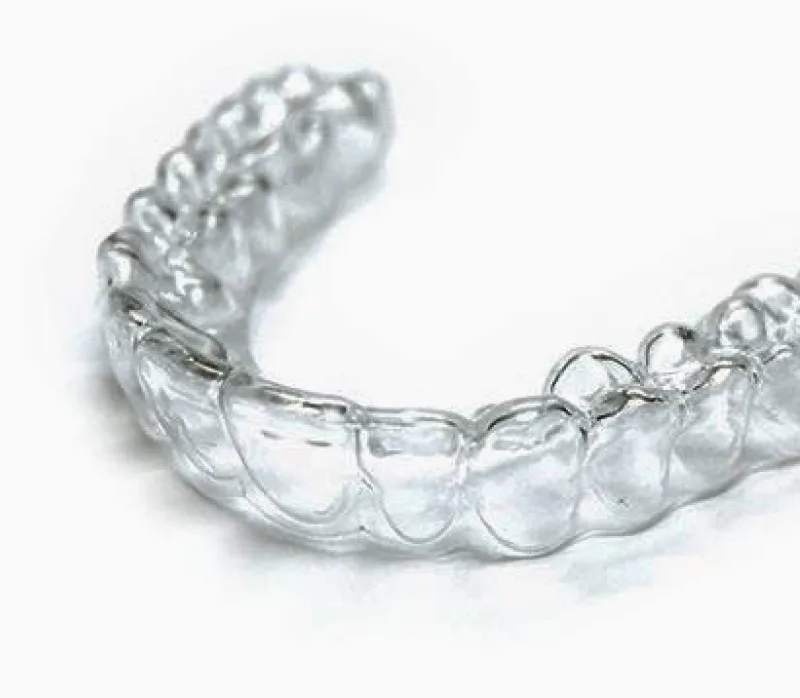
Clear aligners (mouth trays)

Removable, custom-made aligners made from clear polymer, which gradually move the teeth into the correct position. They are almost invisible on the teeth, do not restrict your diet, and are easy to remove for oral hygiene. We offer aligners manufactured in-house, which allows us to reduce the cost of treatment, improve quality and make adjustments without delay. The advantages of aligners are that they are virtually invisible when worn; they can be removed for eating or brushing your teeth; they contain no metal or wires that could damage the gum tissue; and they are affordable.

It is important to understand

Orthodontic treatment does more than just give you a beautiful smile.

Correctly aligned teeth also mean:

1. Even distribution of chewing pressure — less tooth wear and strain on the joints, low risk of chips, etc.

2. Better oral hygiene — straight teeth are easier to clean, with less plaque in hard-to-reach areas, which helps prevent gum disease and tooth decay.

3. Correct articulation and diction — particularly important for children.

4. Self-confidence and the comfort of expressing positive emotions through a smile — a psychological benefit that lasts a lifetime.

Patient reviews

4,9 Google rating All reviews on Google

Diana Kruk

08.07.2026

The clinic and service are of the highest standard – keep up the good work!

Ksenia Savenko

23.06.2026

I am very grateful to the whole FrankoLab team for the experience I’ve had with you. You are incredible! I wish you continued growth and prosperity, because the smiles you create are not only beautiful but also genuine, as seen on the faces of your grateful clients.

FrankoLab Dental Laboratory

The initial consultation involves an examination, answering your questions and understanding what you or your child needs. Book a consultation regarding orthodontic treatment in Ivano-Frankivsk now.

Why people choose FrankoLab Clinic for orthodontic treatment

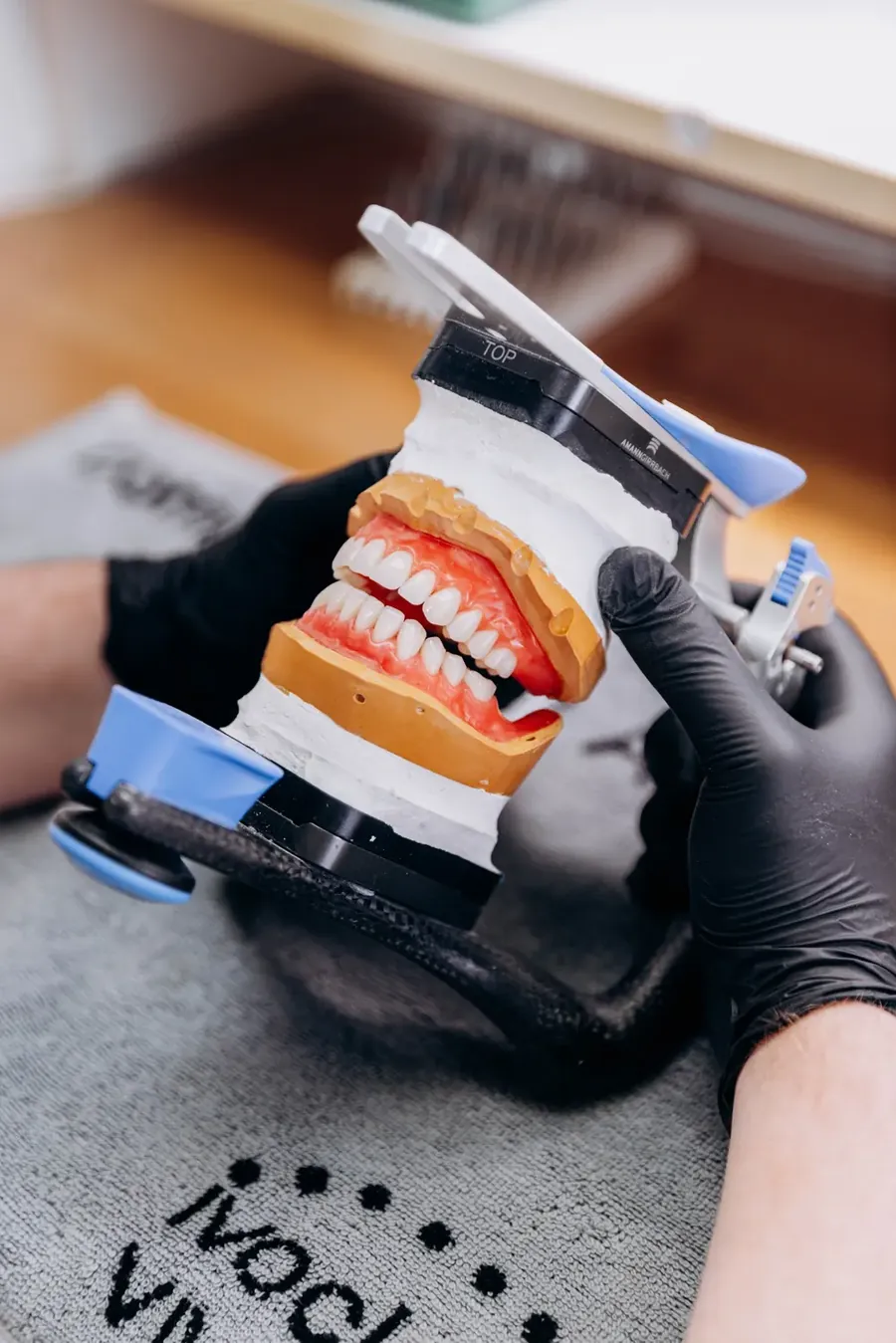
A model of the jaws in an articulator at the FrankoLab laboratory
01

In-house full-service digital dental laboratory

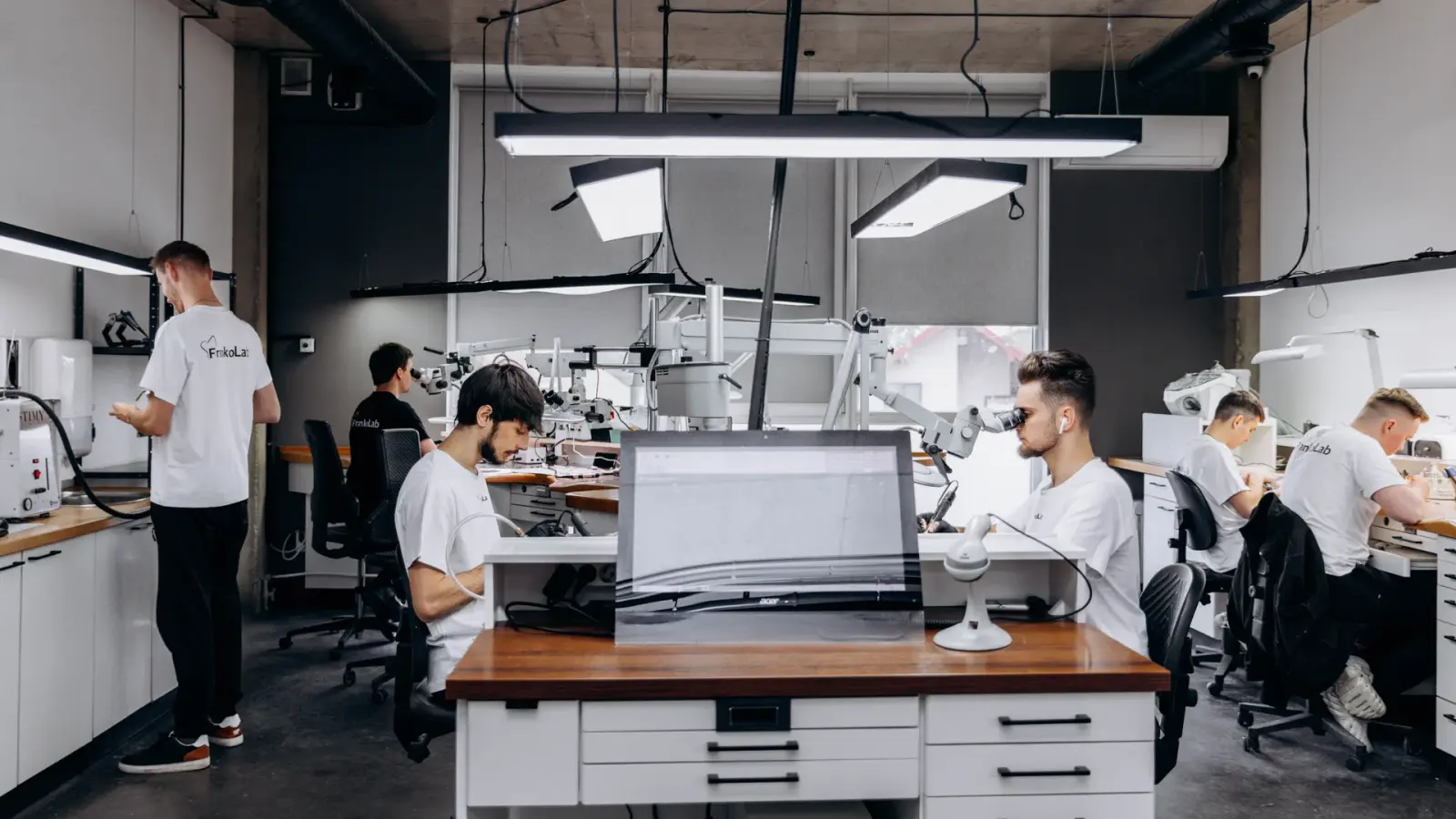
We manufacture everything on-site using CAD/CAM technology: FrankoLab aligners, retainers, plates and braces templates. This ensures maximum precision, speed (no waiting for weeks) and complete quality control. No external laboratories — the dentist and dental technician work as a single team.

02

Digital diagnostics and predicted outcomes

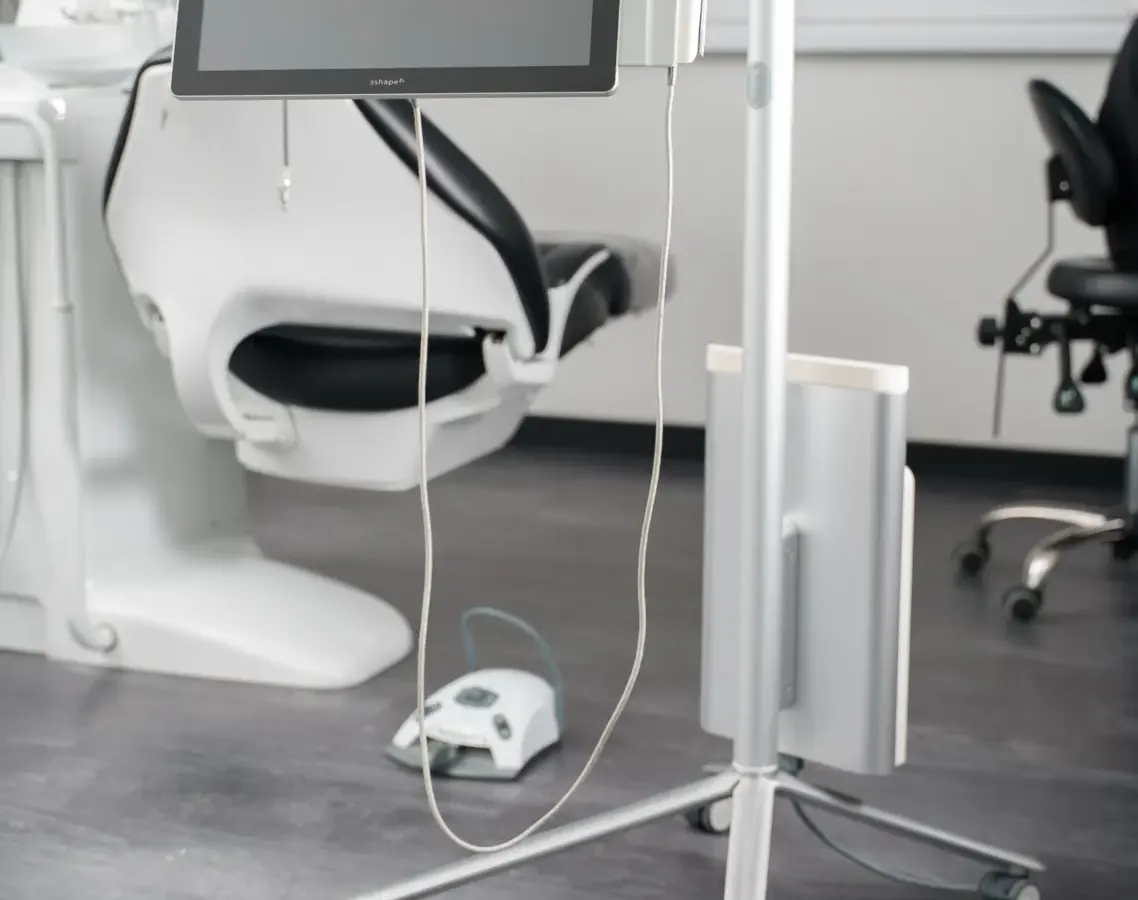
3D jaw scans (SIRONA Primescan and 3SHAPE TRIOS intraoral scanners), CT scans with minimal radiation exposure using the J. Morita 3D Accuitomo 170, digital smile design, AI analysis algorithms — thanks to these, the dentist can show you a precise treatment plan before you even begin: every step of tooth movement, the timeline, and the final result.

03

A full range of modern orthodontic treatments for adults and children

FrankoLab’s discreet aligners, aesthetic braces, functional appliances for children and early intervention trainers, removable plates, retainers, in-house-manufactured retention trays and more. We recommend the teeth straightening method that best suits your wishes and needs.

04

Experienced dentists and a team-based approach

Our multidisciplinary team — comprising orthodontists, surgeons, prosthodontists, general dentists and technicians from our in-house laboratory — work together as a single unit to achieve the best possible treatment outcome for you. This is particularly important in complex cases (TMJ problems, relapses, preparation for prosthetics) that others turn down.

05

Maximum comfort and care for the patient

Pain-free fitting, a minimum number of appointments, flexible payment options, package deals (fixed price with no hidden charges), a free initial online consultation, a modern service tailored to your needs, and the best results in the shortest possible time — all this awaits you at FrankoLab Clinic.

06

A comprehensive ‘one-stop shop’ solution

Once your teeth have been straightened, you can move straight on to veneers, crowns or implants without having to consult other specialists. Ideal for adults who want not just straight teeth, but a complete restoration of function and aesthetics. Long-lasting results thanks to mandatory retainers and follow-up care.

Frequently asked questions about orthodontic treatment

The procedure for fitting braces is painless — the adhesive is applied to the surface of the teeth without the need for injections. During the first 3–5 days after the archwire is fitted or adjusted, you may feel pressure and a dull ache in your teeth — this is a normal reaction to the movement. The discomfort can be relieved with painkillers recommended by your dentist and will subside on its own. With each subsequent visit, the adjustment process becomes quicker.
It depends on the clinical situation and lifestyle. Braces are more effective for complex malocclusions, skeletal abnormalities and severe crowding of the teeth — they provide constant control over tooth movement. Aligners are more convenient for adults with active social or professional lives: they are discreet, removable and comfortable. For mild to moderate cases, both methods produce equivalent results. The final decision should be made following a consultation with an orthodontist and an assessment of the diagnostic results. Our expert will be sure to explain the advantages and disadvantages of both options specifically for your smile.
Yes. Removable appliances are widely used for children up to the age of 12–13: trainers, plates and functional appliances. These utilise the growth potential of the jaws and can correct the bite without the need for fixed appliances. In some cases, aligners are suitable for a child. The need for braces is determined on a case-by-case basis — and often, early removable treatment makes it possible to avoid braces altogether.
For adults, braces (metal, ceramic, sapphire) and aligners are equally effective — provided the appropriate indications are met. In cases of complex malocclusions, skeletal abnormalities or the need for significant tooth movement, braces are the preferred option. For moderate cases and patients with aesthetic requirements, aligners are recommended. The specific choice is always determined by the orthodontist following a full diagnosis.
For cases of similar complexity, treatment times are comparable. Braces allow for more precise control over tooth movement and can be more effective for complex malocclusions, thereby reducing the overall duration of treatment. For mild to moderate cases, aligners deliver results in the same or even shorter timeframes. The decisive factor is the patient’s discipline: aligners must be worn for at least 20–22 hours a day, and patients must look after their aligners and replace them as required.
Not always. The decision on whether to extract wisdom teeth during orthodontic treatment is made on a case-by-case basis, based on X-ray findings and the clinical situation. If wisdom teeth are impacted, growing at an angle or may cause a relapse after treatment, it is recommended that they be removed. If they have erupted correctly and are not putting pressure on the dental arch, removal is not necessary.

Book a consultation

Book a consultation and one of our managers will contact you shortly

+380 50 011 20 00

FrankoLab Clinic dental surgery

A healthy smile starts with the right decision

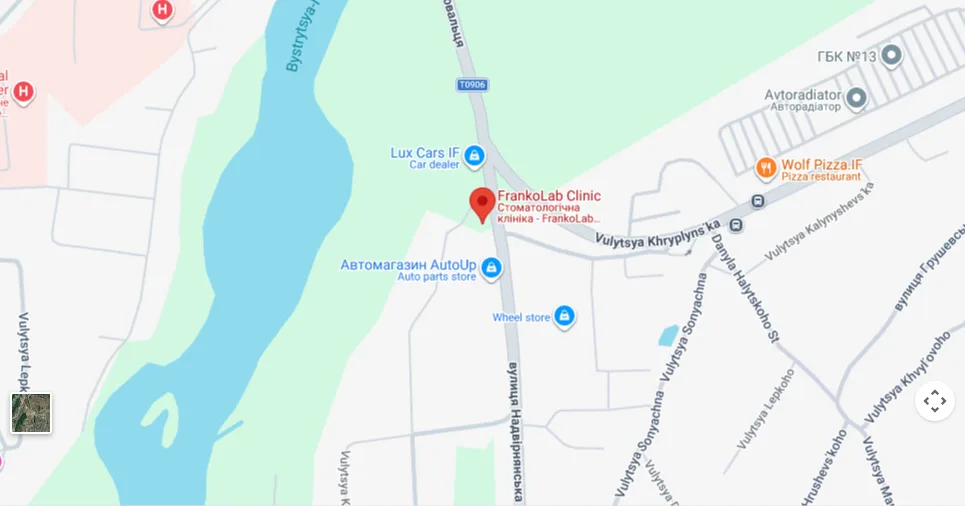
  • 77460, Ivano-Frankivsk, Cherniiv village, 2B Nadvirnianska Street
  • Mon–Sat 9.30 am–7.00 pm, Sun 10.00 am–7.00 pm
  • +380 50 011 20 00
Book a consultation
Map: 77460, Ivano-Frankivsk, village of Cherniiv, 2B Nadvirnianska Street