

EN
Ceramic ligature braces

Why choose FrankoLab:

  1. 01 Aesthetic results from the very first day of wear
  2. 02 Precise control of tooth movement
  3. 03 Affordable prices and payment plans with no hidden charges

Orthodontic treatment using a ceramic ligature brace system in Ivano-Frankivsk

Crowded teeth, an asymmetrical smile and malocclusion are problems experienced by patients of all ages and require comprehensive orthodontic treatment. One of the most popular and, at the same time, most aesthetically pleasing methods for correcting the bite and aligning the teeth is the ceramic ligature brace system.

A ceramic ligature brace system is an orthodontic appliance consisting of ceramic brackets, a metal archwire and elastic or metal ligatures that secure the archwire to each bracket. Thanks to the material used for the brackets — high-strength, enamel-coloured ceramic — the system is almost invisible on the teeth and does not spoil your smile, even during long-term treatment. The ligature-retained ceramic bracket system ensures precise movement of the teeth, allows the orthodontist to monitor each tooth in detail, and is used for a wide range of conditions: from mild crowding to complex cases of malocclusion and asymmetry.

When and for whom is teeth straightening and bite correction using a ligature-retained ceramic braces system suitable?

Patients for whom aesthetics are a key consideration

Ceramic ligature braces are suitable for adults, teenagers and people in public-facing professions (models, actors, teachers, managers) who frequently interact with others and do not wish to wear noticeable metal braces, but are prepared for orthodontic treatment lasting 18–36 months.

Mild to moderate malocclusions

Distal (the lower or upper jaw is displaced from the normal position), deep (the upper incisors overlap the lower ones by more than a third), crossbite (teeth do not align correctly), open bite (no contact between the upper and lower teeth when the jaws are closed) – malocclusions without severe skeletal deformities requiring surgery.

Teeth straightening

One or more teeth overlap neighbouring ones, hindering proper oral hygiene and chewing; there is a need to rotate, adjust the angle of and align the dental arches; there are wide gaps between the teeth that need to be closed in an aesthetically pleasing and functional manner.

Preparation for subsequent prosthetics, implants and veneers

Ceramic ligature braces are commonly used when teeth need to be straightened to achieve a high-quality prosthodontic result. In such cases, their effectiveness is usually comparable to that of treatment with metal braces.

Patients who need effective control over tooth movement

Ligature retention allows the orthodontist to precisely adjust the force at every stage (an advantage over some self-ligating systems). Furthermore, when treating patients with a ligature-retained ceramic brace system, elastic bands, chains and other auxiliary elements can be used to correct the bite.

Patients ready for thorough care

Ceramic braces with ligatures are only suitable for people who understand the importance of good oral hygiene and regular check-ups, as ceramic (to maintain its aesthetic appearance) requires special care and measures to prevent the ligatures from becoming discoloured.

Prices for orthodontic treatment using ceramic ligature braces

The exact cost of teeth straightening and bite correction using a ceramic ligature brace system at FrankoLab Clinic in Ivano-Frankivsk can only be determined following a consultation and diagnosis. The price is set out in the treatment plan.

The dentist will quote the final cost following an examination and diagnosis. Payment in instalments is available. Full price list for the clinic

Payment plans with no extra charges

FrankoLab Clinic offers orthodontic treatment using a ceramic ligature brace system with a convenient payment plan spread over the entire duration of active wear. You pay only the cost of scheduled orthodontic services each month — with no interest or hidden fees. This allows you to start treatment today, without postponing this important correction for the health of your jaw.

Stages of treatment with a ligature ceramic braces system

01

Orthodontist’s consultation

The dentist assesses the condition of the teeth, determines the type of bite and discusses the patient’s preferences regarding aesthetics and the duration of treatment.

02

Diagnosis and treatment planning

We take targeted and panoramic X-rays, as well as CT scans, photographic records and digital modelling. Based on the results of the digital diagnosis, the orthodontist develops a personalised plan for moving the teeth using braces.

03

Oral rehabilitation

Before fitting braces, we treat tooth decay, remove tartar and, if necessary, extract individual teeth to make space.

04

Fitting of a ligature-retained braces system with ceramic braces

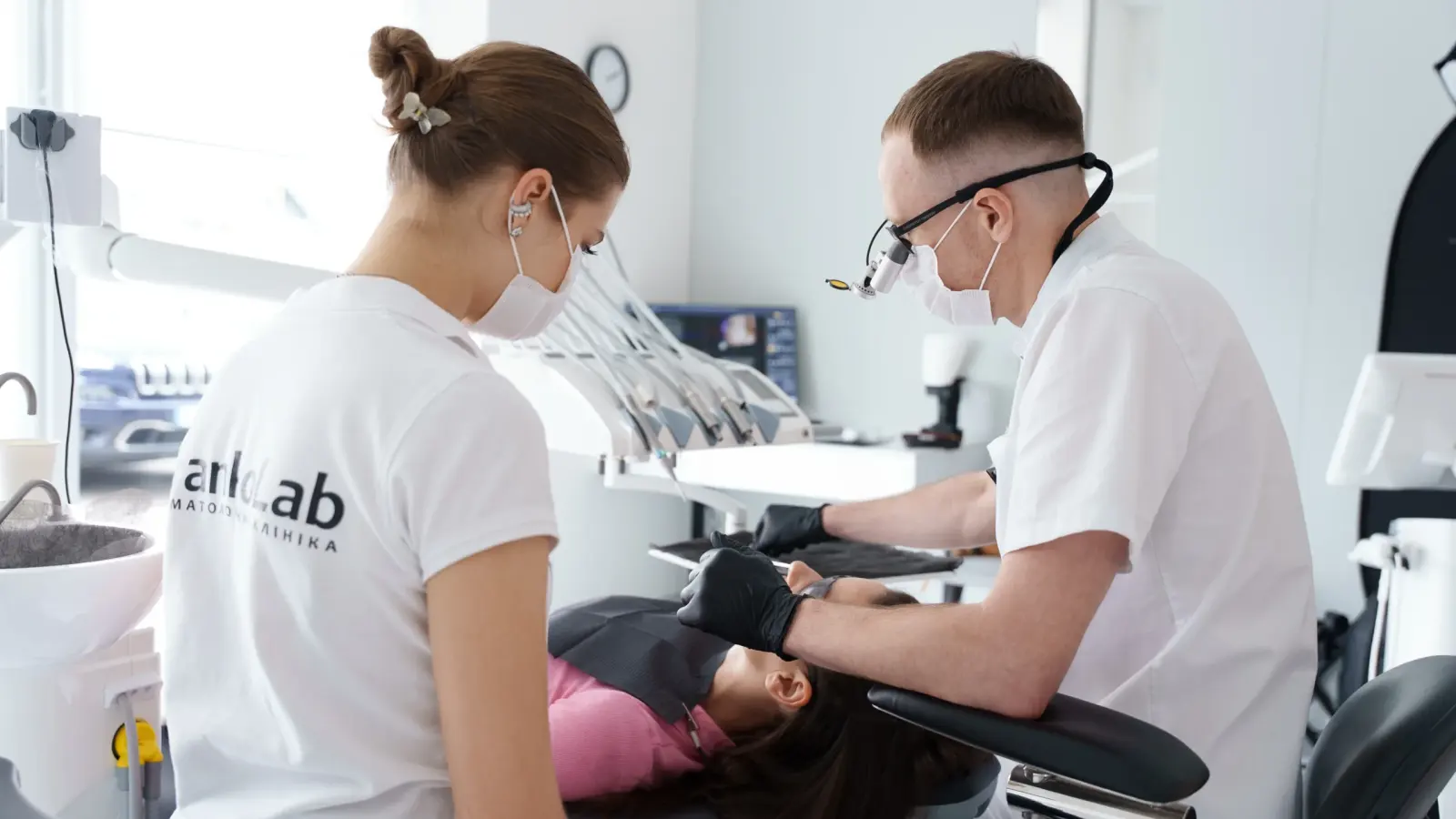
We etch and dry the teeth, then bond a ceramic bracket to each tooth. We thread an orthodontic archwire through all the brackets and secure it with ligatures. The procedure takes 1.5–2 hours and is pain-free.

05

Regular visits to the orthodontist every 4–6 weeks

During each visit, the dentist replaces the ligatures and, if necessary, the archwire, and adjusts the pressure on the teeth. This is the key stage in achieving the desired result of straightening the teeth and correcting the bite using ceramic ligature braces.

06

Removal of braces and the retention phase

Once the desired result has been achieved, we remove the appliance and polish the teeth. We always fit retainers — either removable or fixed — to stabilise the results of the orthodontic treatment.

Doctors providing treatment

Patient reviews

4,9 Google rating All reviews on Google

Diana Kruk

08.07.2026

The clinic and service are of the highest standard – keep up the good work!

Ksenia Savenko

23.06.2026

I am very grateful to the whole FrankoLab team for the experience I’ve had with you. You are incredible! I wish you continued growth and prosperity, because the smiles you create are not only beautiful but also genuine, as seen on the faces of your grateful clients.

FrankoLab Dental Laboratory

Would you like to find out whether treatment with a ceramic ligature brace system is right for you? Book a consultation with an orthodontist at FrankoLab Clinic in Ivano-Frankivsk.

Why people choose FrankoLab Clinic for teeth straightening and bite correction using ceramic ligature braces

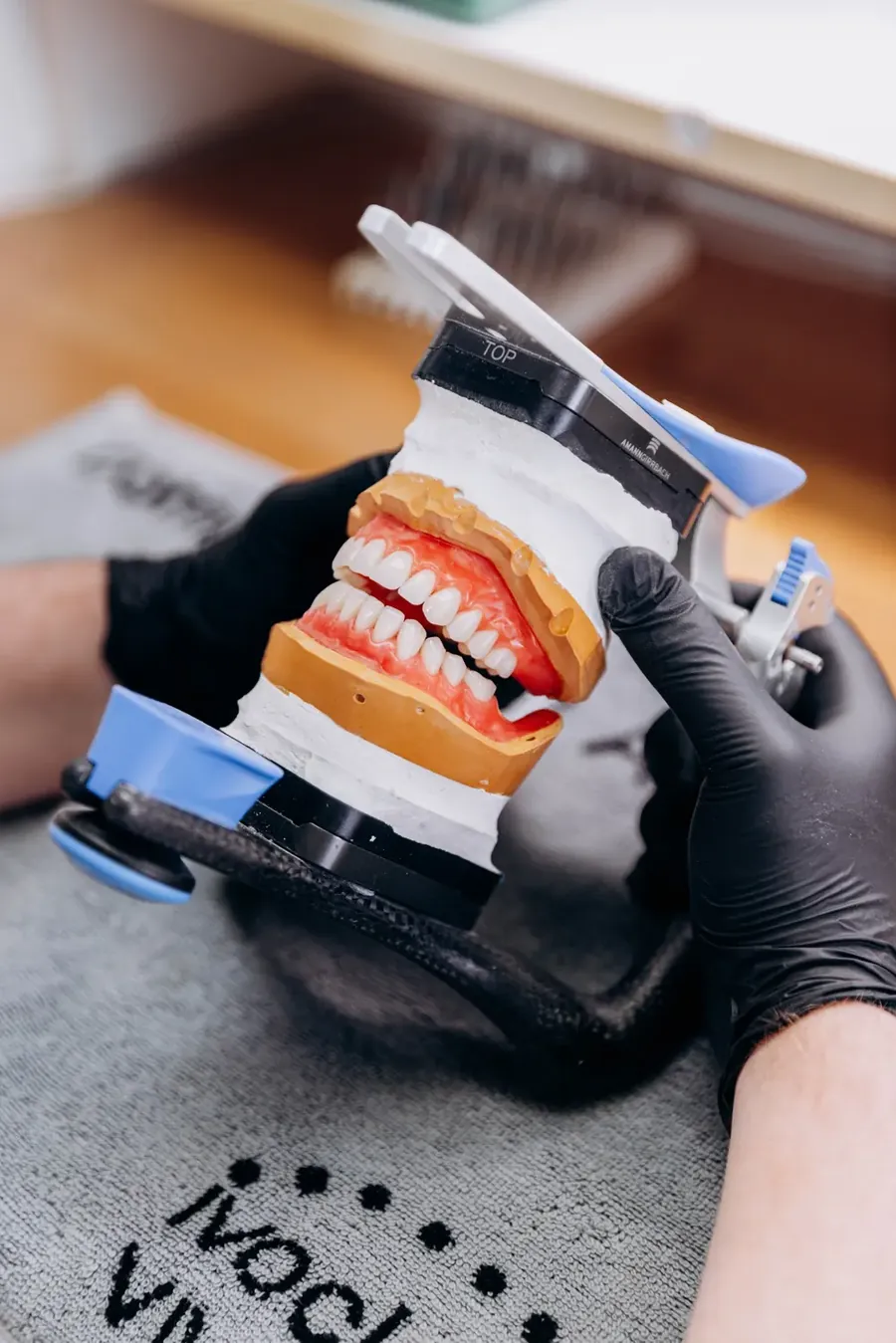
A model of the jaws in an articulator at the FrankoLab laboratory
01

In-house digital laboratory and a full range of treatments

FrankoLab is one of the largest digital laboratories in Western Ukraine (over 25,000 restorations per year). This enables us to quickly and accurately manufacture in-house aligners, braces, retainers and prosthetic restorations. Following orthodontic treatment, you can proceed straight to cosmetic restorations (veneers, crowns, etc.) without needing to consult other specialists. When a single team handles the entire process, it saves time, minimises errors and ensures a consistent result.

02

Modern technology and precise planning

We use digital 3D modelling of tooth movement (intraoral scanners such as 3Shape Trios and Sirona PrimeScan, and CT diagnostics using the J. Morita 3D Accuitomo 170), draw up a personalised treatment plan based on a comprehensive diagnosis (CT scans, functional occlusion assessment, etc.), and select ceramic braces that are not only aesthetically pleasing and less noticeable, but will also be suitable for resolving your issues with crowding, gaps and so on.

03

A comprehensive approach and handling of complex cases

We treat teenagers and adults: from straightforward cases (6–12 months) to complex ones (18–36 months), with a mandatory retention period. If required, you can receive a full range of services in other specialities, such as implantology (All-on-4/6), endodontics under a microscope and sleep dentistry, without having to change your place of treatment. Our dental practice takes on cases that others turn down, achieving predictable results thanks to teamwork and digital protocols.

04

Comfort and service

We offer a range of conveniences for patients, which is particularly important for those travelling from other cities and countries: online consultations, transfers, assistance with accommodation, fixed-price package deals, quick turnaround times and high-quality results (aesthetics + bite health). Furthermore, we always prioritise infection control and the prevention of complications — a correct bite improves oral hygiene and chewing, and reduces the risk of tooth decay, joint problems and facial asymmetry.

05

Certified materials

Our dental laboratory and clinic work exclusively with certified systems and materials, ensuring a precise fit, safety for your health and long-lasting results. After all, treatment with ceramic braces must combine aesthetics (they are less noticeable than metal ones) with reliability.

Frequently asked questions about bite correction and teeth straightening using ceramic ligature braces

The procedure for fitting braces is painless. The orthodontist does not touch the nerve and does not administer anaesthesia. For the first 3–5 days after fitting, patients experience moderate pressure and discomfort in their teeth as they begin to move. Similar sensations may occur for 1–2 days after each ligature change. A standard dose of a common painkiller is usually sufficient to relieve any discomfort. Patients usually adapt to the braces within the first week.
Fitting ceramic ligature braces to both jaws takes between 1.5 and 2 hours. If braces are fitted to just one jaw, it takes approximately 45–60 minutes. No special preparation is required for the procedure itself: simply turn up with clean teeth and, if possible, have a meal beforehand.
The duration of active treatment depends on the complexity of the clinical case. On average, it ranges from 12 to 24 months. Simple cases (minor crowding or diastema) can be corrected in 8–12 months. Complex cases — involving significant tooth movement or combined treatment — may take 2–2.5 years. Routine appointments with the orthodontist take place every 4–6 weeks.
Braces are fitted to the outer surface of the teeth and may slightly affect the pronunciation of certain sounds during the first 1–2 weeks. Most patients adapt completely within 7–14 days without any special exercises. If your work involves public speaking, please tell your orthodontist; they will take the specifics of your braces into account.
Firstly — aesthetics: ceramic brackets in the colour of tooth enamel are significantly less noticeable than their metal counterparts. Secondly — affordability: ligature-retained archwires are cheaper than self-ligating systems. Thirdly — effectiveness: ligatures give the orthodontist greater control over the force and direction of pressure on each tooth, making it possible to precisely plan the movement of the teeth. The material used in ceramic braces is hypoallergenic and does not react with saliva.
Anything can break. However, modern ceramics are a strong material, resistant to everyday wear and tear. The main reason for braces coming loose is eating very hard or sticky foods (nuts, toffee, rusks, etc.). If you follow your dentist’s advice, the risk of problems is minimal. If your braces do come loose, contact your dental practice – they will reattach them.
Relative contraindications: untreated tooth decay or periodontal disease, significant tooth mobility, children under 12 years of age (until all permanent teeth have come through). Absolute contraindications are rare and are mainly related to general health — active-stage cancer, severe immune disorders. A nickel allergy is not a contraindication — ceramic braces do not contain nickel (the archwire, made of stainless steel or titanium, is selected on an individual basis).
Brush your teeth after every meal, at least twice a day, using a toothbrush with soft or medium-stiff bristles. It is also essential to use interdental brushes to clean the spaces between braces and teeth, as well as a water flosser to rinse under the archwire. It is better to replace dental floss with a flosser or a flossing triangle. Alcohol-free mouthwashes containing fluoride are recommended for daily use. Regular professional dental hygiene appointments should be booked every 3–4 months.
Ligature-retained ceramic braces differ from self-ligating braces in terms of archwire retention (ligatures (elastic bands or wire) and built-in clips), price (self-ligating braces are more expensive), the need for dental check-ups (with ligature-type braces, this is at its highest, particularly because the ligatures need to be replaced every 4–6 weeks), and hygiene (ligature-type ceramic braces require more thorough care).
During treatment, you should avoid: hard foods (nuts, crispbread, uncut hard fruit), sticky and toffee sweets, chewing gum, and very crunchy foods. Everything else is permitted without restriction. Please note that staining drinks (coffee, black tea, red wine) may cause slight discolouration of the elastic ligatures — this does not affect dental health and can be corrected during routine ligature replacement.
Yes, the retention phase is essential following any orthodontic treatment. Without it, teeth tend to shift back into their original position. FrankoLab Clinic offers two options: a fixed retainer — an inconspicuous thin wire bonded to the inner surface of the teeth; and a removable retainer tray — to be worn at night. The dentist selects the option depending on the complexity of the treatment and your individual circumstances.

Find out more: ceramic ligature braces

Correcting the alignment of the teeth and bite by wearing braces offers a number of benefits.

First and foremost, it improves your appearance, which is what patients are most often concerned about.

The second and most important aspect and benefit of wearing braces is the health aspect.

Malocclusion and misaligned teeth prevent food from being thoroughly chewed, which can lead to subsequent problems with the digestive system, impaired absorption of nutrients from food, and increased wear on the teeth.As an incorrect jaw alignment causes muscle tension, this will eventually lead to problems with the temporomandibular joint and cause a range of symptoms,such as: headaches, muscle pain when opening and closing the mouth, bruxism, and increased tooth wear.
Book a consultation

Book a consultation and one of our managers will contact you shortly

+380 50 011 20 00

FrankoLab Clinic dental surgery

A healthy smile starts with the right decision

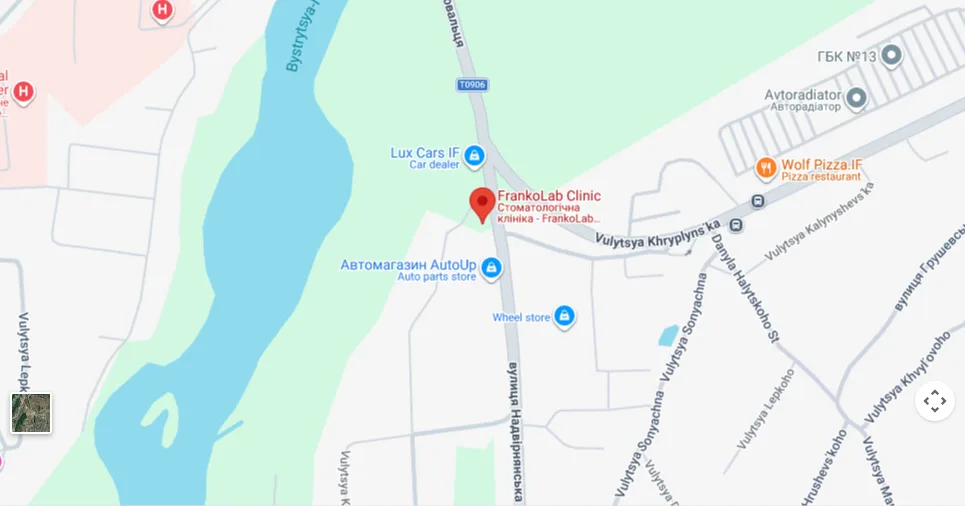
  • 77460, Ivano-Frankivsk, Cherniiv village, 2B Nadvirnianska Street
  • Mon–Sat 9.30 am–7.00 pm, Sun 10.00 am–7.00 pm
  • +380 50 011 20 00
Book a consultation
Map: 77460, Ivano-Frankivsk, village of Cherniiv, 2B Nadvirnianska Street