EN
Braces

Why choose FrankoLab:

  1. 01 Modern braces from leading brands
  2. 02 Orthodontists with extensive clinical experience
  3. 03 Payment plans with no extra charges

Teeth straightening and bite correction with braces in Ivano-Frankivsk

What are braces and the braces system?

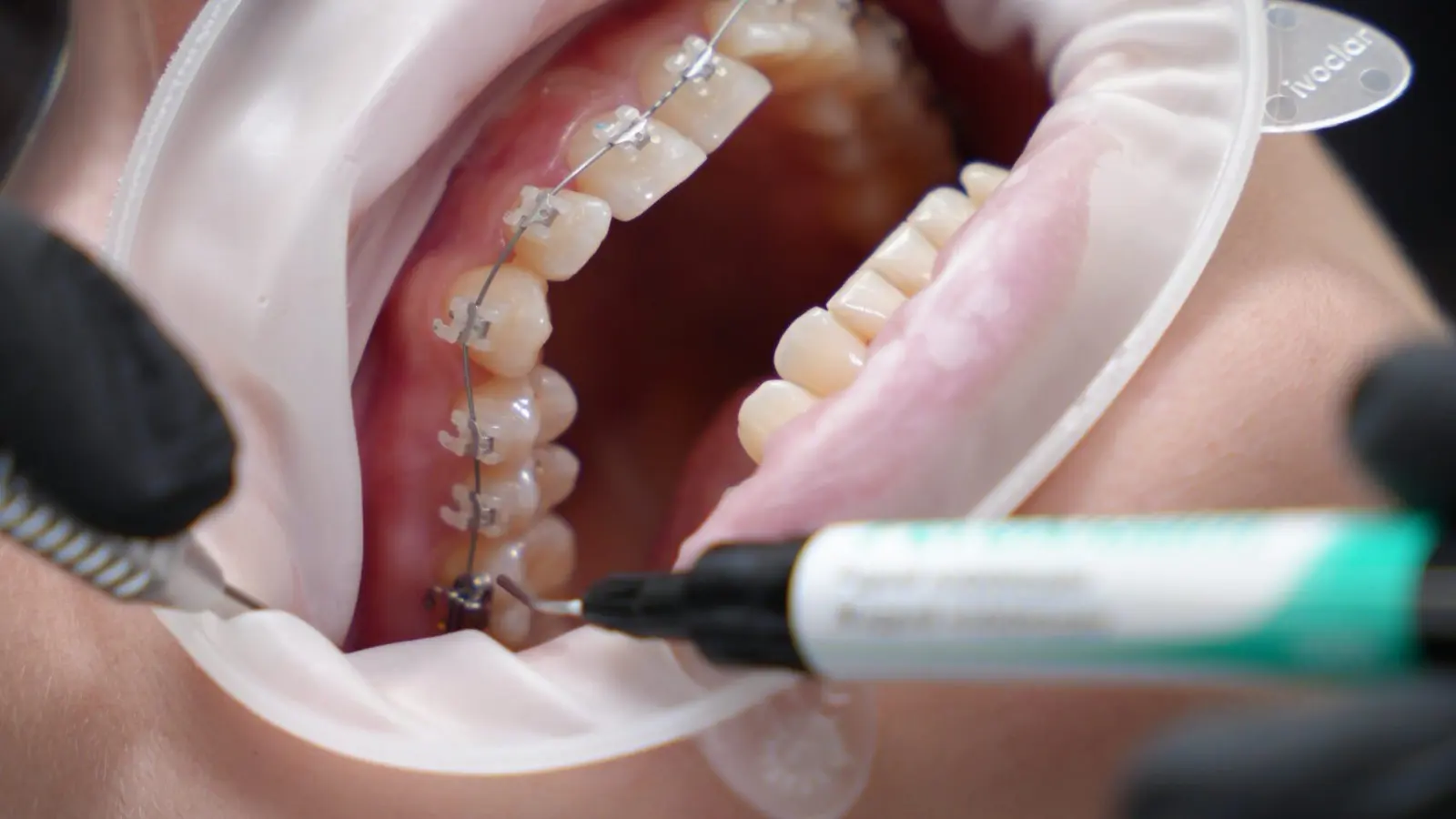
Braces are fixed orthodontic appliances that are attached to the surface of the teeth and gradually move them into the correct position. A brace system consists of several key elements: the brackets themselves (small brackets fixed to each tooth), a metal archwire that connects all the brackets, and ligatures or self-ligating mechanisms that hold the archwire in place within the bracket slot. In some systems, elastic bands and micro-screws are also used.

It is the archwire that is the main ‘driving force’ behind the treatment: secured in the slots of the braces, it exerts constant but gentle pressure on the teeth and gradually guides them into their planned position. By regularly replacing the archwires with stiffer ones, the orthodontist controls the speed and direction of tooth movement at every stage of treatment.

Braces are effective both for children (from the age of 10–12, when almost all permanent teeth have come through) and for adults, with no age restrictions. The orthodontists at FrankoLab Clinic will determine the optimal treatment plan following a detailed assessment.

The benefits of bite correction and teeth straightening with braces

Effectiveness in complex cases

Braces can address various degrees of crowding, complex malocclusions, gaps and serious dentofacial abnormalities, including jaw asymmetry. They affect not only individual teeth but also the entire jaw.

Precise and controlled bite correction

Constant pressure from the archwire and braces allows the teeth to be moved in three planes. The dentist adjusts the force and direction at each appointment. The result is a perfect bite, even distribution of pressure and prevention of enamel wear.

Improving oral health

Straight teeth are easier to clean, which reduces the risk of food or plaque remaining in hard-to-reach areas, leading to tooth decay or periodontal disease. This eliminates excessive pressure on the teeth and reduces the likelihood of chips and cracks.

Long-lasting and stable results

Once braces have been removed and retainers (removable or fixed) fitted, the teeth remain in place for a long time. There is a risk of relapse, but this is minimal if the dentist’s recommendations are followed.

Saving time and money in the long term

Although orthodontic treatment with braces takes 12–24 months, and sometimes longer, it is often cheaper than a combination of aligners, veneers or implants if you start correcting bite problems later on. A single course of treatment solves the problem for good.

A choice of braces to suit your needs

Metal implants are the quickest and most reliable; ceramic or sapphire implants are more expensive, but offer the best aesthetic results; self-ligating braces are more comfortable and require fewer appointments; lingual (internal) braces are completely invisible. We offer you the very best!

Indications for treatment with braces

Any type of malocclusion

If the upper teeth protrude significantly forwards, the lower jaw is pushed forward, one jaw overlaps the other, there is no contact between the front teeth, chewing and speech are impaired, pressure is placed on the joints, and headaches and tooth wear occur.

Crowded teeth (crowding of the dental arch)

Teeth ‘crowd together’, tilt and become misaligned due to a lack of space. This makes it difficult to brush them properly → increasing the risk of tooth decay, periodontitis and inflammation. Treatment with braces usually creates space and straightens the teeth without the need for extractions.

Excessive gaps between the teeth

Wide gaps between the incisors or other teeth are unsightly, trap plaque and cause the teeth to shift over time. Bite correction and teeth straightening using braces close these gaps and stabilise the position of the teeth.

Misaligned teeth

When teeth grow outside the dental arch, are rotated around their axis, or are tilted inwards or outwards, this can cause damage to the gums, lead to hygiene problems and result in aesthetic discomfort. Braces precisely realign each tooth into the correct position.

Tooth displacement following tooth extraction or loss

Adjacent teeth ‘sink’ into the socket, whilst the opposing teeth ‘grow’ into the gap — this process disrupts the bite and complicates future implant and prosthetic procedures. Straightening the teeth with braces restores space and vertical height.

Preparing for dental implants, prosthetics or veneers

Crooked teeth and an incorrect bite hinder effective dental restoration. Straightening teeth and correcting the bite with braces ensures the correct distribution of load on implants and crowns, thereby extending their lifespan. The orthodontist works as part of a team with the prosthodontist and experts from the dental laboratory.

Disorders of the temporomandibular joint

For pain, clicking sounds, limited mouth opening and headaches caused by a misaligned bite, straightening the teeth with braces relieves strain on the jaw joint and muscles, often completely eliminating the symptoms.

Relapse following previous orthodontic treatment

If your teeth have ‘drifted’ again without retainers or for other reasons, braces (or a combination of braces with aligners, a retention tray or the fitting of a retainer) will quickly restore the result and secure it for the long term.

Asymmetry of the dental arch or a midline that is misaligned with the face

Asymmetry of the dental arch or a deviation of the midline, even by 2–3 mm, noticeably disrupts the harmony of the smile and visually ‘skews’ the face. Braces create a symmetrical smile and harmonious facial features without the need for surgery.

Retained teeth (those still embedded in the bone) requiring extraction

‘Extraction’ in this context refers to the surgical exposure of a tooth followed by its orthodontic movement into the dental arch using braces (not removal!). This is a classic indication for combined orthosurgical treatment: the surgeon exposes the crown of the impacted tooth, a bracket is fixed to the tooth, and the braces gradually ‘extract’ the tooth into the correct position (the process takes 6–18 months).

Aesthetic and psychological indications

The desire to have a straight, beautiful smile without any insecurities (even if your bite is almost correct). Modern aesthetic braces (ceramic, sapphire, lingual) make treatment discreet, whilst the result is natural and long-lasting.

Prices for orthodontic treatment with braces

The cost of teeth straightening and bite correction using braces at FrankoLab Clinic in Ivano-Frankivsk depends on the type of braces chosen, the complexity of the clinical case and the duration of treatment. We determine the exact cost of the full course of treatment during a consultation, following an analysis of the diagnostic results.

The dentist will quote the final cost following an examination and diagnosis. Payment in instalments is available. Full price list for the clinic

Payment plans

Orthodontic treatment is a worthwhile investment. FrankoLab Clinic offers the option to pay in instalments so you can start treatment when you need to. You can find out all about the instalment plan terms when you book an appointment with the receptionist.

Stages of treatment with braces

01

Consultation, diagnosis and treatment planning

An orthodontist examines the dentition, assesses the bite and identifies any existing conditions. To obtain a detailed picture, we carry out a CT scan using the J. Morita 3D Accuitomo 170, a panoramic X-ray, a 3D scan of the teeth and a simulation of the future smile. Based on the results, we draw up a detailed plan for moving the teeth and select the type of braces.

02

Preparation of the oral cavity

Before straightening teeth and correcting the bite with braces, we carry out a dental clean-up: cleaning, treatment of tooth decay (if necessary) and removal of tartar. Healthy teeth and gums are an essential prerequisite for starting orthodontic treatment.

03

Fitting of braces

Braces are fixed to the surface of the teeth using a special adhesive, and the archwire is fitted into the slots, applying the necessary pressure to gradually move the teeth. The procedure is painless and usually takes up to 2 hours.

04

Regular check-ups and progress monitoring

Our orthodontist explains how to get used to the new sensations more easily, offers advice on minimising discomfort and outlines the schedule of clinic visits — every 4–8 weeks to adjust the archwires and monitor the progress of treatment. We gradually replace the archwires with stiffer ones, gradually achieving the planned position of the teeth.

05

Removal of braces and teeth polishing

Once the desired result in terms of tooth alignment has been achieved, the braces are removed, any remaining adhesive is carefully removed, and the surface of the teeth is polished. If necessary, additional professional oral care is provided.

06

Retention phase

To consolidate the results, we fabricate a retainer — either a removable or fixed (cap) retainer. Wearing a retainer is essential: it is what keeps the teeth in their new position and prevents relapse, particularly in the lower jaw.

Types of braces

FrankoLab Clinic offers a range of braces. Following an examination and diagnosis, our orthodontist will help you choose the best option for you, taking into account the complexity of your case, your lifestyle and your preferences.

Metal braces

The classic and most common type of braces. Metal braces are made from stainless steel or alloys. They are reliable, durable, affordable and effective for conditions of any complexity, and, importantly, patients tolerate them well. Modern metal braces have become much smaller and more comfortable compared to previous generations.

Ceramic braces

An aesthetic alternative to metal braces. The brackets are made from tooth-coloured polycrystalline ceramic (satin-translucent or ivory-coloured), so the braces are almost invisible when you smile. Ceramic braces combine aesthetics with effectiveness, although they are slightly more expensive than metal ones. They are suitable for patients who prioritise their appearance during treatment.

Sapphire braces

Braces made from synthetic (monocrystalline) sapphire are as transparent as possible, durable and almost invisible. The material does not change colour throughout the entire course of orthodontic treatment and is resistant to staining. Sapphire braces are the choice for patients seeking to combine effective treatment with the highest aesthetic standards. These systems can be fitted to both the upper and lower rows of teeth.

Lingual braces

Lingual (internal) braces are fitted to the inner (tongue-side) surface of the teeth and are completely invisible from the outside. This is the ideal choice for public figures who do not want those around them to know they are undergoing orthodontic treatment. These braces take a little longer to get used to and require very careful and more complex aftercare.

Self-ligating braces

Self-ligating (self-ligating) braces have a built-in mechanism for securing the archwire — instead of conventional ligatures or rings, the archwire is held in place by a special cap. This reduces friction between the archwire and the bracket, which speeds up tooth movement and means fewer visits to the orthodontist. The system is more comfortable to wear and easier to look after. They are available in both metal and ceramic versions.

Orthodontic treatment with braces is one of the most effective methods for correcting the bite and aligning the teeth, proven over decades. They make it possible not only to straighten the teeth, but also to fully correct bites of any complexity. Unlike aligners, braces provide constant control and precise pressure on each tooth and the jaw, making them ideal for complex cases, adults and situations where a significant change in jaw position is required.

At FrankoLab Clinic, braces are not simply ‘fitted’; they are integrated into a complete treatment cycle: from precise 3D diagnostics to a stable result with retention.


Doctors providing treatment

Patient reviews

4,9 Google rating All reviews on Google

Diana Kruk

08.07.2026

The clinic and service are of the highest standard – keep up the good work!

Ksenia Savenko

23.06.2026

I am very grateful to the whole FrankoLab team for the experience I’ve had with you. You are incredible! I wish you continued growth and prosperity, because the smiles you create are not only beautiful but also genuine, as seen on the faces of your grateful clients.

FrankoLab Dental Laboratory

Would you like to find out if braces are right for you? Book a consultation with an orthodontist at FrankoLab Clinic — we’ll carry out a diagnosis and draw up a treatment plan.

Why people choose FrankoLab Clinic for teeth straightening and bite correction with braces

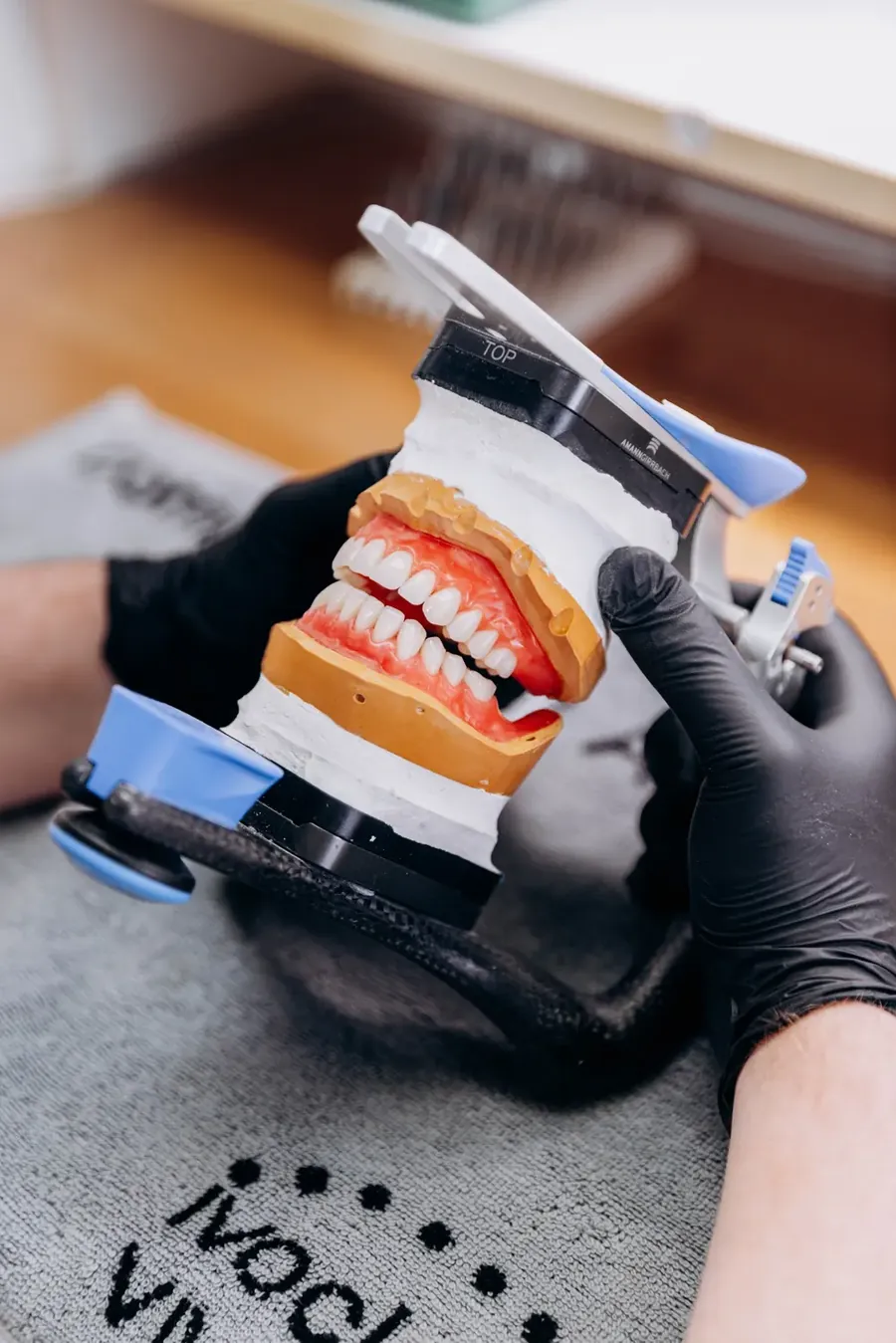
A model of the jaws in an articulator at the FrankoLab laboratory
01

Dentists with experience in complex cases

Orthodontist Iryna Volkova and our entire team are constantly improving their skills and work as a cohesive unit. That is why we take on cases that others turn down: asymmetry, impacted teeth, preparation for implants, and TMJ problems. We draw up a treatment plan based on your individual anatomy.

02

A full range of modern braces to suit every need

We offer metal braces (ligature and self-ligating) — the most reliable and affordable; ceramic braces (ligature and self-ligating) — aesthetic and less noticeable; and lingual (internal) braces — completely invisible. Our dental practice also offers the option of combining treatment with micro-implants for complex tooth movements.

03

Digital diagnostics and precise 3D planning

Intraoral 3D scanning (instead of traditional impressions) using 3SHAPE TRIOS and Sirona Primescan scanners, and low-dose CT scans using the J. Morita 3D Accuitomo 170, digital modelling of every step of tooth movement — the dentist shows you the predicted result even before treatment begins. This means fewer surprises, shorter treatment times (usually 18–24 months) and precise control.

04

In-house full-cycle dental laboratory (CAD/CAM)

We manufacture everything on-site: braces templates, retainers and additional components. Our orthodontist and in-house laboratory technicians work together as a single team, ensuring maximum precision, speed and quality control at every stage — without having to wait for external laboratories. This is a key advantage for braces: bespoke designs that fit your teeth perfectly.

05

A team-based approach and comprehensive ‘one-stop’ treatment

The orthodontist works in tandem with surgeons, prosthodontists and general dentists. This is ideal for cases where implants, crowns or veneers are required following orthodontic treatment. Regular check-ups every 4–8 weeks, follow-up care and adherence to recommendations ensure predictable and long-lasting results.

06

Maximum comfort, care and transparency

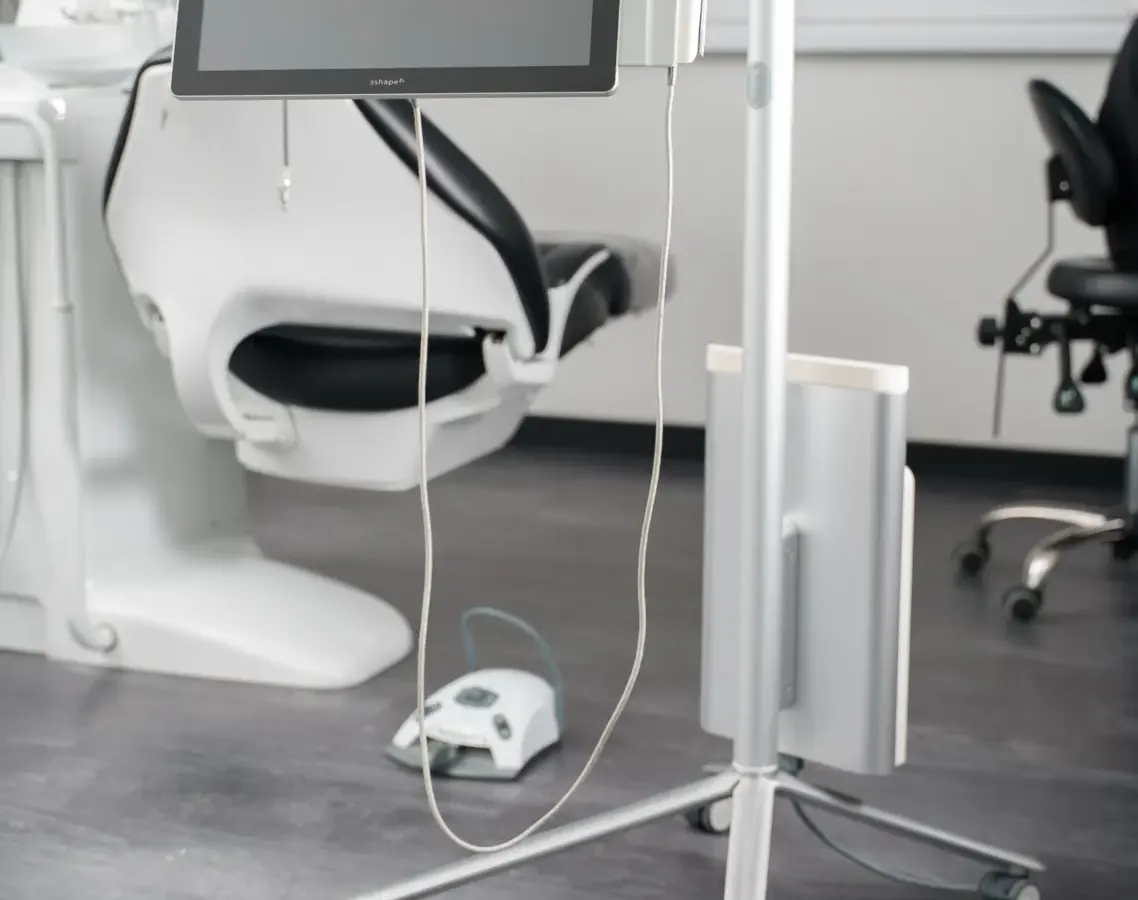
Fitting braces takes up to 2 hours. You’ll be comfortable throughout thanks to the ergonomic Planmeca Compact unit, regardless of the procedure’s duration, and it’s completely painless. Our dental practice also offers flexible payment plans and instalments, a free initial online consultation, and support at every stage (if you need it, we can even arrange a transfer to and from the clinic).

Frequently asked questions about teeth straightening and bite correction with braces

Having braces fitted is a painless procedure. During the first 2–5 days after each adjustment of the archwire, you may experience slight discomfort or pressure: your teeth are ‘reacting’ to the new pressure. This is normal and passes quickly. If necessary, you can take a painkiller recommended by your dentist. Over time, patients get used to the braces and hardly notice they are there.
The duration of treatment depends on the complexity of the orthodontic condition, the type of braces and individual physiological factors. On average, treatment takes between 12 and 24 months. Mild cases (for example, slight crowding) can be resolved in 8–12 months, whilst complex malocclusions sometimes require up to 2.5 years or more. The orthodontist will provide an estimated treatment duration following diagnosis.
We usually schedule routine appointments with the orthodontist every 4–8 weeks. At each check-up, the dentist assesses how the teeth are moving and makes the necessary adjustments: replacing archwires, tightening ligatures or adjusting elastics. Self-ligating systems mean you need to come in for adjustments slightly less frequently.
Yes, there are certain dietary restrictions, but they are not as strict as many people think. You should avoid: hard foods (nuts, rusks, sweets), sticky and chewy foods (chewy sweets, chewing gum, toffee), as well as whole hard fruits and vegetables (apples, carrots — it’s best to cut these into pieces). Other foods can be eaten without restriction. It is important to brush your teeth or rinse your mouth thoroughly after every meal.
There is no upper age limit for braces: they are fitted to both teenagers and adults of any age. For children, the optimal time to start treatment is between the ages of 10 and 13, when almost all permanent teeth have come through. We treat adult patients just as effectively, although treatment times may be slightly longer as bone development has already been completed.
Oral hygiene when wearing braces requires extra care. We recommend: brushing your teeth after every meal (or at least twice a day) with an orthodontic toothbrush; using a single-tufted brush to clean the space around each bracket; use a water flosser to clean between your teeth; use dental floss or superfloss regularly; rinse your mouth with a fluoride mouthwash; and have a professional cleaning at the clinic every 3–4 months.
There are few absolute contraindications, but they do exist: severe bone diseases (for example, severe osteoporosis), active-stage cancer, severe periodontal disease with significant bone loss, and allergies to braces materials. Relative contraindications include poor oral hygiene and untreated tooth decay — these must be addressed before orthodontic treatment begins.
Provided you maintain good oral hygiene and follow your orthodontist’s advice, braces do not damage your teeth. The risk of tooth decay only increases if your teeth are not brushed properly: food debris accumulates around the braces and can lead to demineralisation of the enamel. To avoid this, it is important to follow all hygiene recommendations and visit the clinic regularly for professional oral care.
The most common side effects are temporary discomfort following fitting and adjustments, and chafing of the soft tissues of the cheeks or lips caused by the archwire or the edges of the braces (this can be resolved using orthodontic wax), temporary difficulties with chewing and speaking during the first week. All these symptoms are normal and subside as you get used to the braces. Serious complications (root resorption, periodontal damage, etc.) are very rare and are usually associated with failure to follow recommendations.
We do not always recommend the removal of wisdom teeth (eighth teeth) for orthodontic treatment — only in specific clinical situations: for example, if the wisdom teeth are impacted (have not erupted), are malpositioned, are hindering the movement of other teeth, or if there is a risk of relapse following treatment. The decision to extract teeth is made by the orthodontist on a case-by-case basis, based on a CT scan and the treatment plan.

Book a consultation

Book a consultation and one of our managers will contact you shortly

+380 50 011 20 00

FrankoLab Clinic dental surgery

A healthy smile starts with the right decision

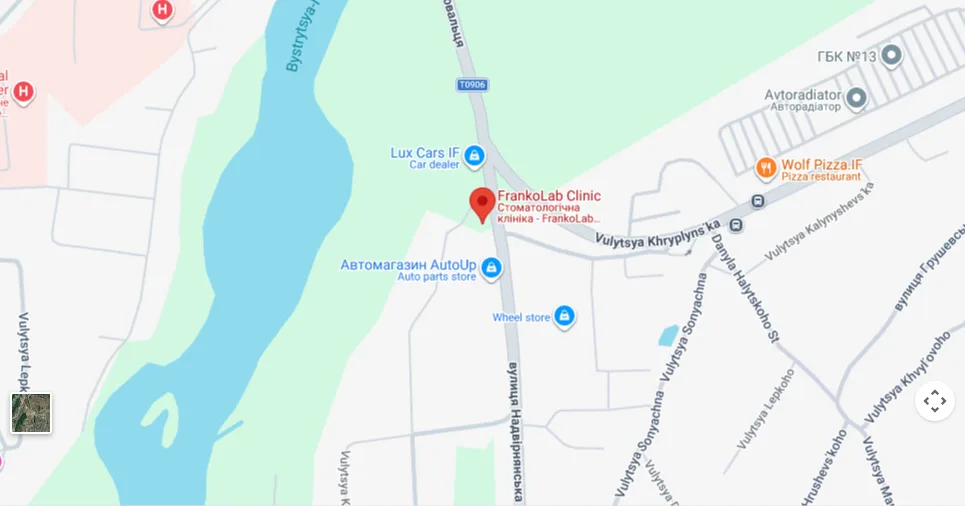
  • 77460, Ivano-Frankivsk, Cherniiv village, 2B Nadvirnianska Street
  • Mon–Sat 9.30 am–7.00 pm, Sun 10.00 am–7.00 pm
  • +380 50 011 20 00
Book a consultation
Map: 77460, Ivano-Frankivsk, village of Cherniiv, 2B Nadvirnianska Street