Creating absolute support
Micro-implants are fixed directly into the jawbone and do not move with the teeth, providing a stable anchor point for braces or aligners.
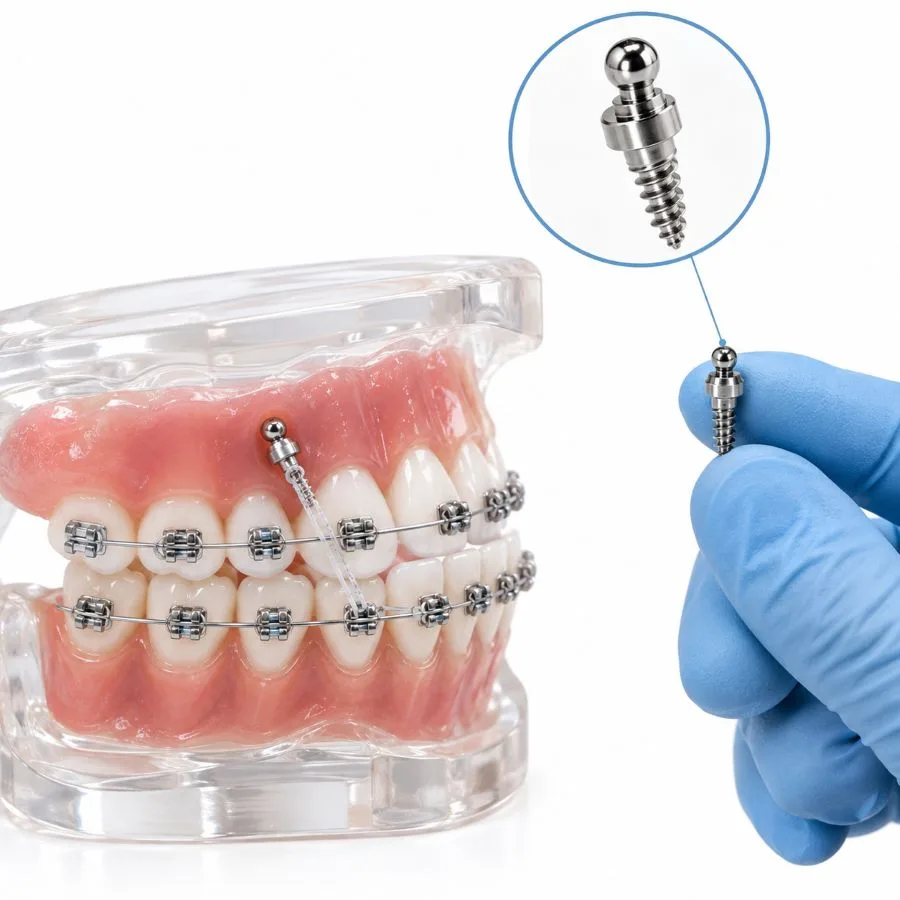
An orthodontic micro-implant is a small temporary device (a micro-screw made of biocompatible titanium) that is screwed into the jawbone for the duration of orthodontic treatment. Unlike a dental implant, it does not replace a tooth, but serves as a temporary anchor to move teeth in the desired direction where there are insufficient natural teeth to provide support or where moving them is undesirable.
In dentistry, micro-implants enable orthodontists to tackle complex clinical challenges with greater precision and without causing unwanted movement of neighbouring teeth. Once treatment is complete, the micro-implant is painlessly removed — the bone tissue regenerates naturally following its removal. At FrankoLab Clinic, we only fit micro-screws made from high-quality materials with enhanced biocompatibility, ensuring the best possible outcome for our patients’ orthodontic treatment.
Micro-implants are fixed directly into the jawbone and do not move with the teeth, providing a stable anchor point for braces or aligners.
Micro-screws in orthodontics make it possible to move, tilt or reposition the required teeth without affecting the position of neighbouring teeth.
Micro-implants help to close gaps following tooth extraction or to move molars back, creating space in the dental arch without the need for tooth extraction.
We use micro-implants to correct open bites, deep bites, distal bites and medial bites, as well as to correct asymmetries and retainers.
The placement of orthodontic micro-implants makes it possible to move teeth in a controlled manner and create sufficient space and the correct positioning of adjacent teeth for the subsequent placement of a dental implant.
Orthodontic micro-implants reduce treatment time and improve the accuracy of the result thanks to complete control over tooth movement.
The cost of having an orthodontic micro-implant fitted at FrankoLab Clinic in Ivano-Frankivsk depends on the number of micro-screws, their type and the extent of the associated orthodontic treatment. We provide a transparent quote following a consultation and diagnosis, with no hidden surcharges. If required, payment plans are available with no extra charges — please check the terms with the receptionist.
The dentist will quote the final cost following an examination and diagnosis. Payment in instalments is available. Full price list for the clinic
We carry out CT scans using the J. Morita 3D Accuitomo 170 to determine the optimal site for placing an orthodontic micro-implant, taking into account bone anatomy, the position of tooth roots and vascular-nerve bundles. We select the type and size of the micro-screw in accordance with clinical indications.
We administer local infiltration anaesthesia in the area where the orthodontic micro-implant is to be placed. The procedure is virtually painless — most patients feel only slight pressure whilst the implant is being screwed in.
We make a small puncture or a minimal incision in the mucosa at the site of fixation. We screw the orthodontic micro-implant into the jawbone by hand or using an orthodontic motor — without drilling and without stitches (in most cases). The procedure for fitting orthodontic micro-implants takes 15–20 minutes.
One to two weeks after placement, the micro-implant is ready to bear a load. The orthodontist attaches elastics or springs from the micro-implant to the braces or aligners — and the active movement of the teeth in the desired direction begins.
Once the desired result has been achieved, the micro-implant is removed — a quicker and simpler procedure than its insertion. The bone tissue regenerates completely on its own without any further intervention.

Diana Kruk
08.07.2026
The clinic and service are of the highest standard – keep up the good work!
Ksenia Savenko
23.06.2026
I am very grateful to the whole FrankoLab team for the experience I’ve had with you. You are incredible! I wish you continued growth and prosperity, because the smiles you create are not only beautiful but also genuine, as seen on the faces of your grateful clients.
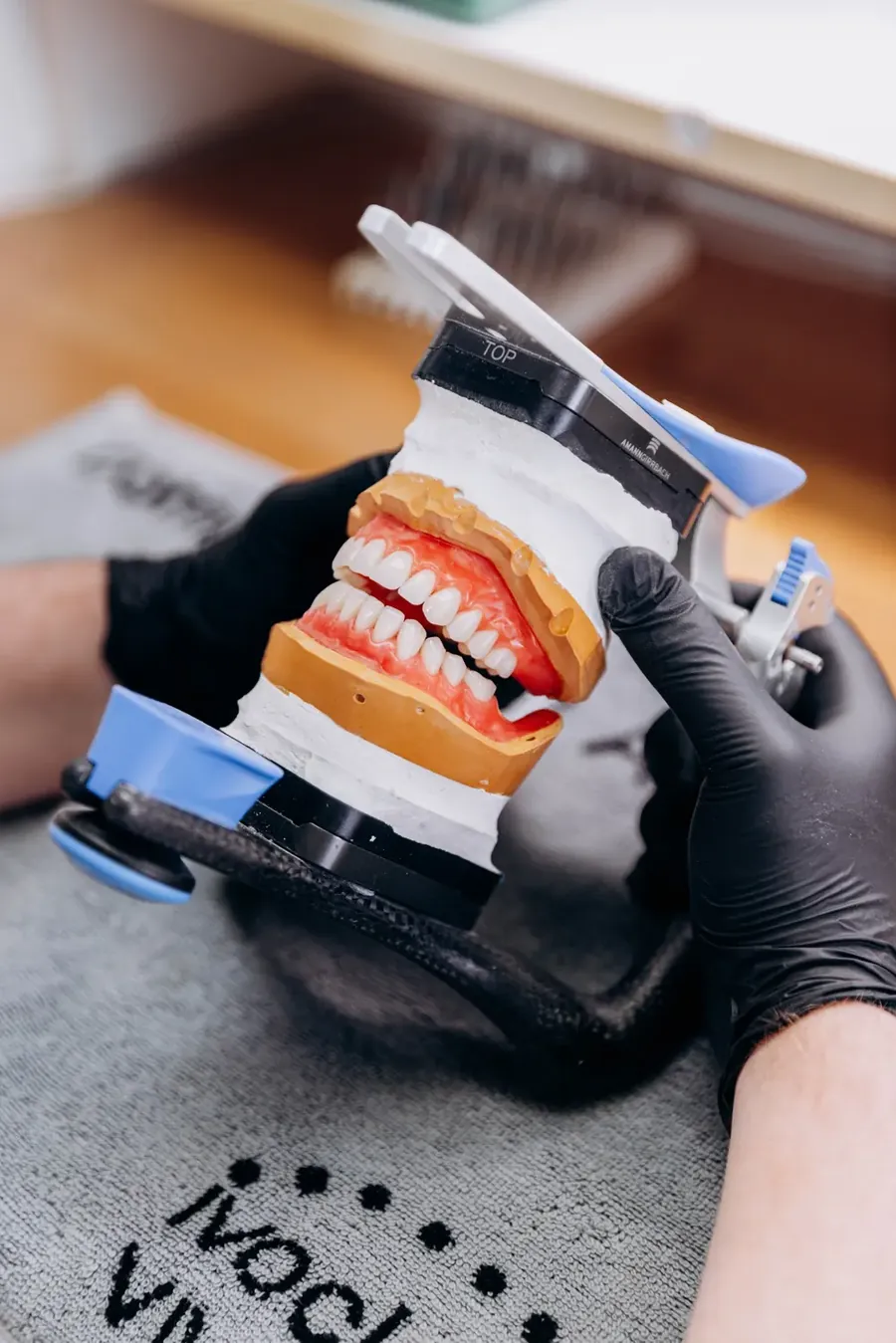
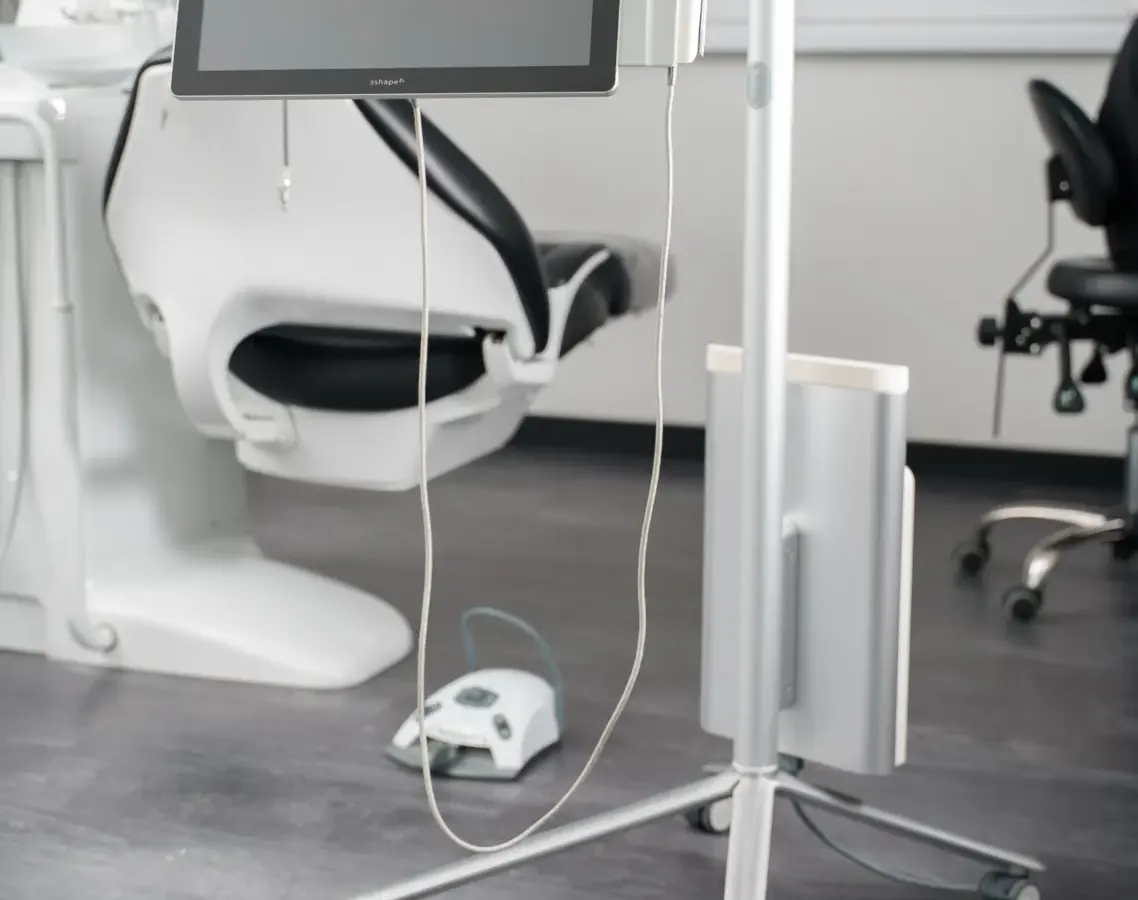
We use intraoral scanners (Sirona Primescan, 3Shape TRIOS), low-radiation CT scanners (J. Morita 3D Accuitomo 170) and digital modelling. The patient sees the treatment plan (stages of tooth movement, timelines, expected outcome) before treatment begins. This is particularly important for micro-implants, as their placement requires precise positioning for skeletal support.
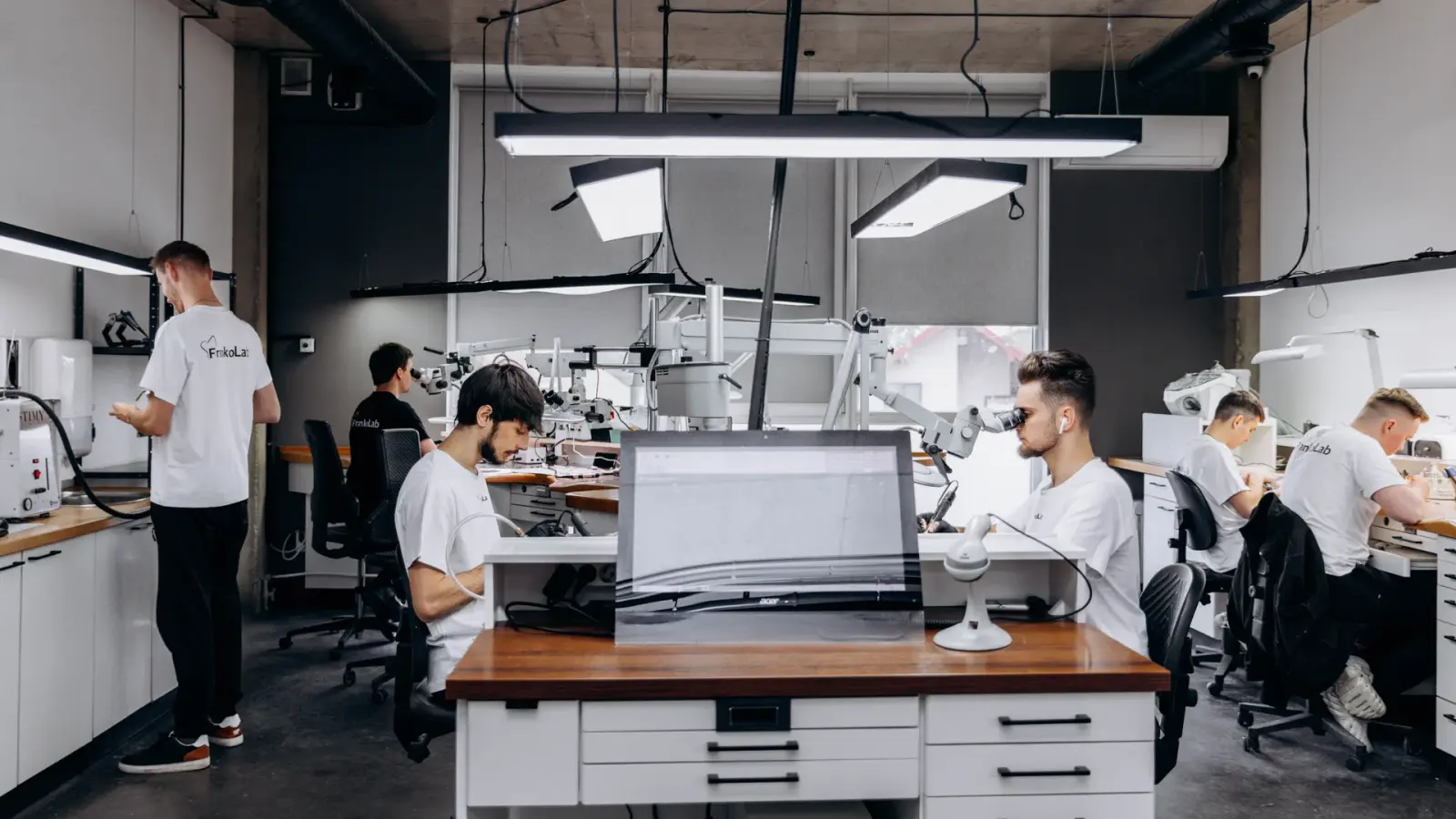
Everything (including templates) is manufactured on-site using CAD/CAM technology. This ensures maximum precision, speed and quality control without the need to involve external laboratories. The dentist and technician work as a single team. The FrankoLab laboratory separately produces surgical guides specifically for the placement of micro-implants — this enables us to plan and carry out guided placement with high precision.
Orthodontists work alongside surgeons, prosthodontists and dental technicians. This is crucial for complex cases (preparation for implantation/prosthetics, TMJ problems, relapses), where micro-implants are often used for absolute support, distalisation, intrusion, etc. Following orthodontic treatment at our dental practice, patients can proceed directly to the next stages of treatment without having to change clinics.
Micro-implants form part of a wide range of treatments (in-house aligners, various braces systems, functional appliances) and are a tool for the effective treatment of complex malocclusions, offering better control and often shorter treatment times compared to traditional methods.
We use certified micro-screws made from titanium alloys. They are safe, hypoallergenic and clinically proven.
Pain-free fitting, minimal number of appointments, flexible payment options/instalments, package deals with no hidden charges, online consultation. The entire dental service (including transfers) is designed with patient convenience in mind.
Book a consultation and one of our managers will contact you shortly
Book a consultation and one of our managers will contact you shortly
Would you like a remote consultation? Online consultation with a dentist
Share your experience of your treatment — your review will appear on the website once it has been verified by an administrator.