Periodontitis is an inflammatory disease of the tissues surrounding and supporting the teeth. Unlike gingivitis, which affects only the gums, periodontitis spreads deeper, affecting the periodontal ligament and bone tissue. Ignoring the problem can lead to serious consequences: loose teeth, gaps between teeth, exposed tooth necks, persistent bad breath and, ultimately, tooth loss. High-quality, effective treatment for periodontitis is provided by the specialists at our FrankoLab Clinic dental practice.
Why does periodontitis occur?
Various factors can trigger the development of periodontitis:
- Poor oral hygiene. Inadequate tooth brushing leads to the build-up of bacterial plaque, which is the main cause of inflammation of the periodontal tissues.
- Dental calculus and soft plaque. Dental plaque that is not removed in good time mineralises and turns into dental calculus, which creates an ideal environment for the proliferation of pathogenic microorganisms.
- Systemic diseases. Diabetes, cardiovascular diseases and hormonal imbalances weaken the body’s defences and contribute to the development of periodontitis.
- Harmful habits. Smoking significantly impairs blood flow to the gums, which complicates the medical treatment of periodontitis and accelerates tissue destruction.
- Genetic predisposition. Some people have a genetic predisposition to developing periodontal disease, which requires particularly thorough oral hygiene and regular check-ups.
Understanding the causes of periodontitis enables the effective prevention of the disease’s progression. Regular visits to a periodontist will help to identify the problem at an early stage and begin treatment in good time.
How can you recognise periodontitis?
There are some key symptoms of periodontitis that should raise a red flag:
- Bleeding gums when brushing teeth or eating hard food.
- Swelling and redness of the gums.
- Persistent bad breath that does not go away after brushing your teeth.
- A sensation of loose teeth.
- Exposure of tooth necks, increasing the visible part of the tooth.
- The formation of periodontal pockets (spaces between the tooth and the gums where bacteria accumulate).
It is important to note that in its early stages, periodontitis can be almost symptom-free, so regular check-ups are essential even in the absence of visible problems. Early detection of the first signs of the condition significantly improves the effectiveness of treatment and helps to maintain gum health. If you notice even one of these symptoms, it is important to see a periodontist for a consultation as soon as possible.
Diagnosis of periodontitis at FrankoLab Clinic
At our clinic, we take a comprehensive approach to the diagnosis of periodontal disease:
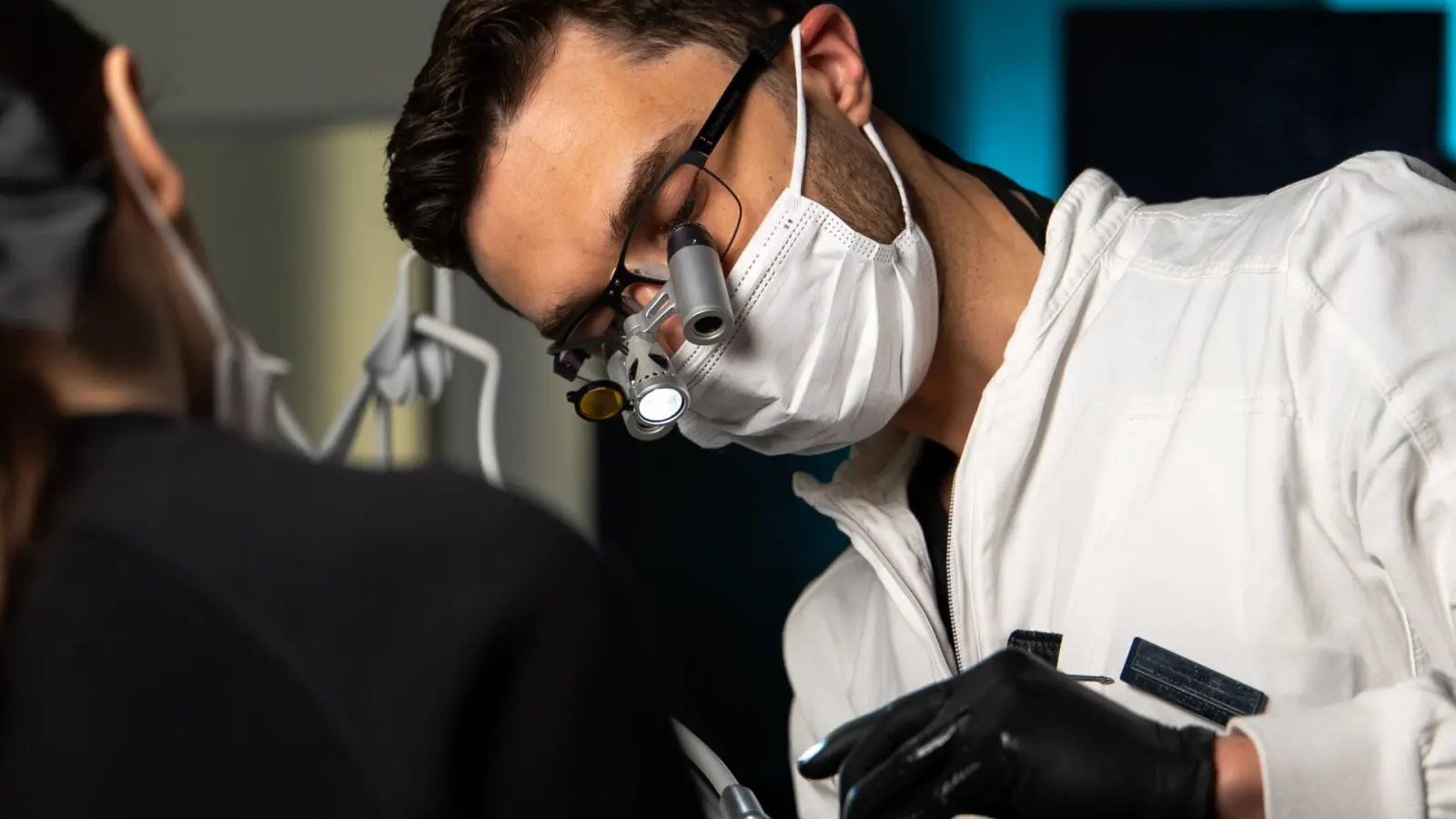
- Initial consultation and detailed examination. Our periodontist will carry out a thorough examination of your mouth and assess the condition of your gums and teeth.
- Determining the periodontal index. Using a special instrument (a periodontal probe), the depth of the gum pockets, the degree of bleeding and the mobility of the teeth are measured.
- X-ray examination. An orthopantomogram or targeted X-rays enable us to assess the condition of the bone tissue and determine the extent of its deterioration.
- Computed tomography. In complex cases, for a more detailed diagnosis, we prescribe a CT scan, which provides a three-dimensional image of all structures in the maxillofacial region.
Accurate diagnosis is a key element of effective periodontitis treatment. Our specialists use a comprehensive approach, which allows us not only to identify the problem, but also to determine its causes and select the optimal treatment strategy.
Effective treatment for periodontitis at FrankoLab Clinic
Our specialists draw up a personalised treatment plan for each patient, which includes the following stages:
- Professional oral hygiene. Thorough removal of tartar and plaque is carried out using ultrasound and the Air Flow system. Ultrasonic cleaning is used for hard plaque, whilst a special Air Flow powder is used for soft plaque.
- Antiseptic treatment of the gums. Anti-inflammatory and antimicrobial agents are used to combat infection.
- Curettage of periodontal pockets. The procedure involves the removal of affected tissue and dental deposits from periodontal pockets. Depending on the extent of the damage, either closed or open curettage may be performed.
- Laser treatment. This is a modern method that ensures effective disinfection and stimulates tissue regeneration without pain or discomfort.
- Physiotherapy and supportive therapy. This is followed by a programme of procedures aimed at improving microcirculation, reducing inflammation and accelerating regenerative processes.
- Surgical treatment. Where indicated, periodontal surgery is performed to correct the gum line, eliminate deep pockets and restore bone tissue.
- Plasmolifting for the gums. This is an innovative technique for natural tissue regeneration through the injection of the patient’s own platelet-rich plasma.
At our clinic, periodontitis is treated using modern techniques, enabling us to achieve excellent results even in complex cases.
A personalised approach to every patient
Successful treatment of periodontitis is only possible with a comprehensive approach. Our specialists develop a personalised treatment plan, taking into account the patient’s individual characteristics, the stage of the disease and the presence of any underlying conditions. The comprehensive approach includes:
- Professional treatment at the clinic.
- Careful selection of home oral care products.
- Lifestyle and dietary recommendations.
- Regular check-ups to maintain the results achieved.
Book a consultation at FrankoLab Clinic today, and we will do everything we can to restore the health of your gums and the beauty of your smile.