
EN
Periodontal consultation and periodontal charting

Why choose FrankoLab:

  1. 01 Accurate gum diagnosis with a periodontal chart
  2. 02 Measurements of pocket depth, mobility and gum recession
  3. 03 A clear treatment plan following the first visit

Consultation with a periodontist and completion of a periodontal chart in Ivano-Frankivsk

Bleeding gums, bad breath, sensitivity or the feeling that your teeth have ‘grown longer’ — people often ignore these symptoms for years or put them down to sensitivity to toothpaste. In fact, these are signs that your gums need attention. Without a timely consultation with a periodontist, inflammation in the gums gradually destroys bone tissue, and teeth begin to become loose without any tooth decay.

A periodontist is a dentist who specialises not in the health of the teeth themselves, but in the tissues surrounding them: the gums, ligaments and bone. At FrankoLab Clinic, a periodontist carries out a comprehensive examination of the periodontium, which includes the mandatory completion of a periodontal chart. Compiling a periodontal chart is not a superficial examination, but a systematic process that allows us to assess the exact condition of the gums and recommend a treatment plan. We record precise data, which enables us to make a diagnosis and monitor progress over time.

What is recorded in the periodontal chart

Measuring the depth of periodontal pockets.

We use a special probe to measure the depth of the space between the tooth and the gums at six points around each tooth. The normal range is up to 3 mm. Measurements of 4–5 mm indicate early-stage changes, whilst 6 mm or more indicate severe periodontitis. This is a key indicator of the condition of the periodontium — it shows how far the inflammatory process has progressed.

Assessment of gum recession.

The distance by which the gums have receded from the anatomical margin of the tooth. Measured in millimetres for each tooth. Recession is an irreversible change, but it can be halted and, in some cases, reversed surgically.

Assessment of the level of clinical attachment.

The combined pocket depth and recession index reflects the overall loss of tissue around the tooth. This is an important indicator for treatment planning and prognosis.

Bleeding.

During probing, we identify which areas are bleeding. A ‘+’ or ‘−’ is recorded for each measurement point. Bleeding is a marker of active inflammation, which helps to assess the effectiveness of treatment over time.

Assessment of plaque and tartar.

We assess hygiene indices and the presence of supragingival and subgingival calculus — the main triggers of inflammation.

Results of the tooth mobility test.

Each tooth is assessed on a standard scale: Grade I — mild, Grade II — noticeable, Grade III — the tooth moves in all directions. Mobility indicates the degree of destruction of the bone supporting the tooth.

Presence of furcation lesions.

For multi-rooted teeth, it is specified whether there is any damage in the area where the roots branch.

Additional clinical observations.

The presence of purulent discharge, abscesses, the condition of the gum line, and bite characteristics that may affect the load on the teeth.

When should you book a consultation with a periodontist?

You are experiencing bleeding, redness, swelling or tenderness of the gums.

This is how inflammation manifests itself in the periodontium. Symptoms may be mild at first, but will gradually worsen. Without treatment, gingivitis often progresses to periodontitis and leads to damage to the tissues that hold the tooth in place.

I have bad breath.

A persistent odour that does not disappear after oral hygiene is often associated with bacterial plaque in periodontal pockets. A periodontist will identify the cause and select a treatment aimed at eliminating the source of the infection, rather than just the symptoms.

One or more teeth are loose.

Even slight looseness can sometimes indicate a loss of bone support. This is one of the later symptoms of periodontitis, which requires prompt diagnosis. The sooner treatment begins, the greater the chances of stabilising the condition and saving the tooth.

The roots of my teeth are exposed.

Your teeth may appear longer, and you may experience sensitivity to cold, hot or acidic foods and drinks. This is a sign of gum recession and loss of protective tissue. Our specialist will identify the cause and suggest ways to halt the process and restore your comfort.

Are you concerned about pus-like discharge or pain in your gums?

Such symptoms may indicate an exacerbation of periodontitis or the formation of deep periodontal pockets. The condition requires urgent treatment, as there is a risk that the infection will spread to neighbouring tissues and bone.

Gaps or pockets have appeared between the teeth and gums.

This often indicates the destruction of the tissues supporting the tooth and the formation of periodontal pockets. Bacteria and plaque accumulate in these pockets, fuelling inflammation.

Prices for periodontal examinations

The cost of a periodontist’s consultation includes an examination, the completion of a periodontal chart and the drawing up of a treatment plan. The final price depends on the scope of the examination and the need for additional diagnostics. You will find a detailed price list below (the cost of compiling the periodontal chart is included in the consultation fee).

The dentist will quote the final cost following an examination and diagnosis. Payment in instalments is available. Full price list for the clinic

What happens during a consultation with a periodontist

01

Taking a medical history and noting complaints

During a consultation with a periodontist at FrankoLab Clinic in Ivano-Frankivsk, our specialist will find out what symptoms are troubling you and for how long, whether you have any systemic conditions (diabetes, cardiovascular or hormonal disorders), what medication you are taking, and what your oral hygiene routine and habits are (such as smoking). This information has a significant impact on the diagnosis and the choice of treatment plan.

02

Visual overview

The dentist will assess the condition of the gums, checking for inflammation, bleeding, recession, plaque and tartar — even before probing. This provides a general overview of the condition of the periodontium and identifies areas requiring particular attention.

03

Completing the periodontal chart

This is a key part of the consultation. Using a periodontal probe, the dentist measures pocket depth, recession and attachment level at six points around each tooth. At the same time, they note any bleeding, tooth mobility and the presence of tartar. All the information is recorded in the patient’s chart — this takes 20–30 minutes.

04

Analysis of X-rays

If X-rays (panoramic or targeted) are available, the dentist will analyse the condition of the bone tissue between the teeth. If no X-rays are available, and if there is an urgent need, we will refer you for a diagnostic examination, which can be carried out at our clinic.

05

Diagnosis and treatment plan

Based on the information gathered, the dentist makes a diagnosis (healthy periodontium, gingivitis or periodontitis at a specific stage), explains what is happening and why, and proposes a treatment plan — including a list of procedures, the sequence of treatment and an estimated cost.

06

Recommendations and follow-up care

After explaining the diagnosis, the dentist provides personalised recommendations regarding oral hygiene at home, professional treatment and a schedule of follow-up appointments. If necessary, a start date for treatment is agreed and alternative options are discussed.

What is a periodontal chart?

A periodontal chart (or periodontal record) is a detailed diagram of the condition of the tissues surrounding each tooth, recorded as numerical values. In effect, it is a ‘passport’ for your periodontium: where there is inflammation, how deep it is, which teeth are at risk, and how the situation changes over time. Unlike a standard examination, where the dentist looks at the overall picture, a periodontal chart records specific information for each tooth individually — at six points.

This ensures that no problem areas are overlooked, even if the gums appear normal on the surface. The chart is updated at every follow-up appointment — this allows us to see whether there has been progress following treatment, whether the condition has stabilised, or whether the treatment plan needs adjusting.

Who is a periodontal chart recommended for?

Filling in a periodontal chart is not only necessary for those who merely suspect they have gum problems but do not have a clear diagnosis. It is a useful diagnostic tool in many situations, for example:

  • If you have been diagnosed with gingivitis or periodontitis — to accurately determine the stage and choose a treatment plan.
  • Preparations for implant placement or prosthetic treatment are underway — the condition of the bone and gums directly affects the prognosis for implants and the long-term success of prosthetic treatment.
  • If you are planning orthodontic treatment, braces and aligners cannot be fitted whilst you have active gum inflammation.
  • Periodontitis treatment is underway — creating a treatment plan allows us to monitor progress and adjust the plan as necessary.
  • Systemic conditions — such as diabetes, cardiovascular disease and hormonal imbalances — increase the risk of periodontitis.
  • A tendency to smoke — tobacco masks the symptoms of inflammation, so it is possible that the actual condition of your gums is much worse than you realise.
  • Pregnancy — hormonal changes increase the gums’ susceptibility to inflammation.
  • If it has been a long time (over a year) since you last saw a periodontist, or if you have never had such a consultation at all, a preventive screening can help identify a problem before symptoms appear.

What you can expect after a consultation with a periodontist

01

A completed periodontal chart.

Numerical data for each tooth, recorded in a standard format — the basis for comparison during follow-up appointments.

02

An accurate diagnosis.

The dentist will determine the stage of the condition: gingivitis, or periodontitis stages I, II, III or IV — and explain what this means in practical terms.

03

Step-by-step treatment plan.

A clear step-by-step guide to the procedures: where to start, how many appointments are needed, and what will happen at each stage.

04

Recommendations for oral hygiene at home.

A selection of cleaning products and techniques tailored to your specific needs: toothbrushes, interdental brushes, water flossers, mouthwashes and more.

05

Answers to your questions.

The dentist will explain whether the process can be halted, which teeth are at risk, how long the treatment will take, and what will happen if no action is taken.

Our advantages

Completion of a full periodontal assessment during the very first visit

Not just ‘let’s have a look and see’, but a systematic diagnosis with numerical data for each tooth. This is exactly what an examination in line with international standards looks like.

Expert periodontist

A dentist with specialist training and practical experience in treating gingivitis and periodontitis, and in preparing the periodontium for dental implants or orthodontic treatment.

Modern treatment protocols

We use the latest approaches: from ultrasonic pocket cleaning to maintenance periodontal therapy. We treat the cause, not just the symptoms.

Storing the chart in the clinic’s archive

Your periodontal records are stored in our database. At your next appointment, we can track your progress and immediately see whether there has been any improvement.

Coordination with other specialists

If a patient requires dental implants, orthodontic treatment or surgery, our periodontist works as part of a team with the clinic’s other doctors to achieve a comprehensive result.

Honesty in our predictions

If a tooth cannot be saved, we’ll tell you straight away. If there’s a chance of saving it, we’ll explain what needs to be done and how much it will cost.

Doctors providing treatment

Patient reviews

4,9 Google rating All reviews on Google

Diana Kruk

08.07.2026

The clinic and service are of the highest standard – keep up the good work!

Ksenia Savenko

23.06.2026

I am very grateful to the whole FrankoLab team for the experience I’ve had with you. You are incredible! I wish you continued growth and prosperity, because the smiles you create are not only beautiful but also genuine, as seen on the faces of your grateful clients.

FrankoLab Dental Laboratory

Are your gums bleeding? Save your teeth – book a consultation with a periodontist in Ivano-Frankivsk.

Frequently asked questions about periodontal charts and gum health

Probing is not a painful procedure, but it is a specific one. Most patients describe the sensation as mild pressure or discomfort, particularly in areas with inflammation or deep pockets. If your gums are healthy, you will feel almost nothing. If there is inflammation, sensitivity is higher, but the procedure remains tolerable. In cases of severe sensitivity, local anaesthesia can be used — please tell your dentist, and we will find the most comfortable option for you.
Completing a full periodontal assessment for all teeth takes approximately 20–30 minutes. Including the medical history, examination, analysis of X-rays and discussion of the treatment plan, the consultation usually lasts 45–60 minutes. If it is the patient’s first visit or the case is complex, it may sometimes take a little longer.
If you have healthy gums, a once-a-year check-up is sufficient. If you are undergoing gum treatment, the chart is completed at the start of treatment and at each follow-up appointment, usually every 3–6 months. This allows us to monitor progress: whether the pocket depth has decreased, whether bleeding has stopped, and whether the periodontium is responding to treatment as expected.
A general dentist assesses the condition of the teeth — tooth decay, fillings and restorations. A periodontist focuses on the tissues surrounding the teeth: the gums, ligaments and bone. They measure pocket depth, assess recession, mobility and the level of bone support. It is on the basis of this information that they make a diagnosis and draw up a treatment plan. A routine check-up with a general dentist is no substitute for a periodontal examination, especially if there are complaints about the gums.
Technically, it is possible to carry out certain procedures. For example, performing a scaling or prescribing a mouthwash. However, without a periodontal chart, the dentist cannot see the full picture: exactly where the pockets are deepest, which teeth are most at risk, or whether there has been any progress following treatment. It’s like treating a patient without test results: you might guess correctly, but the risk of making a mistake is significantly higher. The chart serves as a baseline and is the primary tool for monitoring the effectiveness of treatment.
A periodontal pocket is the space between the tooth and the gums that forms when the gums become inflamed and recede from the tooth, and the bone tissue breaks down. In a healthy state, this space does not exceed 2–3 mm. A depth of 4 mm is already a cause for concern. A depth of 5–6 mm indicates moderate periodontitis, whilst 7 mm or more indicates a severe stage, where the tooth is at serious risk. This is precisely why regular pocket measurements are the only way to halt the process in time.
Brush your teeth before your appointment — just your usual oral hygiene routine; there’s nothing special you need to do. Please bring any previous X-rays with you, if you have them (particularly panoramic X-rays or targeted X-rays of the back teeth). If you do not have any X-rays, we can carry out a diagnostic examination at our clinic. It is also helpful to recall when your symptoms began, whether you are taking any medication, and whether you have any chronic conditions — this information will help the dentist make an accurate diagnosis.
Your periodontal chart is stored in the clinic’s database and forms part of your medical record. Following your consultation, you will receive a copy of it (in printed or electronic form). The chart contains all numerical readings for each tooth, an indication of problem areas and the dentist’s conclusion. You can use it for comparison during subsequent visits or for consultation at another clinic.
Yes, the examination results are yours. You can obtain a copy of your periodontal chart, the dentist’s report and X-rays at any time. If you wish to continue your treatment at another clinic or seek a second opinion, we will provide all the necessary documents. There are no restrictions on this.

Book a consultation

Book a consultation and one of our managers will contact you shortly

+380 50 011 20 00

FrankoLab Clinic dental surgery

A healthy smile starts with the right decision

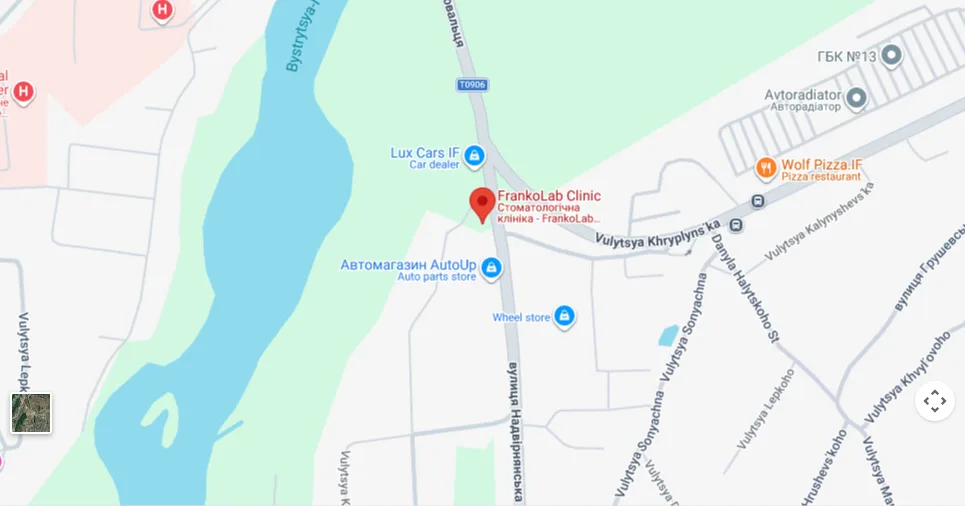
  • 77460, Ivano-Frankivsk, Cherniiv village, 2B Nadvirnianska Street
  • Mon–Sat 9.30 am–7.00 pm, Sun 10.00 am–7.00 pm
  • +380 50 011 20 00
Book a consultation
Map: 77460, Ivano-Frankivsk, village of Cherniiv, 2B Nadvirnianska Street