EN
Stabilisation splint

Why choose FrankoLab:

  1. 01 A precise treatment plan immediately following the consultation
  2. 02 We manufacture using digital ‘impressions’ of the jaw
  3. 03 Results visible after just the first few weeks of wear

Splint therapy in Ivano-Frankivsk

What is splint therapy in dentistry?

Splint therapy is a method of orthopaedic treatment in gnathology, which involves wearing a custom-made removable device (a stabilising splint) to normalise the position of the lower jaw and correct temporomandibular joint dysfunction. At FrankoLab Clinic, it is widely used in orthodontics and prior to comprehensive dental rehabilitation: it enables the jaws to be stabilised, reduces the load on the joint structures, eliminates muscle spasms and corrects occlusion without the need for surgery.

A stabilising splint is a custom-made occlusal splint (mouthguard) that evenly distributes chewing pressure, relaxes the masticatory muscles, allows the joint to ‘rest’ in its physiological position and stabilises the lower jaw. The design is removable — it is worn at night or during the day, as recommended by the gnathologist. The splint system does not alter the shape of the teeth and is not a permanent prosthesis.

Key benefits of splint therapy

A personalised approach

We custom-make each splint to suit the anatomy of each individual patient — based on digital scans and functional jaw movements, axiography results, and often an MRI of the temporomandibular joint. This bespoke design ensures the splint is comfortable to wear, and it can be removed for special occasions.
Quick results

Most patients report a significant reduction in pain and clicking in the jaw joints after just 2–4 weeks of regular use. It can be combined with other treatment methods and is often indispensable when these prove insufficiently effective.

Treatment of temporomandibular joint disorders without surgery or pain

A conservative approach — no incisions or anaesthesia. Splints are comfortable to wear and have virtually no effect on speech (particularly diction). Splint therapy in orthodontics and the treatment of temporomandibular joint disorders is a non-invasive and reversible method (unlike surgery or permanent fixtures).

Protecting teeth from wear and damage

A splint prevents enamel abrasion (wear), cracks and fractures in the teeth caused by bruxism; it protects existing fillings, crowns and implants, and absorbs excessive pressure during teeth grinding or clenching.

Muscle relaxation and restoration of muscle tone

It relieves hypertonicity (overload) of the masticatory muscles, spasms and muscle weakness; stabilises the position of the lower jaw; improves joint mobility; and reduces clicking, crunching and restricted mouth opening.

Improving jaw function and bite alignment

Splint therapy helps to gradually stabilise the occlusion (bite) and align the jaw’s movement. It is often used prior to orthodontic treatment, prosthetics or comprehensive dental restoration to achieve a better result. It helps to assess the actual position of the jaw without the influence of a malocclusion.

Reducing pain and discomfort

A bite splint reduces pain in the jaw, chewing muscles and temples, as well as headaches and pain in the ears and neck associated with TMJ disorders. The effect is often felt within the first few weeks: overstrained muscles relax, reducing joint inflammation.

Improving quality of life and sleep

Splint therapy reduces morning headaches, facial muscle fatigue and discomfort whilst chewing or speaking, and improves sleep in cases of nocturnal bruxism by minimising interruptions caused by teeth grinding. Many patients also report a general sense of relief, increased confidence and greater comfort in their daily lives.

Indications for splint therapy

Problems with the temporomandibular joint (TMJ / TMD)

Pain in the jaw, temples, ears or neck (particularly when chewing, opening the mouth or in the morning), clicking, crunching or ‘jamming’ of the jaw, limited mouth opening or a feeling that the jaw ‘won’t cooperate’, inflammation or discomfort in the joint without serious structural damage.

Bruxism and parafunctions (unnecessary movements) of the masticatory muscles

If you grind your teeth at night, daytime grinding or severe clenching of the teeth (particularly in cases of moderate to severe enamel wear), splints protect the teeth, fillings, crowns and implants from further damage.

Malocclusion or unstable bite

Splint therapy is recommended prior to orthodontic treatment, prosthetics or comprehensive dental restoration — to stabilise the position of the lower jaw and ‘reprogramme’ the muscles. It is also recommended following jaw injuries or when the optimal position of the joints needs to be determined prior to final treatment.

Muscle tension and associated symptoms

Constant fatigue or spasms of the masticatory muscles, muscle-related headaches (tension headaches), particularly in the morning, pain in the neck, shoulders or face due to muscle strain, and myofascial pain syndrome of the masticatory muscles.

Other cases

Indications for a splint system may include chronic stress, which manifests as jaw clenching (to prevent severe enamel erosion), and abnormal movement of the lower jaw or asymmetry when opening the mouth.

Prices for splint therapy at FrankoLab Clinic

The total cost of splint therapy in Ivano-Frankivsk at FrankoLab Dental Clinic comprises a consultation with an orthodontist, diagnostics (CT scan, digital cephalometry, etc.), the custom digital fabrication of the splint in our own laboratory using state-of-the-art CAD/CAM technologies, and any subsequent adjustments. The exact cost depends on the complexity of the case and the type of splint. You can find out the final price via an online consultation or following an examination by a specialist.

The dentist will quote the final cost following an examination and diagnosis. Payment in instalments is available. Full price list for the clinic

The main stages of splint therapy

01

Consultation with an oral surgeon and diagnosis

Our expert takes a medical history, carries out functional tests of the temporomandibular joint, and assesses the bite and movements of the lower jaw. None of this is done by eye. Right here at the clinic, you can have a CT scan using the state-of-the-art J. Morita 3D Accuitomo 170 scanner and have the movements of the lower jaw and TMJ condyles recorded on the Modjaw axiograph.

02

Taking impressions and bite registration

We do not use traditional methods of taking impressions; we rely solely on precise digital results. We record the central position of the joint to create the perfect stabilising splint using state-of-the-art intraoral scanners – the Dentsply Sirona Primescan and 3Shape TRIOS 3 + MOVE – combined with computer modelling.

03

Fitting of a custom-made splint

Using the CAD/CAM system, the dental technician fabricates the restoration, taking into account all the patient’s anatomical features as recorded by the orthodontist. Turnaround time: 3–4 days.

04

Fitting and adjustment of a splint

The dentist fits the restoration, checks the occlusal contacts and makes minor adjustments to ensure a comfortable fit (if necessary, though thanks to digital diagnostics and in-house fabrication, this is rarely required).

05

Wearing and monitoring the results

The patient wears the splint during the day, at night or round the clock — as prescribed. Follow-up appointments every 3–4 weeks to assess progress. The average duration of splint therapy for the treatment of TMJ disorders and other conditions is 3–6 months. The duration depends on the complexity of the clinical situation, how regularly the splint is worn, and the body’s response.

06

Completion of treatment or progression to the next stage

Once the patient’s condition has stabilised, the dentist assesses the situation and proposes a plan for the next steps — orthodontic treatment, prosthetics or the completion of treatment.

Types of stabilising splints by purpose

Depending on the clinical objective and design, there are several main types of splints.

Classic (flat) stabilising splint

It relaxes the masticatory muscles, reduces pain in the joints and muscles, protects teeth from wear caused by bruxism, stabilises the bite prior to orthodontic treatment, prosthetics or implants, and helps break the habit of clenching the jaws. It fully covers all teeth and has a completely even (flat) occlusal surface. We most often make it for the upper jaw, but this is the most versatile option.

Tanner splint

It provides slightly better control over jaw movement than the classic type; it is more suitable when a patient has difficulty adapting to a completely flat surface, and is also used during the stabilisation phase prior to major dental restoration. It has small indentations that correspond to the cusps of the opposing teeth, but it remains a stabilising (rather than repositioning) appliance.

Stabilisation splint with canine/anterior guidance

It protects against lateral grinding and excessive clenching, provides additional relief for the back teeth during sideways jaw movements, and ensures better control of parafunctional (abnormal) movements of the masticatory muscles. The splint features special angles for the canines or front teeth, which guide jaw movement.

Soft-hard stabilising splint

Suitable for patients with very severe bruxism (to prevent the splint from cracking). At the same time, it combines comfort and durability. The outer layer is made of hard acrylic, whilst the inner or occlusal layer is made of a soft material.

Mandibular stabilisation splint

Used in cases where the upper jaw is unsuitable (for example, due to dentures or bite issues) or where daytime wear is required (occasionally). It is made for the lower jaw, but the principle is the same — even contact and stabilisation of the temporomandibular joints.

Payment in instalments

We work with leading partner banks and offer transparent instalment plans covering the entire course of treatment at our clinic — with no surcharges or hidden fees. Get treatment now — pay at your convenience. Please check the terms for paying in instalments with the receptionist when booking your appointment.

Our patients’ results

Case Study 4: Comprehensive dental restoration using crowns and veneers

Diagnosis:

Complete loss of dental function due to teeth that could not be saved. The patient required comprehensive rehabilitation of both jaws, restoring both chewing function and aesthetics.

Treatments:

All teeth that could not be saved were extracted. In the first stage, 4 implants were placed in the upper jaw and 6 in the lower jaw. During the next stage of treatment, a further 2 implants were placed in the upper jaw. As a result, the permanent prosthetic restoration will be anchored to six implants in the upper jaw and six implants in the lower jaw, providing a secure foundation for the future prosthesis.

Result:

The patient has successfully completed the surgical stages of treatment and is preparing for the final prosthetic restoration. The chosen rehabilitation approach ensures maximum stability of the restoration, even distribution of the chewing load, long-lasting results and a high level of comfort.

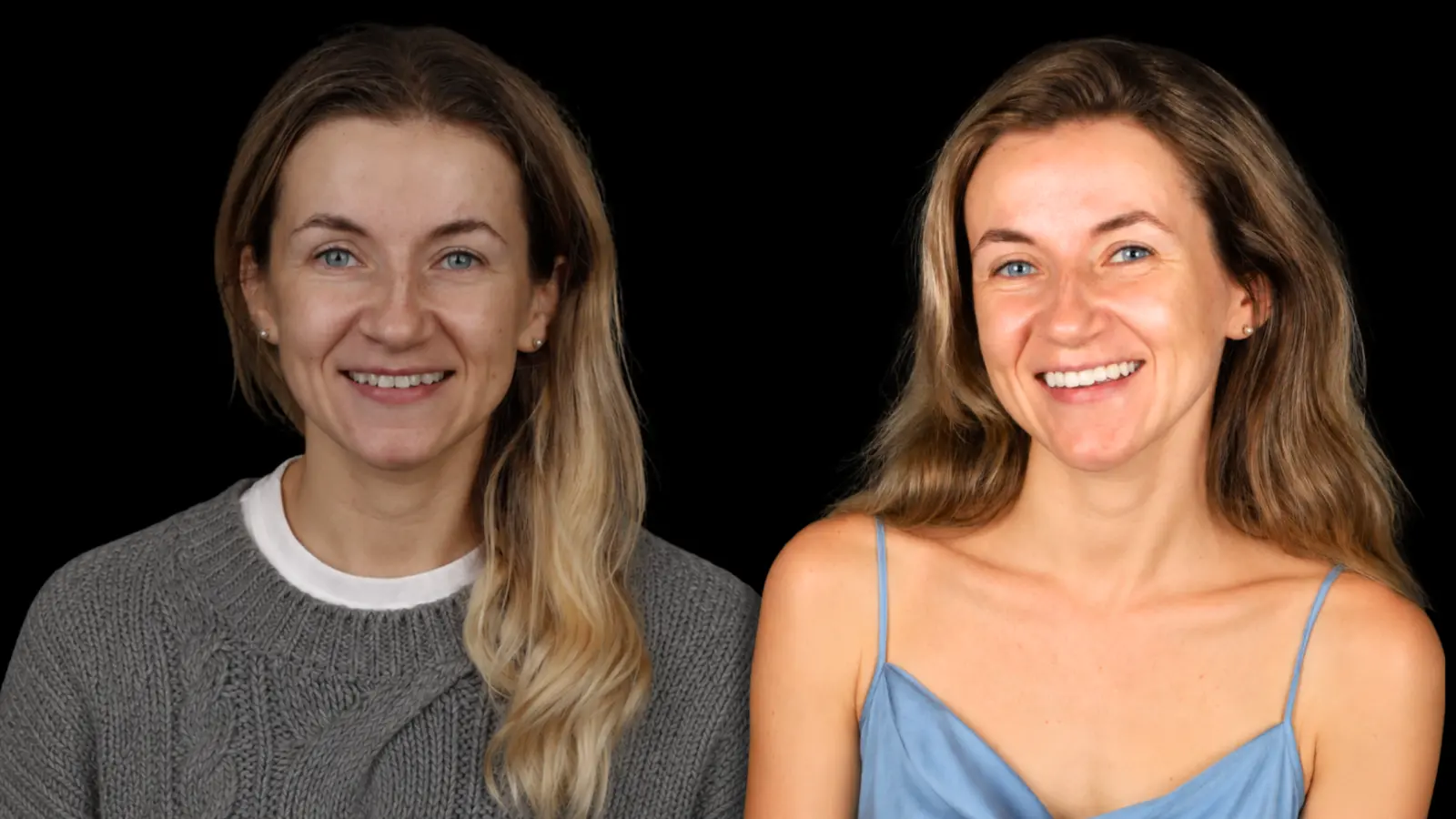
Case Study 3: Composite Restorations

Diagnosis:

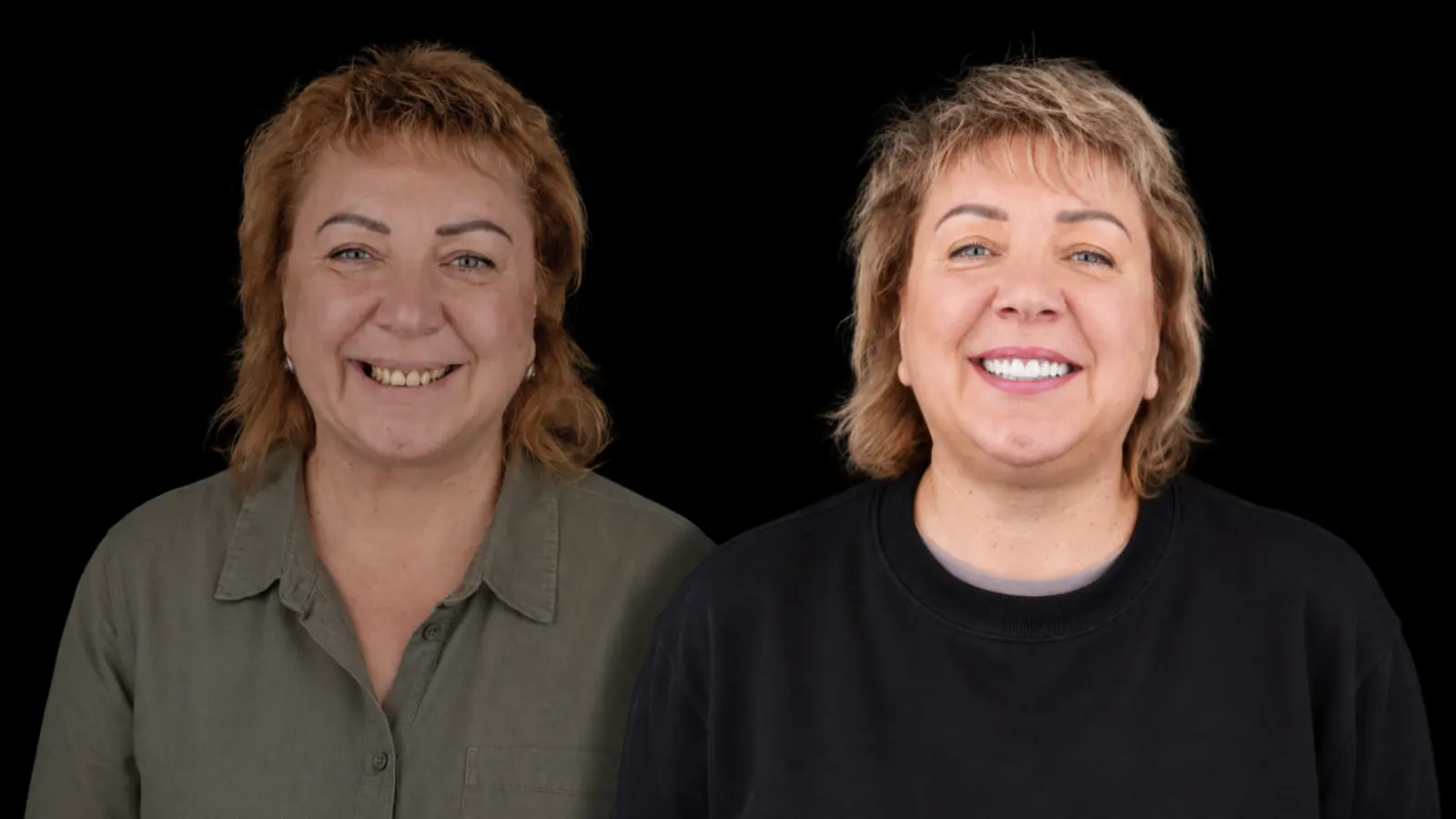
The patient presented with complaints of discolouration of her front teeth, numerous old composite restorations and an unsatisfactory smile. During the clinical examination, discolouration of the teeth was identified, along with restorations that had lost their functionality and aesthetic appearance.

Treatments:

Following digital planning, a decision was made to carry out aesthetic restoration of the upper incisors using refractive veneers.
The restorations
are made entirely from ceramic materials, without any metal framework, which is one of the most aesthetically pleasing techniques in modern dentistry. This method allows for the most accurate reproduction of the natural translucency, colour depth and optical properties of natural enamel, ensuring a flawless result.

Result:

Discolouration has been removed and old, unaesthetic restorations have been replaced. The natural shape, proportions and harmony of the front teeth have been restored. Thanks to refractive veneers, the patient achieved a natural, bright and aesthetically pleasing smile that closely mimics natural teeth, combining durability, functionality and premium aesthetics.

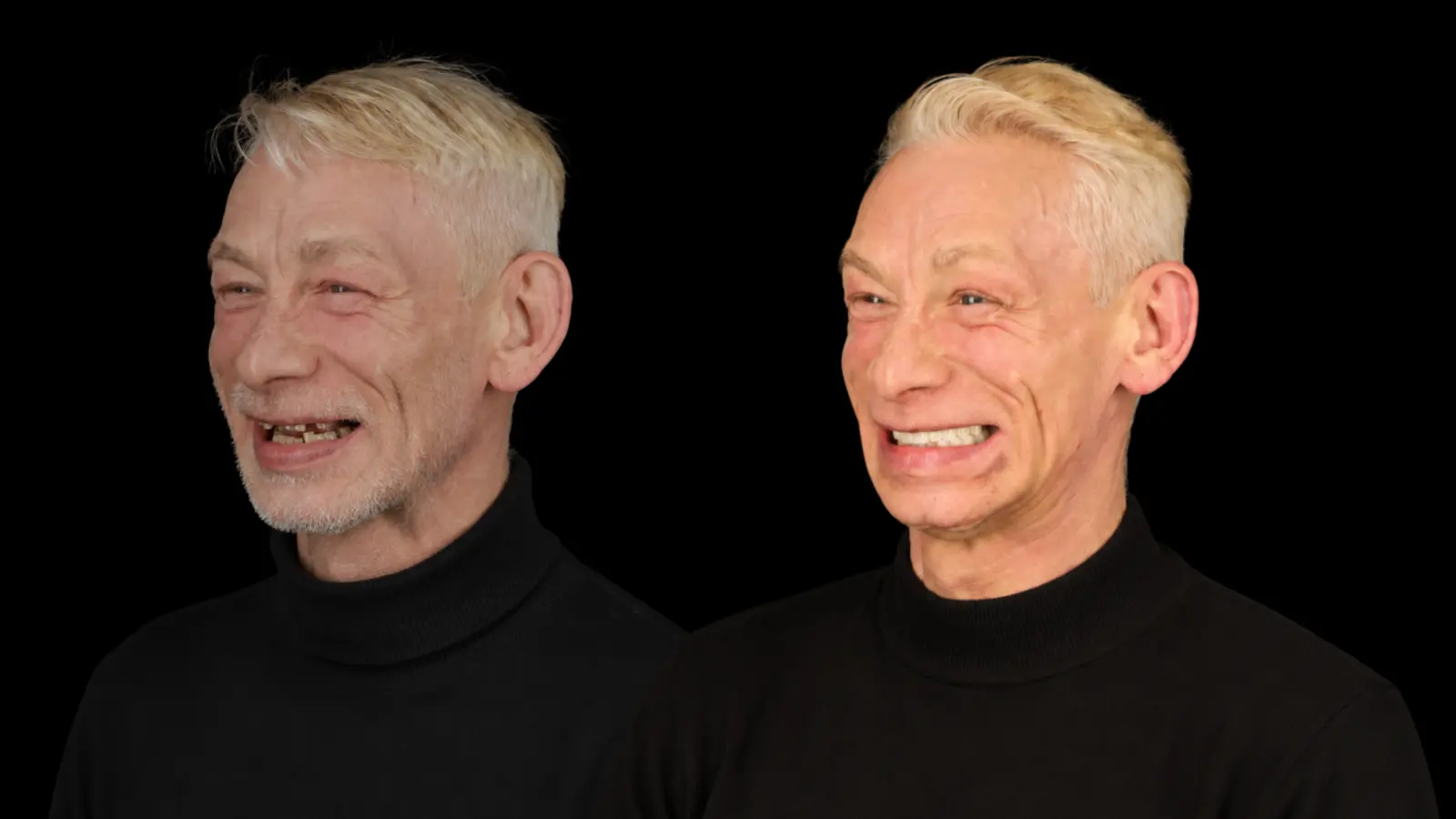
Case 2: Implantology. Prosthetics

Diagnosis:

The patient presented with complaints of discomfort whilst chewing, increased tooth sensitivity and dissatisfaction with the appearance of her smile.

Treatments:

The first stage involved professional hygiene, comprehensive oral rehabilitation, therapeutic and endodontic treatment, the extraction of teeth that could not be restored, and implant placement.

Immediately following the surgical stage, temporary prosthetic restorations were fitted.
Six months
later, a prototype of the future smile was fabricated in the clinic’s own dental laboratory, FrankoLab.

The final stage involved the fitting of 24 fully anatomical zirconia crowns onto the patient’s natural teeth and implants in the upper and lower jaws.

Result:

Full functional and aesthetic rehabilitation has been achieved. Tooth sensitivity has been eliminated, chewing efficiency has been fully restored, and a stable prosthetic structure and a natural, harmonious smile have been created.

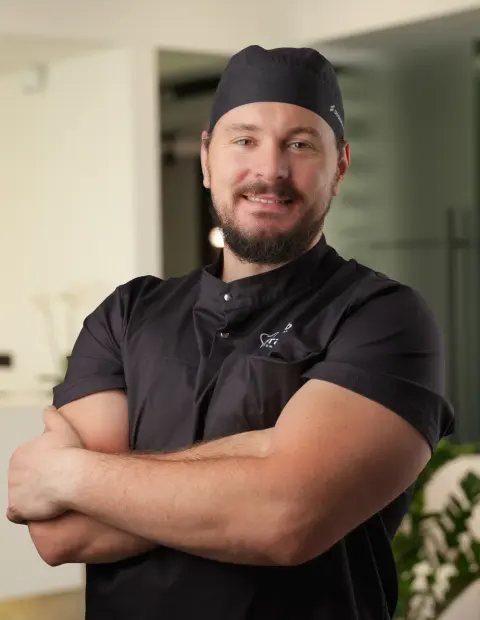
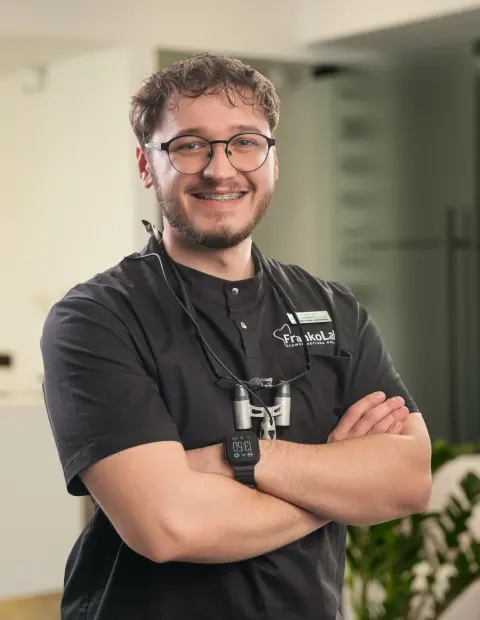
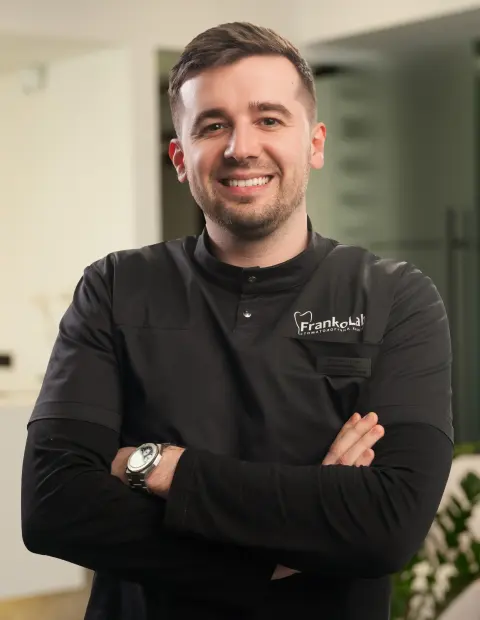
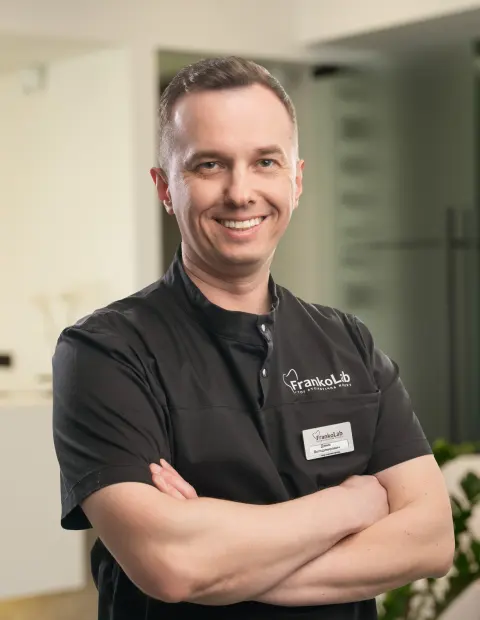
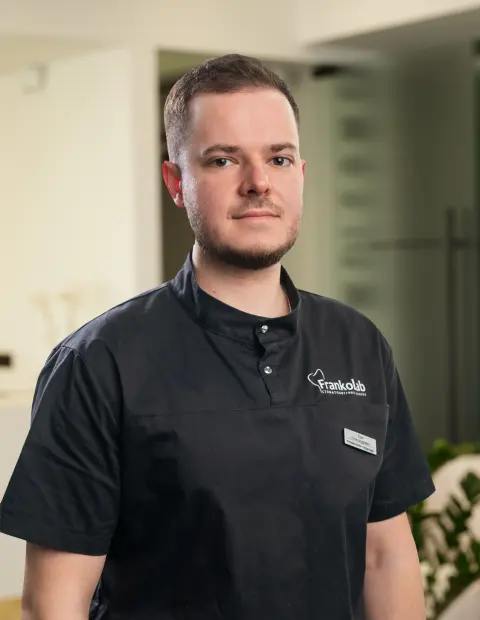
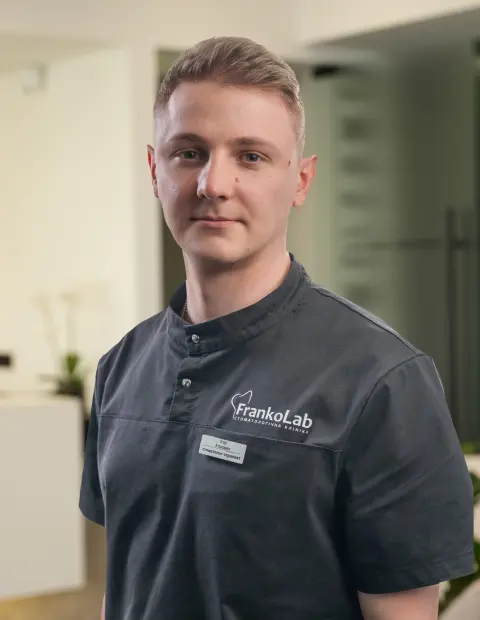
Doctors providing treatment

Patient reviews

4,9 Google rating All reviews on Google

Diana Kruk

08.07.2026

The clinic and service are of the highest standard – keep up the good work!

Ksenia Savenko

23.06.2026

I am very grateful to the whole FrankoLab team for the experience I’ve had with you. You are incredible! I wish you continued growth and prosperity, because the smiles you create are not only beautiful but also genuine, as seen on the faces of your grateful clients.

FrankoLab Dental Laboratory

Do you experience clicking or pain in your jaw? Book a consultation with a gnathologist at FrankoLab Clinic — we’ll identify the cause and select the best course of treatment.

Why do patients choose FrankoLab Clinic for splint therapy?

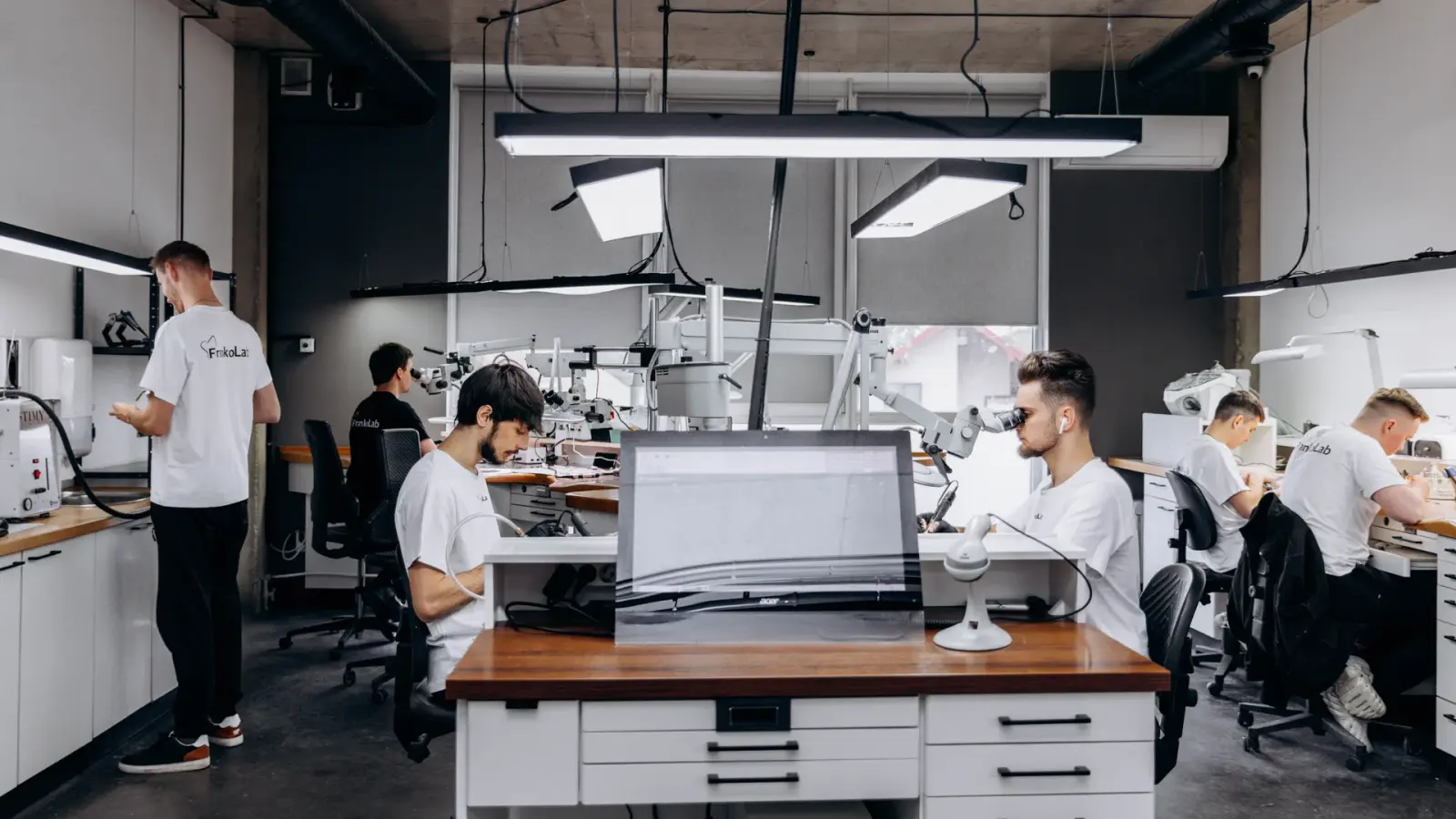
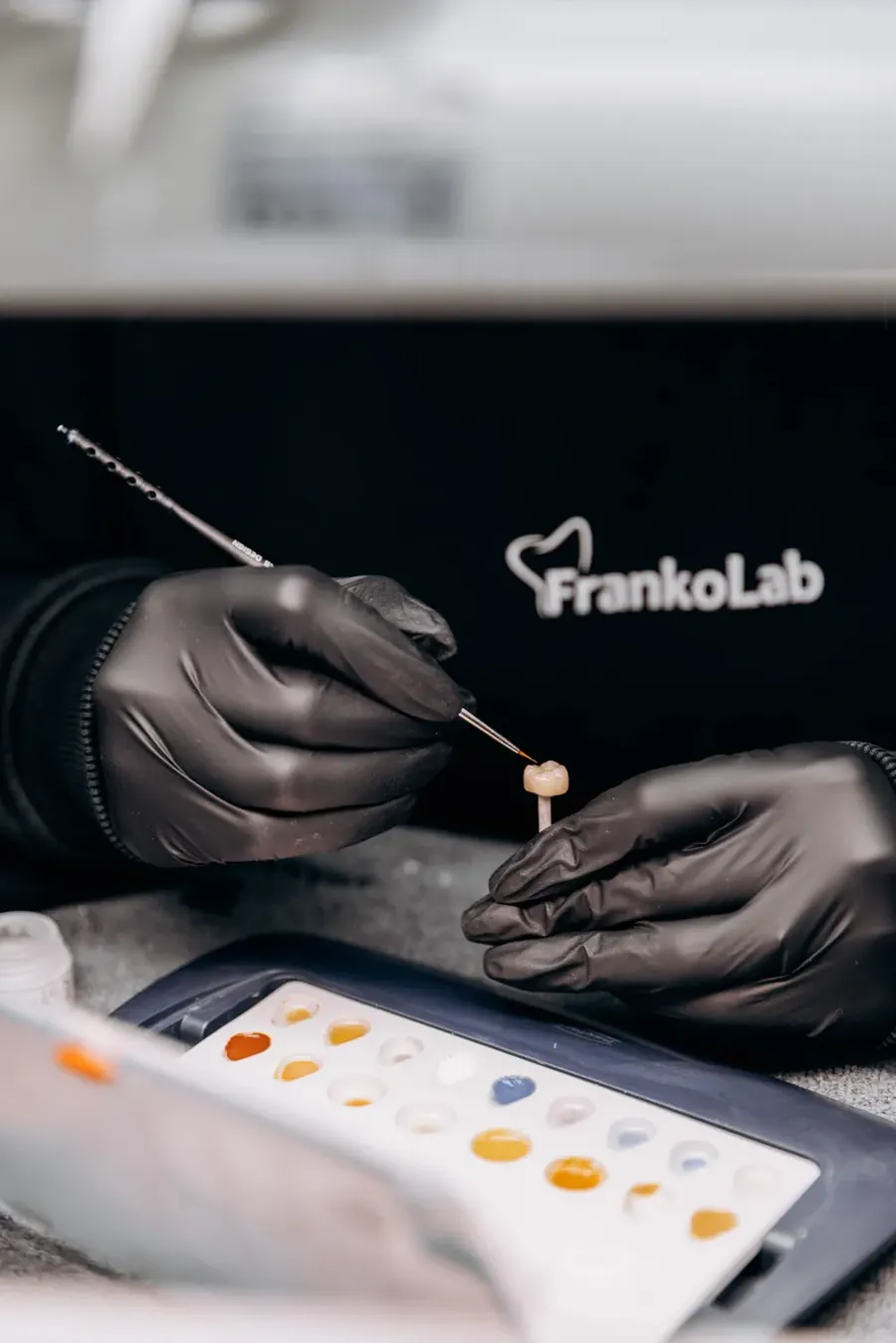
A FrankoLab dental technician works on a crown in the clinic’s in-house laboratory
01

Digital precision and our own dental laboratory

FrankoLab Clinic operates from one of the largest digital dental laboratories in Ukraine. Splints (custom-made mouthguards | splints) are manufactured using CAD/CAM technology from biocompatible materials, with diagnosis and fabrication carried out by a single team. This ensures maximum fit, comfort and effectiveness. Thanks to the integration of the clinic and the laboratory, the number of visits is reduced, the risk of inaccuracies is minimised and the entire process is accelerated.

02

Effective treatment for TMJ disorders and bruxism

Splint therapy is a comfortable and painless method that relieves tension in the masticatory muscles and the temporomandibular joint, eliminates pain and grinding, prevents tooth wear caused by bruxism, and helps stabilise the bite prior to further orthodontic or prosthetic treatment. This is the first stage of a comprehensive gnathological approach, after which our patients report a significant improvement in their well-being.

03

All treatments under one roof

If you require comprehensive treatment (for example, moving on to teeth straightening or prosthetics after wearing a splint), then our dental clinic is exactly what you need. FrankoLab Clinic is a clinic where all specialists work as a single team. We do not pass the responsibility on to third parties – quality and timelines are under our control. Patients receive a comprehensive solution to their problem, all under one roof.

04

A comprehensive and predictable approach

Our patients are people who appreciate that treatment is not dragged out and is not passed between different specialists. After all, we offer a clear treatment plan before treatment begins, digital diagnostics (3D scanning, axialography, CT scans), a team-based approach to care, and a guarantee of quality and long-lasting results.

05

Comfort and attentive service for patients

For patients from abroad and other towns and cities, we offer a free online consultation, a transfer service, assistance with accommodation and the option to plan treatment to require fewer visits. FrankoLab Clinic — modern facilities, high-quality sedation, infection control and attention to detail.

06

Experience and reputation

Our specialists have extensive clinical experience — over 500 successfully treated cases of TMJ dysfunction, bruxism and other conditions — and are constantly improving their skills and implementing new treatment protocols. Over 98 per cent of patients are satisfied with the results and report a significant reduction in symptoms as early as the first month of splint therapy.

Frequently asked questions about stabilising splints and splint therapy

The wearing schedule is determined individually by the orthodontist. Sometimes this involves wearing the appliance round the clock (it may only be removed whilst eating); in other cases, it is worn at night or for a specific number of hours per day. The course of treatment lasts on average 3–6 months, although complex clinical cases may require up to a year. It is important to adhere strictly to the treatment regimen: irregular use significantly reduces the effectiveness of the therapy.
At FrankoLab Clinic, we produce bite splints in two ways: the traditional method (using plaster models of the jaws in the dental laboratory; very rarely) and digital CAD/CAM (using a 3D scan of the jaw, milled on a specialised machine). The digital method ensures a more precise fit and a shorter production time.
During the first few days of wearing the splint, the patient may experience slight discomfort — this is a normal reaction to the change in jaw position. There should be no actual pain. If the discomfort persists for more than a week or worsens, the patient should see their dentist for an adjustment. Most patients get used to the splint within 3–7 days.
After each use, rinse the splint under cold or warm (not hot!) water using a toothbrush without toothpaste or with liquid soap. Store it in the container supplied with the splint. Avoid harsh cleaning products — they damage the material. We recommend soaking the splint once a week in a special solution for disinfecting dentures.
Yes, in many cases — for example, for bruxism or mild TMJ dysfunction — the dentist prescribes night-time wear. For more severe conditions, daytime or round-the-clock use may sometimes be required. We do not recommend changing the wearing schedule yourself — such decisions should be made exclusively by an orthodontist based on the progress of treatment.
A standard mouthguard (for example, a sports mouthguard or a thermoformed one ‘from the chemist’s’) is a standard protective device with no therapeutic purpose. A stabilising splint is a custom-made prosthodontic device that precisely replicates your anatomy. In other words, it is made taking into account the position of the joint heads, which helps to distribute the occlusal load evenly. The therapeutic effect of a splint is incomparably greater than that of a standard mouthguard.
Yes, the splint should be removed before eating. Chewing whilst wearing the splint may displace the occlusal contacts and damage the splint. After eating, you should rinse your mouth and brush your teeth before putting the splint back in.
There are virtually no absolute contraindications to splint therapy. Relative contraindications include acute inflammatory processes in the oral cavity (which must be resolved before treatment begins), a severe allergy to the splint material (in which case we will select a different material), as well as certain psychoneurological conditions that make it difficult to adhere to the wearing regimen. The full picture is assessed by the dentist during the initial consultation. This can be carried out online, but it is preferable to do so in person at the clinic.

Book a consultation

Book a consultation and one of our managers will contact you shortly

+380 50 011 20 00

FrankoLab Clinic dental surgery

A healthy smile starts with the right decision

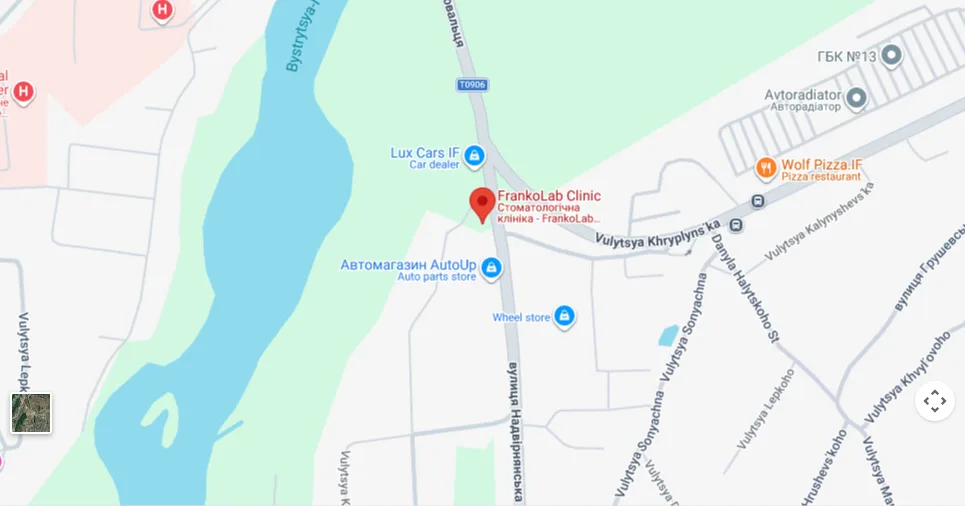
  • 77460, Ivano-Frankivsk, Cherniiv village, 2B Nadvirnianska Street
  • Mon–Sat 9.30 am–7.00 pm, Sun 10.00 am–7.00 pm
  • +380 50 011 20 00
Book a consultation
Map: 77460, Ivano-Frankivsk, village of Cherniiv, 2B Nadvirnianska Street