EN
Implant-supported prosthetics

Why choose FrankoLab:

  1. 01 Full restoration of chewing function
  2. 02 A natural look and aesthetic smile
  3. 03 Fabrication of prostheses in our own laboratory

Dental prosthetics using implants in Ivano-Frankivsk

What is implant-supported denture restoration?

Dental prosthetics using implants is a modern method of restoring the dentition, in which the dental prosthesis (crown, bridge or full denture) is not attached to adjacent teeth, but directly onto a titanium implant embedded in the jawbone. The implant acts as an artificial tooth root, providing a secure foundation for the prosthetic restoration and ensuring long-term treatment results.

Implant-supported prosthetics make it possible to restore either a single missing tooth or several teeth at once (for example, to fully restore the dentition on one or both jaws). Dental prostheses on implants do not put pressure on the gums, do not damage neighbouring teeth and look completely natural. This is precisely why dental treatment using implants is considered the gold standard in smile restoration.

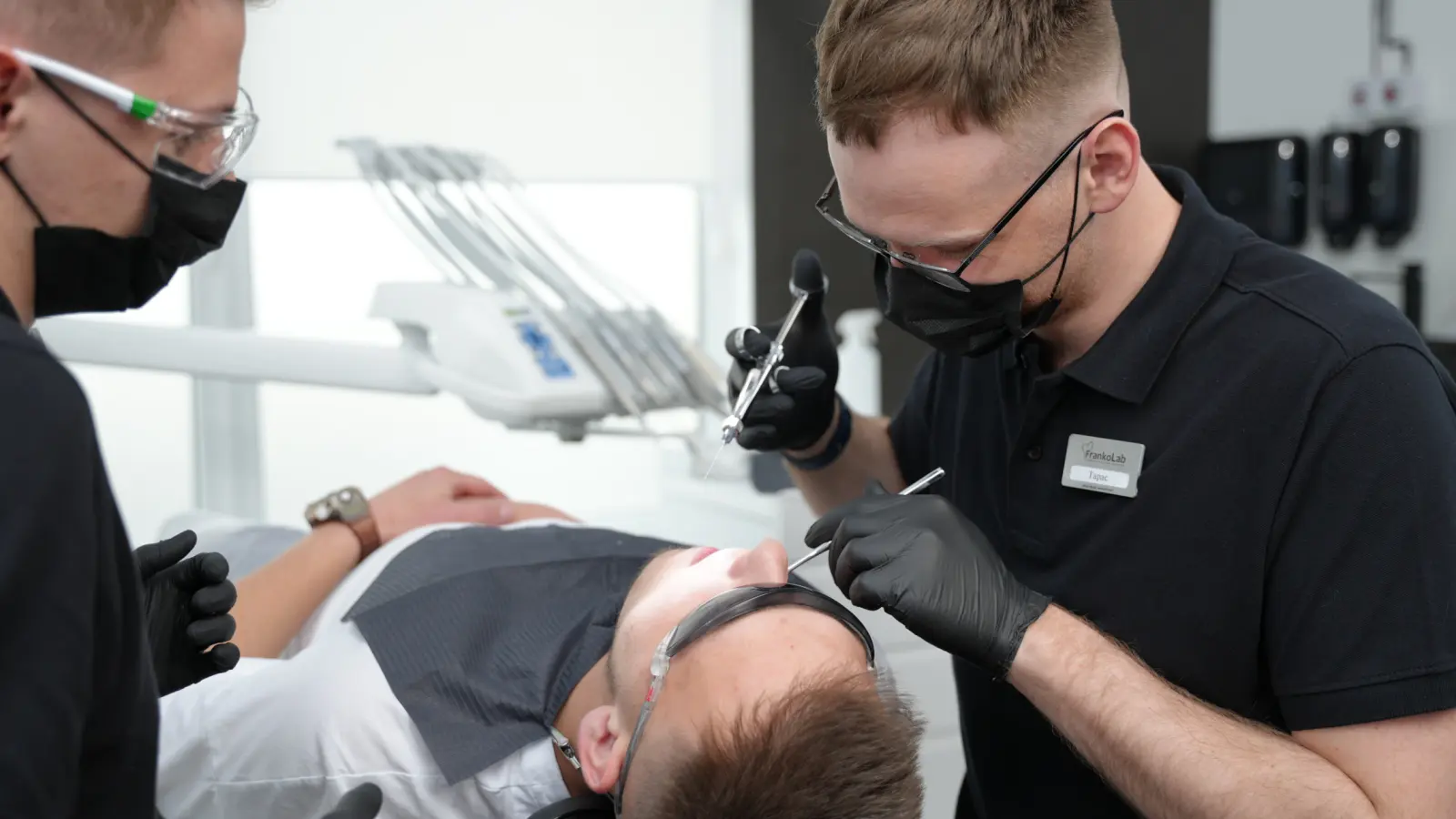
The benefits of implant-supported prosthetics

A natural look

Restorations (crowns and bridges) on implants are indistinguishable from natural teeth: they perfectly replicate their shape, colour and size. No one will realise you have dental work, as we use the very latest materials and technologies to ensure your smile remains impeccably natural.

Restoration of chewing function

An implant transfers the chewing force directly to the bone tissue, just like a natural tooth root, and ensures a natural distribution of the load. This allows you to eat without restrictions, even biting into hard foods.

Preserving the health of the jaws and adjacent teeth

Implant-supported restorations stimulate the bone tissue during chewing, preventing it from resorbing following tooth loss, and do not require the adjacent teeth to be ground down (as is the case when fitting a bridge onto natural teeth). Prosthetic restorations preserve the natural contours of the jaws and facial structure.

Durability

When fitting dental implants, we use titanium structures which we integrate into the bone. Unlike conventional dentures, which need to be replaced every 5–7 years, implant-supported dentures last for decades (with proper care).

Comfort and stability

An implant-supported prosthetic restoration is permanently fixed in place — it does not shift, cause chafing or require any retaining devices. This type of restoration eliminates any day-to-day inconveniences (including problems with speech).

Convenient, hassle-free care

Fixed dental restorations are looked after in exactly the same way as natural teeth — with a toothbrush, dental floss and a water flosser. No special daily hygiene products, fixing gels or complicated procedures are required. Don’t forget to visit your dentist for regular check-ups to monitor your dental health.

Indications for dental prosthetics using implants

Extraction of a single tooth, several consecutive teeth or teeth in different areas of the jaw

The loss of one or more teeth due to trauma, tooth decay or extraction, particularly in cases where there is no support for a traditional bridge or where the dentist considers traditional prosthetics to be ineffective.

Complete edentulism in one or both jaws

When teeth are completely missing from one or both jaws, implant-supported dentures are considered a modern, comfortable alternative to removable dentures, which will eliminate speech impediments and/or chewing difficulties and protect against jawbone atrophy.

Avoiding the need to grind down healthy adjacent teeth

When fitting a traditional bridge, it is necessary to grind down the healthy teeth to which the bridge is attached. Dental prosthetics using implants leave the adjacent teeth healthy and undamaged.

Discomfort caused by removable dentures

We always recommend implant-supported dentures to patients who experience discomfort from removable dentures, or who suffer from speech impediments, chewing difficulties, instability, chafing and/or psychological stress.

Aesthetic requirements for a smile

Tooth loss leads to serious consequences — misalignment of the teeth, malocclusion, premature ageing of the face, and more. For patients who prioritise a smile and facial contours that look as natural as possible, as well as for socially active people, we recommend dental prosthetics on implants.

A commitment to restoring chewing function and a balanced diet

The functionality of the dentition is important for the health of the digestive system. Implant-supported prosthetics are the only option that allows chewing function to be fully restored, as they can cope with hard foods.

Prices for turnkey dental implant restorations

The cost of implant-supported dentures at FrankoLab Clinic in Ivano-Frankivsk depends on several factors: the type and number of prosthetic restorations, the material used, the extent of preparatory procedures (if required) and the complexity of the clinical case. Turnkey dental implant restoration means that the price already includes: a consultation, diagnosis, fabrication of the prosthesis in our in-house dental laboratory, and the fitting of the restoration. The exact cost of the restoration is calculated by the dentist following a consultation and examination of the X-rays.

The dentist will quote the final cost following an examination and diagnosis. Payment in instalments is available. Full price list for the clinic

Payment in instalments

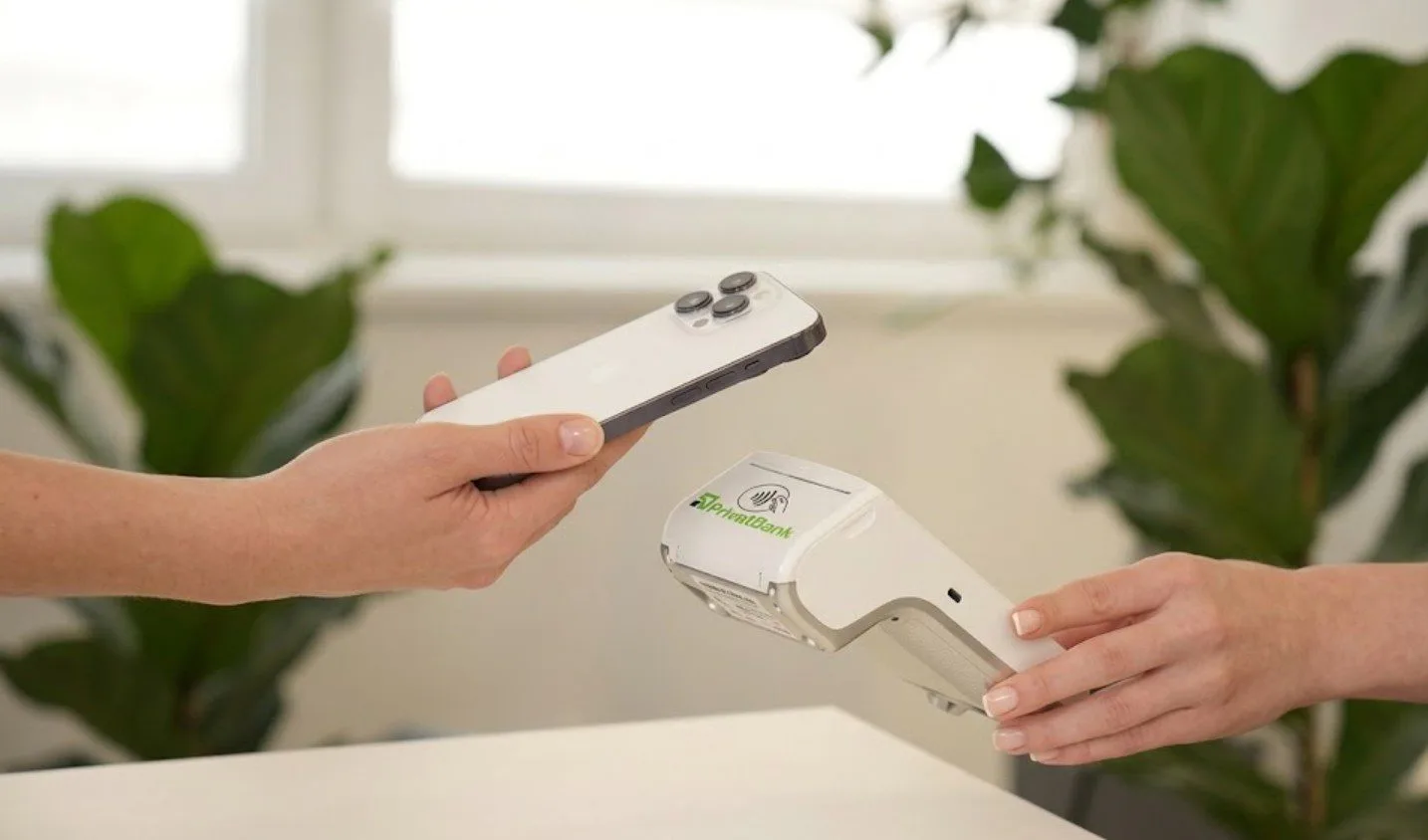
We understand that comprehensive dental treatment represents a significant expense. That is why FrankoLab Clinic offers payment plans — with no hidden interest charges or complicated terms. Spread the cost of your treatment over convenient monthly instalments and start restoring your smile today. Please ask the receptionist for further details.

Stages of dental prosthetics using implants

01

Consultation and diagnosis

We take a medical history, carry out an examination, arrange a 3D scan of the jaw (we perform CT scans in our dental clinic using the J. Morita 3D Accuitomo 170) and carry out digital modelling. Based on the results, we draw up a treatment plan and calculate the cost.

02

Preparing for dental implants

If required, we carry out oral rehabilitation, treatment for tooth decay and gum disease, and bone augmentation (bone grafting).

03

Dental implant placement

The surgeon inserts a titanium implant into the jawbone. The procedure is carried out under anaesthesia, using a high-precision surgical microscope (specifically, the Ukrainian brand Scanner). It takes between 30 and 60 minutes.

04

Osseointegration

The implant integrates into the bone within 2–6 months. During this period, where indicated, we fit a temporary fixed restoration for comfort, to enhance the aesthetics of your smile and to help you get used to your new teeth.

05

Abutment placement

Once the implant has integrated, we attach the connecting element — the abutment — which serves as the foundation for the future prosthetic restoration.

06

Fabrication and fitting of a permanent prosthesis

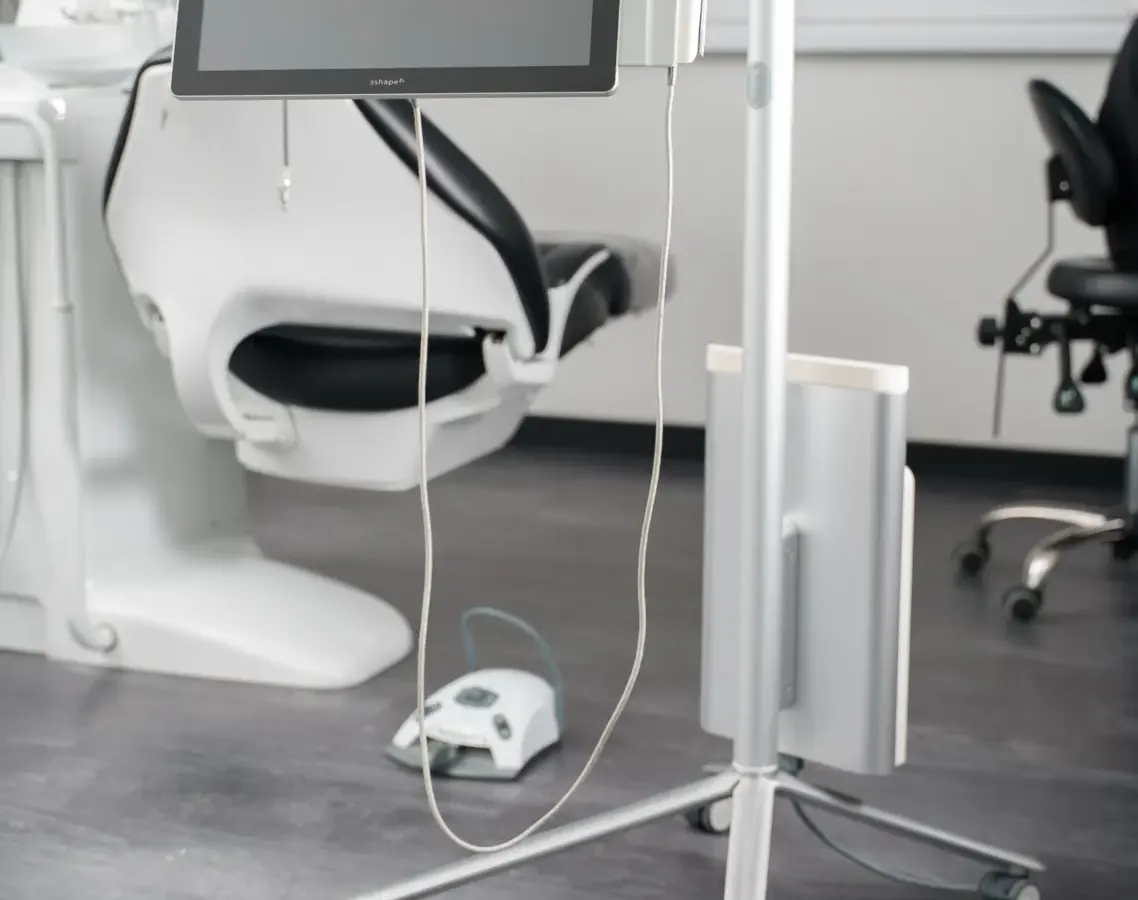
We take digital impressions using the Dentsply Sirona Primescan and 3shape TRIOS intraoral scanners, after which we fabricate a crown, bridge or other restoration in FrankoLab’s in-house laboratory. We attach the finished dental prosthesis to the implant. The dentist checks the bite and the fit of the restoration and provides care advice.

Types of implant-supported dentures

Depending on the number of teeth extracted and the clinical situation, we use various types of prosthetic restorations. Implant-supported prostheses can be either removable or fixed; below are the main fixed solutions we use at FrankoLab Clinic.

Crown on an implant

Suitable for: those missing a single tooth
. Material: zirconium, metal-ceramic
. Features: we fully replace a single tooth; we do not affect the adjacent teeth.

Bridge-type restoration on implants

Suitable for: missing 2–4 consecutive
teeth. Material: zirconia, metal-ceramic
. Features: fixed onto 2 or more implants; no need to grind down natural teeth.

Circular structures using the All-on-4 technique

Suitable for: complete or near-complete tooth
loss. Material: zirconium, titanium
. Features: 4 implants support a full dental arch; load can be applied to a specific section of the jaw.

Circular structures using the All-on-6 method

Suitable for: complete edentulism, reduced bone
density. Material: zirconium, titanium
. Features: 6 implants for additional stability and better load distribution.

Our patients’ results

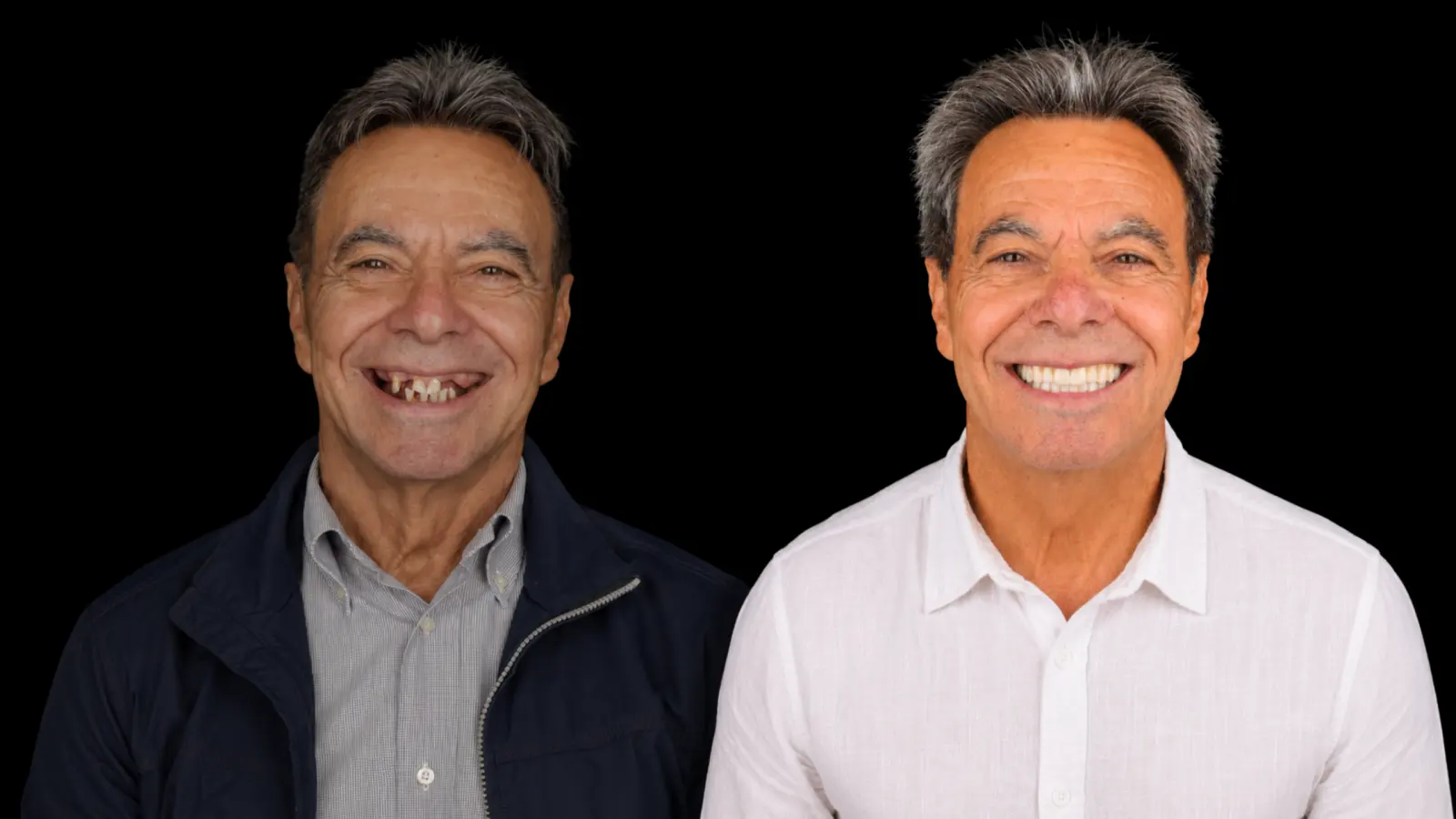
Clinical Case 5

Diagnosis:

Partial edentulism, mobility of remaining teeth, severe bone atrophy and chronic periodontal inflammation. The patient complained of difficulty chewing food, discomfort whilst chewing and an unsatisfactory appearance of their smile.

Treatments:

Digital treatment planning was carried out, along with the fabrication of surgical guides, the extraction of teeth that could not be saved, the placement of six implants in each jaw, and the fixation of fixed temporary restorations reinforced with titanium bars. Following the completion of the osseointegration period, the second stage of treatment was carried out — the fabrication and fixation of permanent prosthetic restorations.

Result:

The patient has had their upper and lower dentition fully restored, regaining stable chewing function and a natural-looking smile. Discomfort whilst eating has disappeared, and their self-confidence and quality of life have been restored.

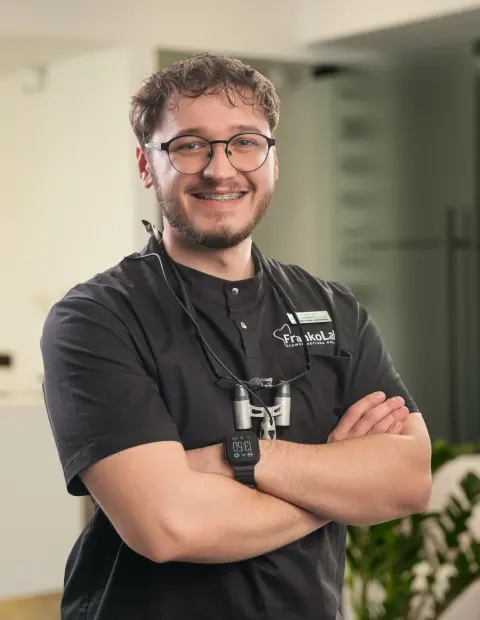
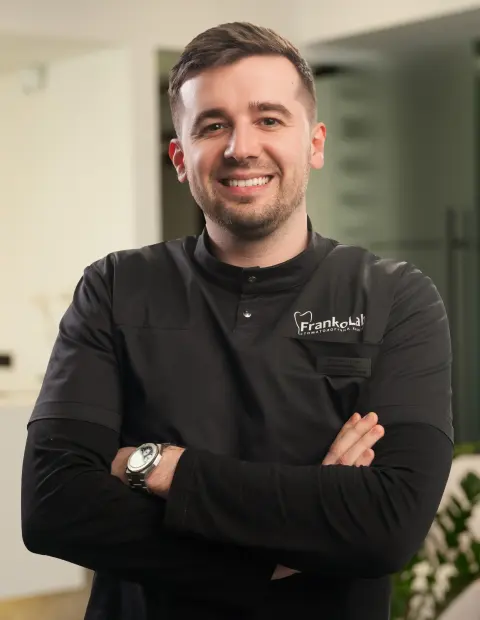
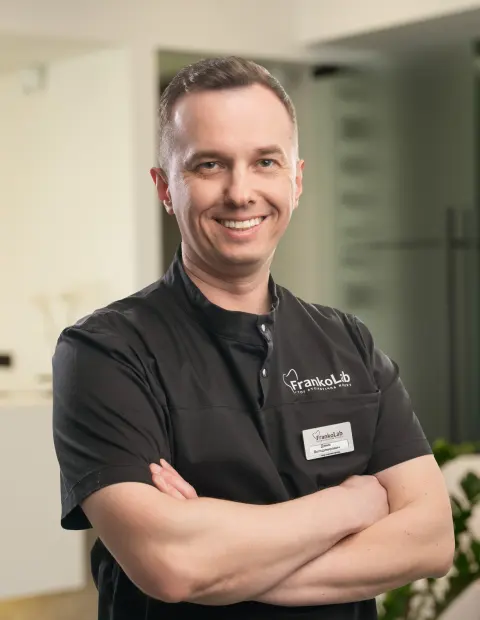
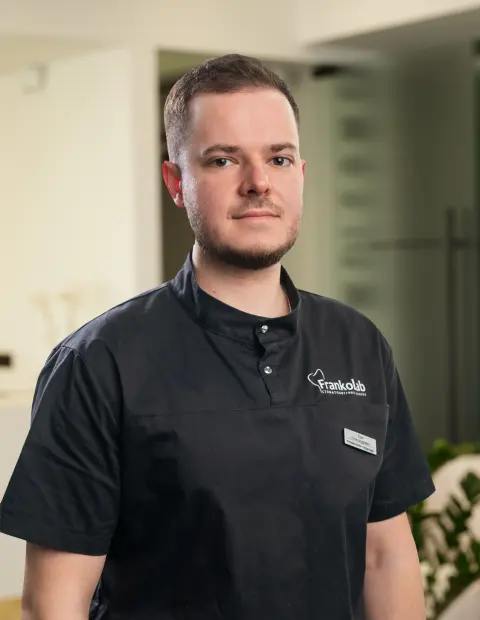
Doctors providing treatment

Patient reviews

4,9 Google rating All reviews on Google

Diana Kruk

08.07.2026

The clinic and service are of the highest standard – keep up the good work!

Ksenia Savenko

23.06.2026

I am very grateful to the whole FrankoLab team for the experience I’ve had with you. You are incredible! I wish you continued growth and prosperity, because the smiles you create are not only beautiful but also genuine, as seen on the faces of your grateful clients.

FrankoLab Dental Laboratory

Would you like to find out if implant-supported dentures are right for you? Book a consultation — a dentist will assess the condition of your jaw and suggest the best solution.

Why people choose FrankoLab Clinic for implant-supported dentures in Ivano-Frankivsk

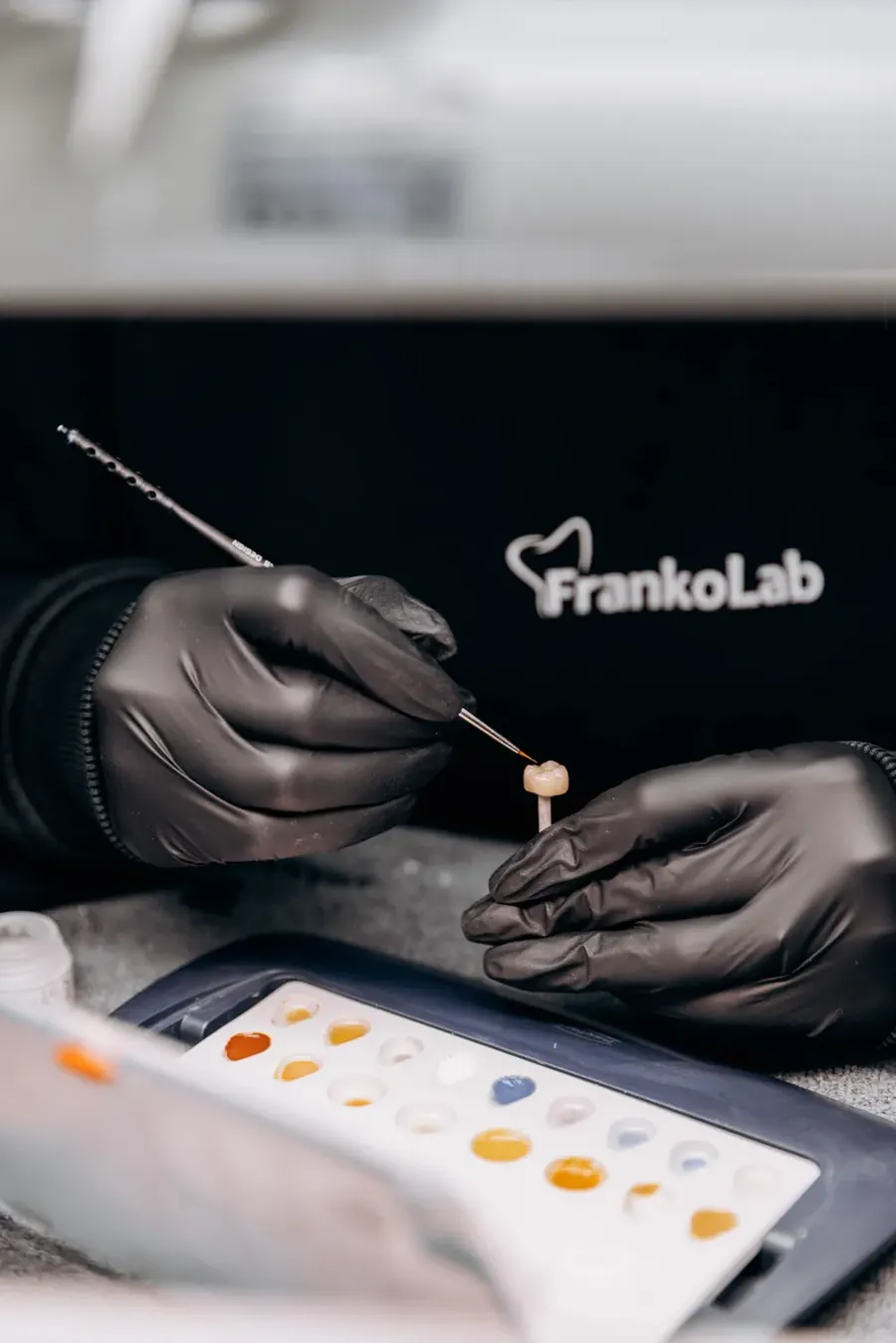
A FrankoLab dental technician works on a crown in the clinic’s in-house laboratory
01

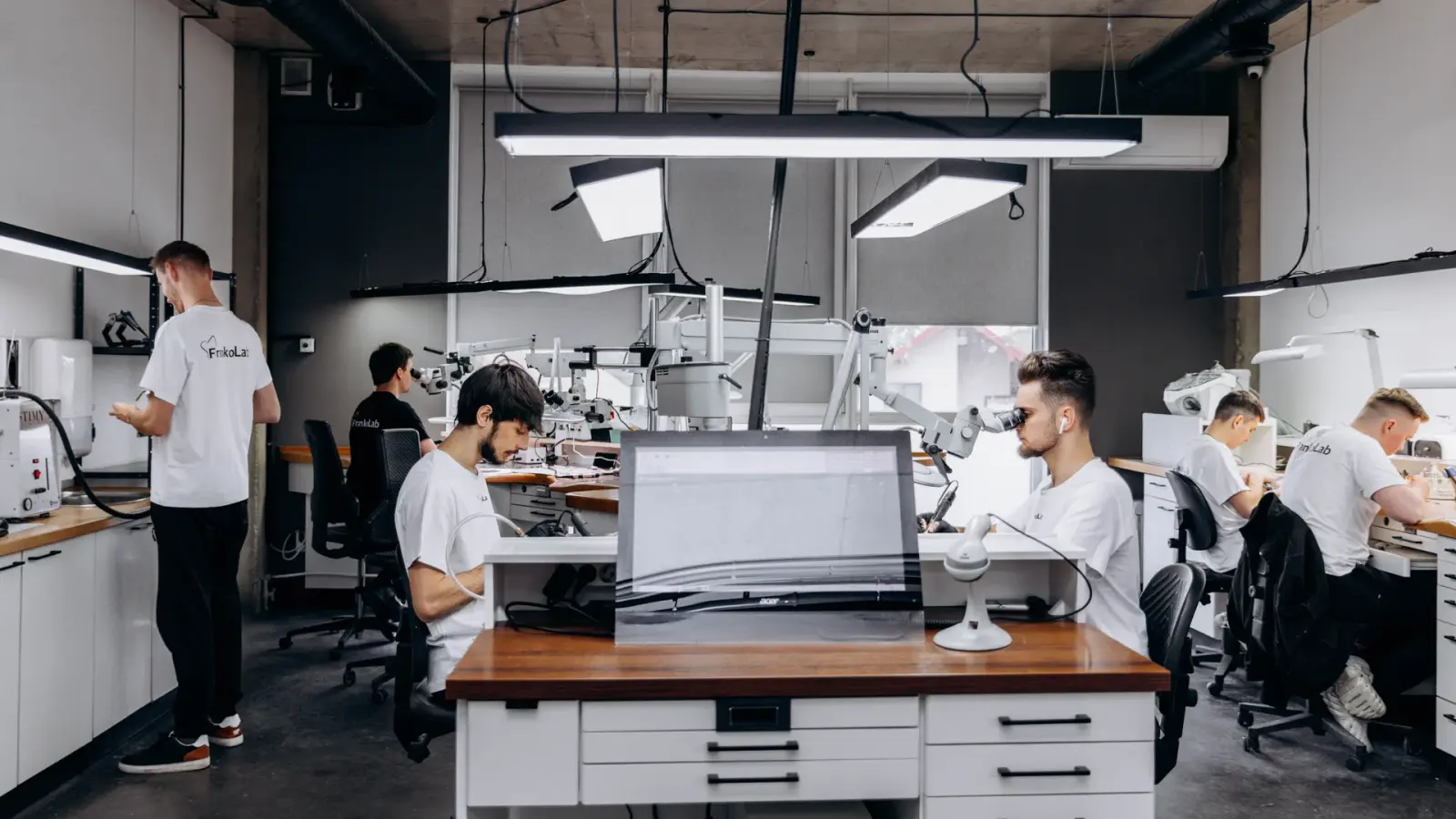
In-house full-service digital dental laboratory

FrankoLab is one of the largest digital laboratories in Western Ukraine (over 25,000 restorations per year). Production times for restorations are up to 7 days. This is significantly faster than at many clinics that use third-party laboratories. We use CAD/CAM technology, which ensures a high-precision fit, perfect occlusion, and minimal errors and adjustments.

02

Quality and durability

Ivoclar Vivadent certification (compliance with international standards), a focus on metal-free restorations (aesthetics + biocompatibility), an official guarantee on work and restorations, and an emphasis on long-term results lasting from 15 years onwards

03

Specialising in dental implants and implant-supported prosthetics

We specialise in single, All-on-4 and All-on-6 implant procedures, utilise navigational surgery (placing implants with an accuracy of 0.1 mm), we work with premium systems (Straumann, Osstem, Megagen, JD Dental, Nobel and others), and manufacture zirconia, ceramic (E-MAX) and metal-ceramic restorations, as well as titanium abutments and bars produced in-house. When you come to us, you’ll leave with a beautiful smile.

04

A full ‘dentist and technician’ service provided by a single team

From consultation and implantation to the fabrication and fitting of permanent restorations — everything under one roof, so there’s no need to travel between the dental practice and the laboratory. The dentist and dental technician work together — this reduces the risk of errors and speeds up the process.

05

A digital approach

Before fitting implant-supported dentures, we carry out 3D diagnostics, digital scanning and computer-aided planning (in particular, we use the Palm photogrammetry system, the Dentsply Sirona Primescan intraoral scanner and others) to ensure the result is accurate and predictable even before treatment begins.

06

Services

For your convenience and comfort, we offer treatment under sedation (whilst asleep), a free online consultation, a transfer service, a personal assistant, payment plans and more.

Frequently asked questions about implant-supported prosthetics

Yes, there are certain contraindications. Absolute contraindications include: cancer currently undergoing active treatment, severe blood clotting disorders, uncontrolled diabetes mellitus, and severe autoimmune diseases. Relative contraindications (which can be resolved prior to treatment) include: active inflammatory processes in the oral cavity, insufficient bone volume (requiring bone grafting), and uncontrolled heavy smoking. A full list of contraindications is determined by the dentist during a consultation after reviewing the patient’s medical history.
The total duration of the procedure for fitting implant-supported dentures depends on the individual clinical case. If the implant has already been placed and has integrated well into the bone, the fabrication and fitting of the prosthesis takes a few days (usually up to 7, but often less). If, however, the restoration is carried out at the same time as the implantation, allow a further 2–6 months for osseointegration (the implant to heal into the bone).
In certain clinical situations — yes. The immediate loading protocol makes it possible to secure a temporary restoration on the day the implant is placed. However, this option is not suitable for everyone: it requires sufficient bone density and an adequate level of primary implant stability. Whether this option is suitable in your case will be determined by the surgeon following a 3D diagnostic assessment.
No. One of the main advantages of an implant-supported crown is precisely that the adjacent teeth remain undamaged. The crown is fixed exclusively to the implant — without any contact with or preparation of natural teeth.
With proper care and in the absence of contraindications, implants last a lifetime, whilst prosthetic restorations (crowns, bridges, etc.) last on average 15–20 years or more — depending on the material used, chewing forces and the quality of care. Zirconia crowns are considered the most durable of all modern materials.
The procedure of attaching a dental prosthesis to an implant that has already integrated is painless and does not usually require anaesthesia. We carry out the implant placement (the surgical stage) under anaesthesia (local or general), so the patient feels no pain during the operation. Once the anaesthesia has worn off, you may experience mild discomfort for 1–3 days, which can be relieved with standard painkillers.
As with any medical procedure, implant placement and subsequent prosthetic restoration carry certain risks: inflammation around the implant (peri-implantitis), insufficient osseointegration, and mechanical damage to the restoration. However, provided that a thorough diagnosis is carried out, the treatment protocol is followed and proper aftercare is observed, complications are rare. At FrankoLab Clinic, every case is carefully planned before treatment begins, which minimises risks — the success rate for implant placement with prosthetics is over 98.5 per cent of cases.
Caring for fixed restorations is the same as for natural teeth: brush twice a day with toothpaste, use dental floss or superfloss to clean between the teeth, and use a water flosser regularly. In addition, it is important to visit the clinic for a check-up and professional cleaning every 6–12 months — this allows any changes to be detected in good time and ensures the restoration lasts for many years.

Book a consultation

Book a consultation and one of our managers will contact you shortly

+380 50 011 20 00

FrankoLab Clinic dental surgery

A healthy smile starts with the right decision

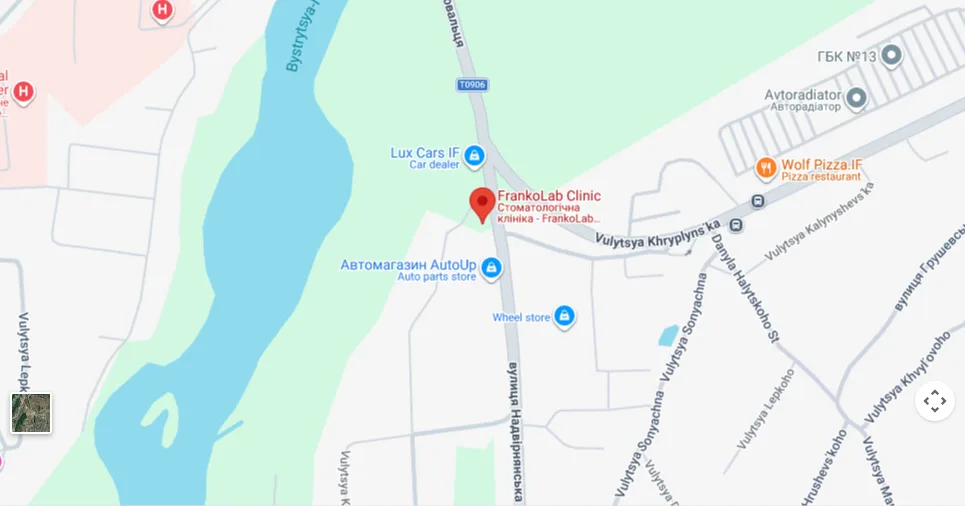
  • 77460, Ivano-Frankivsk, Cherniiv village, 2B Nadvirnianska Street
  • Mon–Sat 9.30 am–7.00 pm, Sun 10.00 am–7.00 pm
  • +380 50 011 20 00
Book a consultation
Map: 77460, Ivano-Frankivsk, village of Cherniiv, 2B Nadvirnianska Street