Helps the gums to heal around the implant
The soft tissue guide creates the conditions for the soft tissues around the implant to heal and maintains the shape of the soft tissues whilst preparing for prosthetic restoration.

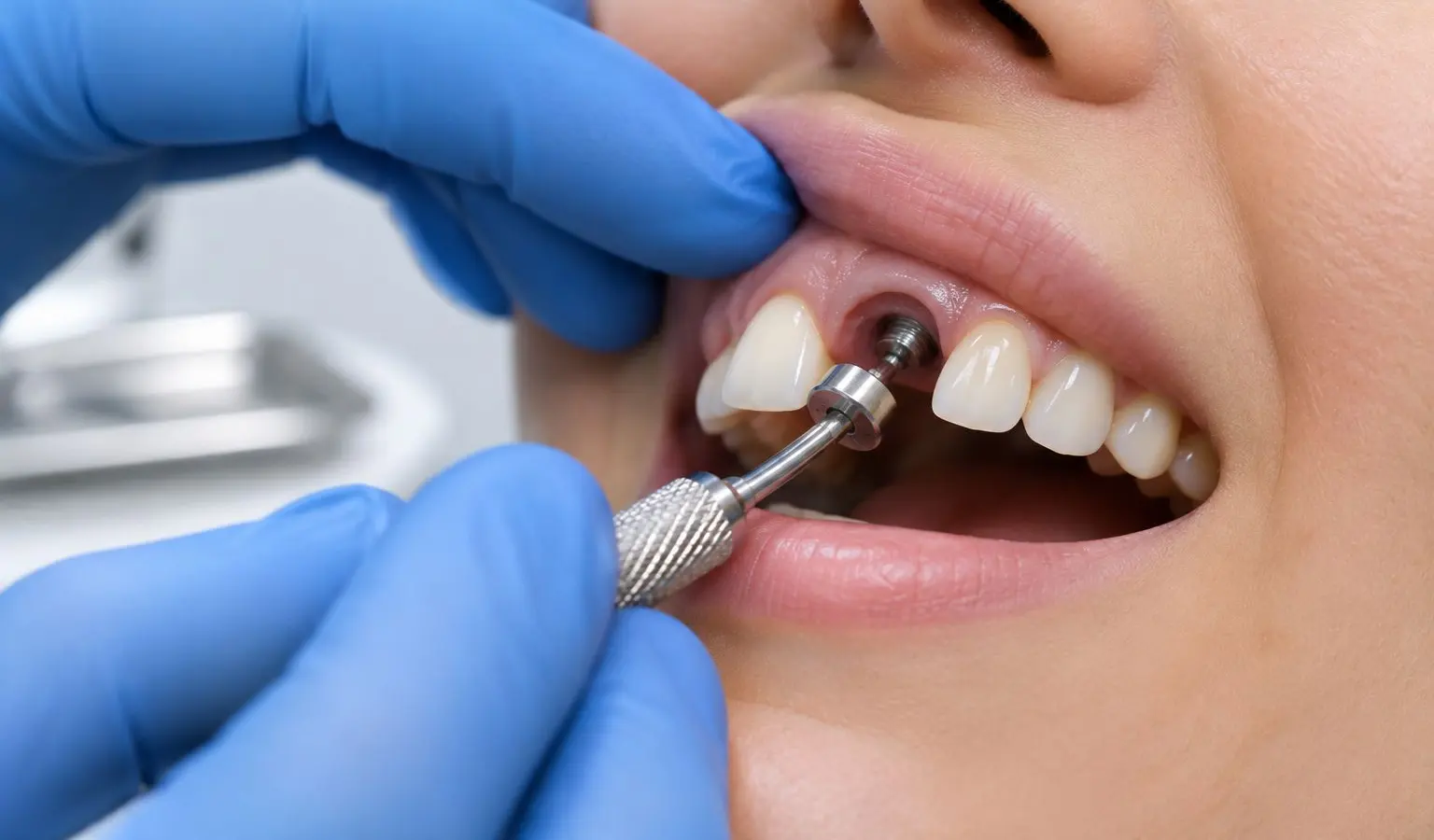
A gum former is a temporary component used during the implantation process, which is secured within the implant to help shape the soft tissues around it. It usually takes the form of a small cylinder or cone with a smooth surface: the lower part connects to the implant, whilst the upper part protrudes above the gums and defines the shape of the future contour. In other words, the placement of a gingival former is an intermediate stage of the implant procedure: it does not complete the treatment, but prepares the way for the subsequent, prosthetic phase. Without properly shaped gums, a permanent implant-supported restoration will look unnatural and untidy, and maintaining good oral hygiene around it will be difficult.
At FrankoLab Clinic, we use gingival moulds compatible with implant systems from manufacturers in Switzerland, Germany and South Korea. The moulds come in cylindrical, conical and anatomical shapes, with or without a gingival cuff, and are made of titanium or zirconium; therefore, the dentist selects them based on the type of implant, gum thickness, jaw area and so on.
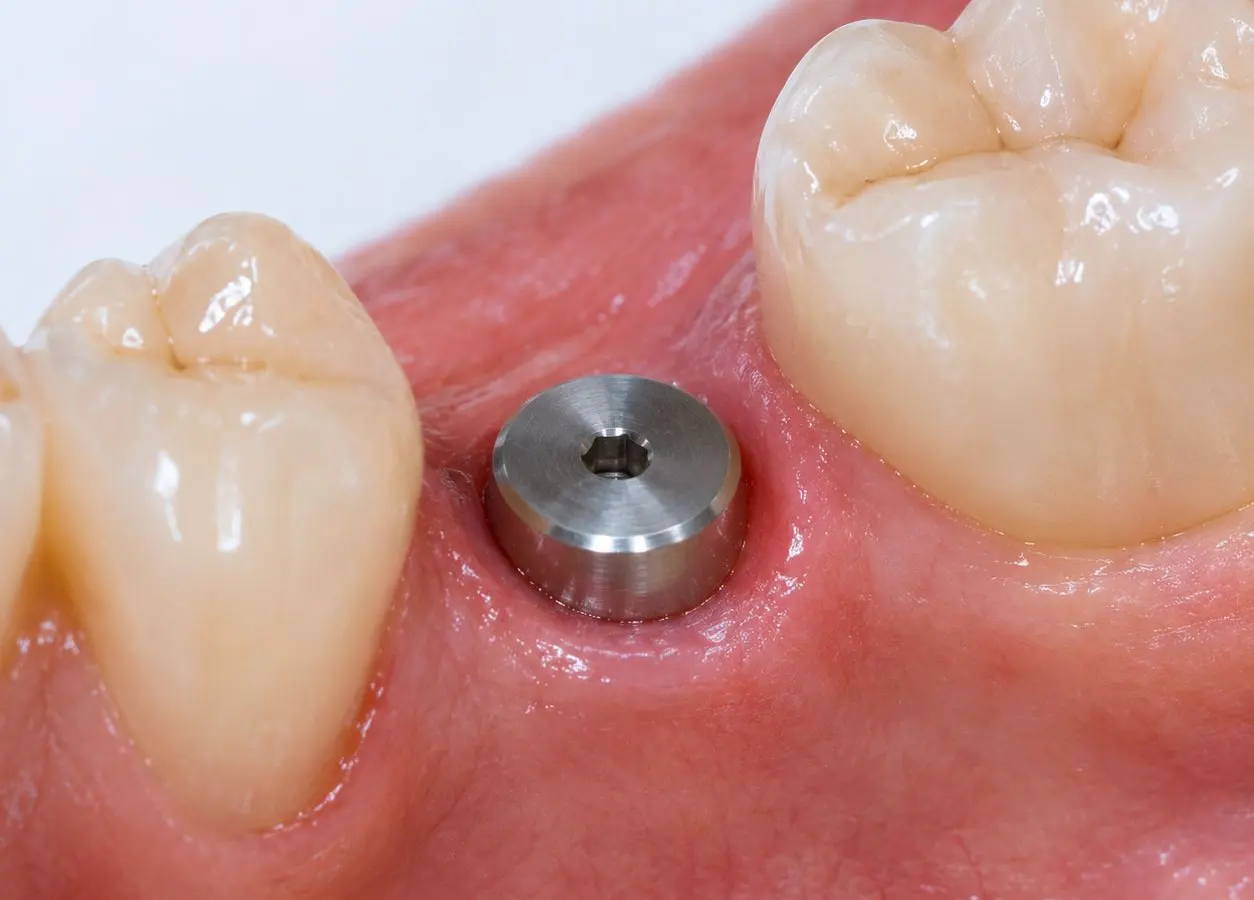
The soft tissue guide creates the conditions for the soft tissues around the implant to heal and maintains the shape of the soft tissues whilst preparing for prosthetic restoration.
The gums form a natural shape around the implant, mirroring the contour of a natural tooth and making the permanent restoration imperceptible when smiling.
The gingival former ensures that the gums fit snugly against the implant neck, which is important for its stable functioning and for reducing the load on it.
The gingival former covers the inner part of the implant, preventing food debris and bacteria from entering it.
Thanks to the installation of a gingival former, tissue does not build up over the implant head, so the abutment can be fitted without any further intervention.
Once the gums have fully formed, it is easier for the dentist to fit the abutment and crown precisely.
The cost of a gum former at FrankoLab Clinic in Ivano-Frankivsk depends on the type of implant, the complexity of the clinical case and the type of former. The dentist will quote the exact amount following an examination, when drawing up the treatment plan. For patients’ convenience, payment in instalments is available. Details of the instalment plan can be obtained from the administrator by telephone or during a consultation.
The dentist will quote the final cost following an examination and diagnosis. Payment in instalments is available. Full price list for the clinic
We examine the patient’s mouth, assess the condition of the gums and check the implant’s integration using an X-ray. We then explain the treatment plan and select the appropriate size of gum former (depending on the thickness of the gums and the area being treated).
If necessary, we administer local anaesthesia to ensure the procedure is comfortable. With the two-stage method, we carefully expose the gum tissue over the implant (sometimes using a laser to minimise trauma); with the one-stage method, this step is not required. Occasionally, our specialist performs minor cosmetic surgery to improve the contour.
The dentist removes the cap and selects a try-in based on the diameter, height and shape to match the implant and gums. The try-in is then secured in the implant and its fit is checked; if necessary, a control X-ray is taken. The procedure usually takes around 15–30 minutes, though sometimes longer.
The gums are moulded to the guide. Stitches are placed so as not to create excessive tension and to ensure comfortable tissue healing. Part of the guide remains above the gum line — this is by design. Over the next 2–6 weeks, it helps the soft tissues to take on the correct shape. The stitches are usually removed after 7–10 days.
The patient receives instructions on oral hygiene and nutrition and books a follow-up appointment.
Once the gum tissue has formed, we remove the mould and proceed directly to the prosthetic stage — fitting the abutment and crown.

Diana Kruk
08.07.2026
The clinic and service are of the highest standard – keep up the good work!
Ksenia Savenko
23.06.2026
I am very grateful to the whole FrankoLab team for the experience I’ve had with you. You are incredible! I wish you continued growth and prosperity, because the smiles you create are not only beautiful but also genuine, as seen on the faces of your grateful clients.
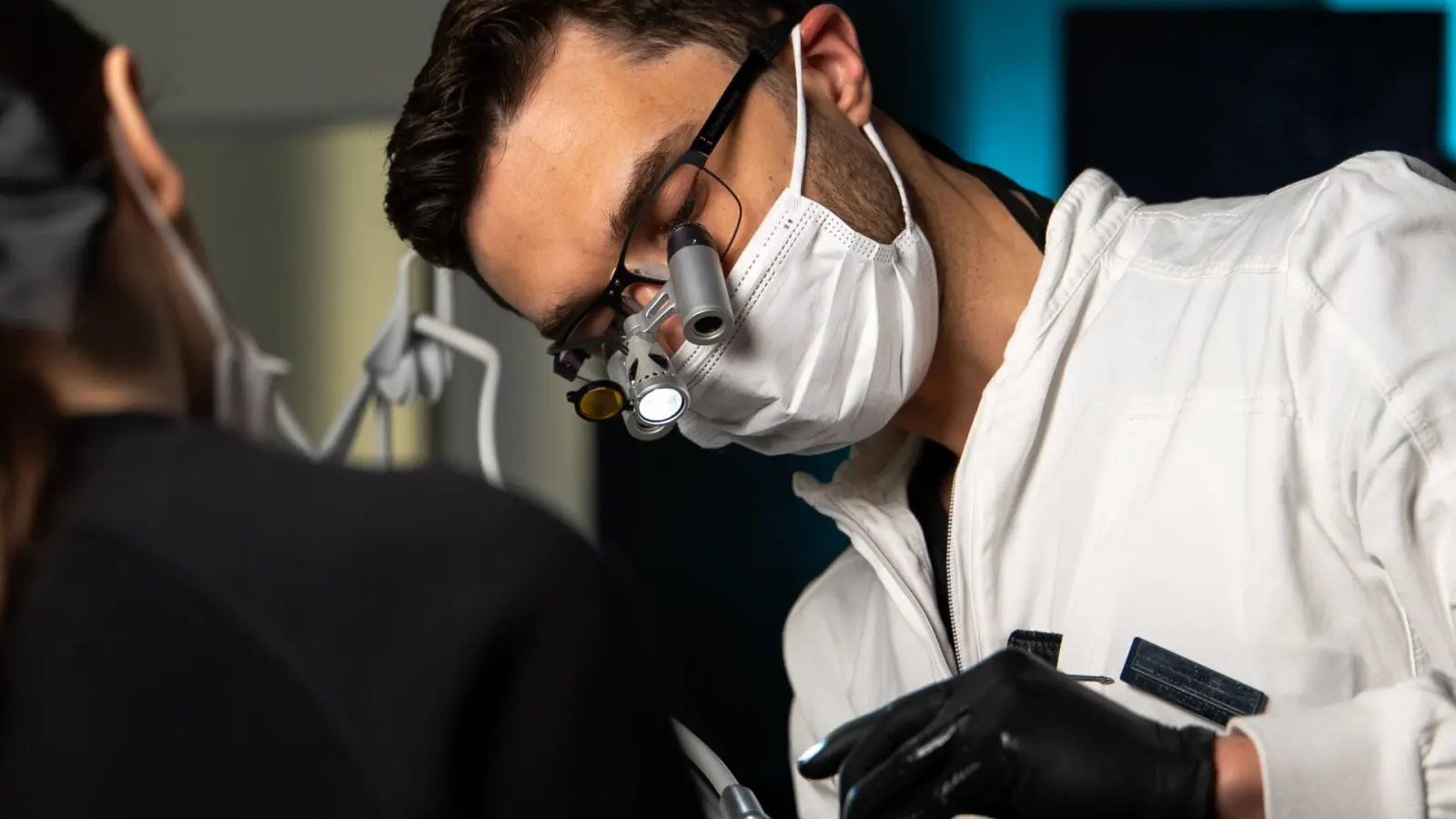
We have one of the largest digital laboratories in western Ukraine (producing over 25,000 restorations annually) — a full cycle ‘under one roof’, precise CAD/CAM modelling of the gum line for perfect aesthetics, rapid prosthesis fabrication, and predictable results. In other words, the subsequent prosthetic stage is carried out under the supervision of our team, without long waiting times with external providers.
We work with systems and compatible moulding machines from manufacturers in Switzerland, Germany and South Korea. Our dentists undergo specialised training, which ensures they can work correctly with each system.
We use digital diagnostics at every stage of implant planning and placement. We utilise our own CT scanner, a Primescan intraoral scanner and navigational surgery technologies, which ensure implant positioning accuracy to within 0.1 mm. We use customised surgical guides to implement the surgical plan. This approach helps to precisely place the implant and the gum former, creating the conditions for proper healing and a predictable outcome.
Book a consultation and one of our managers will contact you shortly
Book a consultation and one of our managers will contact you shortly
Would you like a remote consultation? Online consultation with a dentist
Share your experience of your treatment — your review will appear on the website once it has been verified by an administrator.