
EN
Upper jaw dental implants

Why choose FrankoLab:

  1. 01 A precise technique that does not require grinding down adjacent teeth
  2. 02 Rapid integration even in complex cases
  3. 03 Results designed to last for decades

Upper jaw dental implants in Ivano-Frankivsk

The loss of even a single tooth in the upper jaw affects not only the aesthetics of one’s smile, but also chewing function and speech; moreover, the neighbouring teeth gradually begin to shift into the empty space. Furthermore, without a tooth root, the bone tissue in this area atrophies over time — it decreases in volume and height. Dental implants in the upper jaw make it possible to restore the lost dentition without the need for tooth preparation and to halt bone loss, as the implant, just like a natural root, transfers the chewing force to the bone.

Upper jaw dental implants are a modern method of restoring lost teeth using a titanium root and crown. (The upper jaw has a number of anatomical differences that directly influence treatment planning.)

When are dental implants needed in the upper jaw?

The need to restore the aesthetics of a smile without grinding down adjacent teeth

Upper jaw dental implants are placed in the space left by a missing tooth and do not require the healthy neighbouring teeth to be prepared, unlike a traditional bridge. This allows the integrity of the teeth to be preserved and ensures the most natural-looking result.

The desire to restore full chewing function and clear speech

Dental implants in the upper jaw fully restore chewing function and the stability of the dentition. As a result, discomfort whilst chewing food disappears, and speech becomes clear — without the whistling or lisping sounds that often occur when teeth are completely or partially missing, or when a removable denture is worn.

Prevention of further bone loss following tooth loss

Following tooth extraction or traumatic tooth loss (particularly if more than 3–6 months have passed), the bone in the upper jaw rapidly loses volume. An implant stimulates the bone tissue and halts the process of atrophy, preserving the correct facial proportions and creating the conditions for future prosthetic treatment.

Dissatisfaction with removable dentures or bridgework

If removable dentures are uncomfortable, do not fit properly, rub against the gum tissue or cause discomfort, and bridges require healthy teeth to be ground down — upper dental implants provide a fixed, stable and long-lasting solution.

When other prosthetic methods are not suitable

It is not possible to fit traditional bridges due to a lack of supporting teeth, whilst removable dentures do not provide the necessary stability and comfort; there may be an allergy or intolerance to removable dentures, or a need for maximum aesthetics and a natural feel; or the patient does not wish to have healthy adjacent teeth ground down — in such cases, dental implants become the only way to restore teeth reliably and for the long term.

Cost of dental implants in the upper jaw

The exact cost of upper jaw dental implants in Ivano-Frankivsk at FrankoLab Clinic depends on the chosen implant system, the number of implants required and the need for preparatory procedures. We determine the final price only after a face-to-face consultation, CT scan, simulation and selection of the method for upper jaw dental implants.

The dentist will quote the final cost following an examination and diagnosis. Payment in instalments is available. Full price list for the clinic

Payment plans for treatment with no extra charges

FrankoLab Clinic offers upper jaw dental implants with payment in instalments: you can arrange a convenient payment plan and pay gradually, with no additional interest. This makes it possible to start treatment right now, when it’s really needed, rather than waiting until the full amount is available to pay for a new smile in one go.

Stages of dental implant surgery in the upper jaw

01

Consultation, diagnosis and treatment planning

We examine and assess the condition of the oral cavity, carry out a CT scan of the upper jaw, and evaluate the volume of bone tissue and the condition of the maxillary sinuses. Only then do we select the type, number and placement of the implants. When all teeth are missing, we offer implantation using the All-on-4 or All-on-6 protocol.

02

Preparation for the procedure as indicated

If there is insufficient bone volume, we perform a sinus lift or bone grafting. These procedures create a solid foundation for the implant and significantly increase the chances of successful integration.

03

Dental implant placement

Under local or general anaesthesia, we carefully insert a titanium implant into the bone of the upper jaw. The procedure takes between 20 and 60 minutes, depending on the number of implants, and causes minimal discomfort to the patient.

04

Osteointegration period

Following upper jaw dental implant surgery, there is a healing period — the implant must osseointegrate into the bone tissue over a period of 3–6 months. During this time, it is important to follow the dentist’s advice on oral hygiene and bite load to ensure a strong bond between the titanium and the bone.

05

Fitting a gingival form and taking a digital ‘impression’

We fit a healing abutment to create a natural soft-tissue contour. We then take a digital impression using the Sirona Primescan, based on which we fabricate a bespoke crown or other prosthetic restoration in FrankoLab Clinic’s in-house laboratory.

06

Fixation of a permanent restoration

We securely attach the finished permanent restoration, manufactured in FrankoLab Clinic’s in-house full-cycle dental laboratory, to the implant. The patient benefits from excellent aesthetics, comfortable chewing, clear speech and a long-lasting result.

Features of upper jaw dental implant surgery

The main features that a dentist must take into account when planning dental implant surgery in the upper jaw are that its bone tissue has a porous structure and lower density compared to the lower jaw, and the roots of the upper lateral teeth are adjacent to the maxillary sinuses. Due to these characteristics, dental implant surgery in the upper jaw is considered somewhat more complex to perform than in the lower jaw.

However, when carrying out upper tooth implantations in Ivano-Frankivsk, the dental specialists at FrankoLab Clinic carefully select the implants and the loading protocol. The titanium implant, which we place into the bone, acts as an artificial tooth root: a fixed restoration or removable denture is subsequently attached to it.

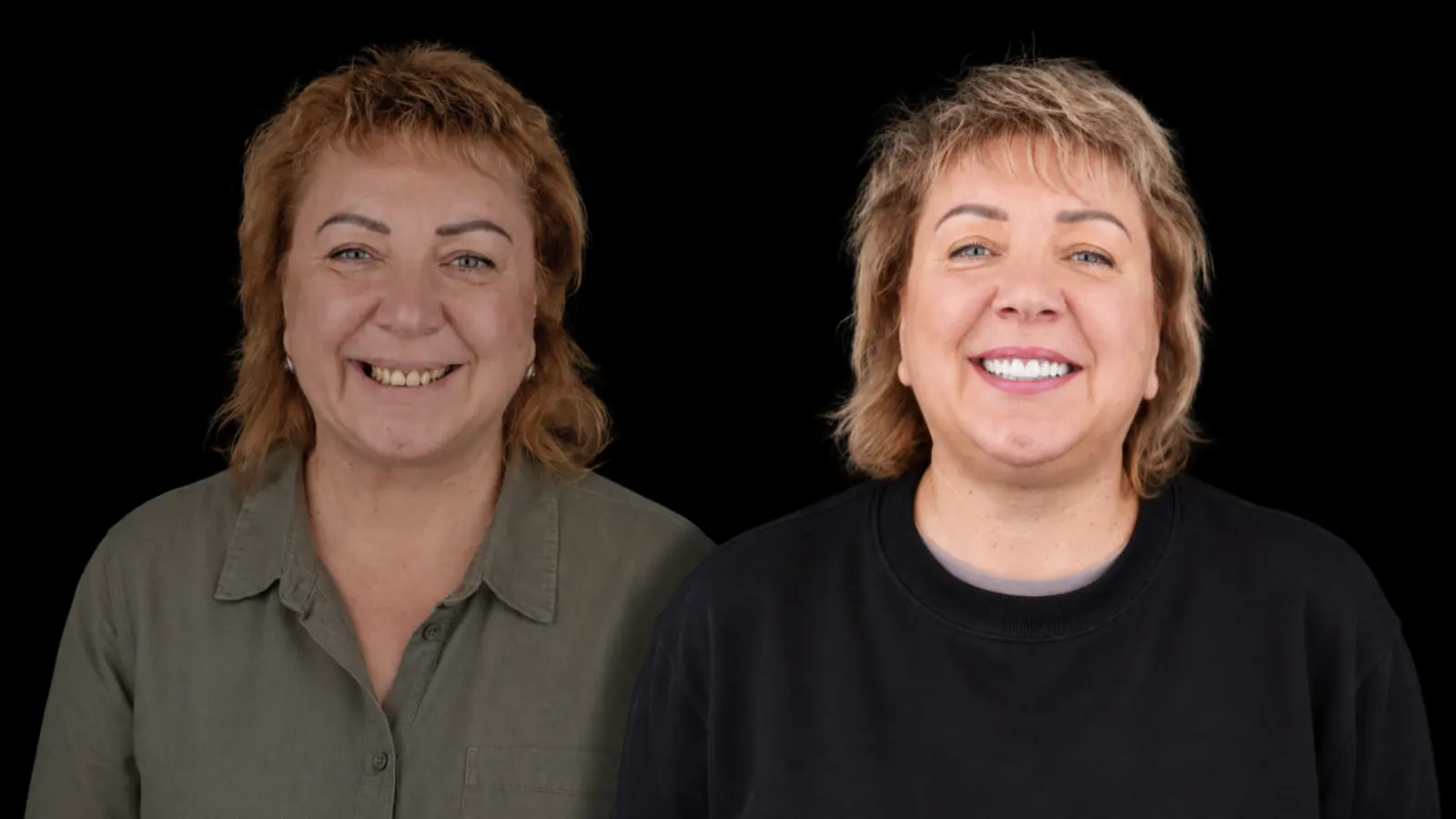
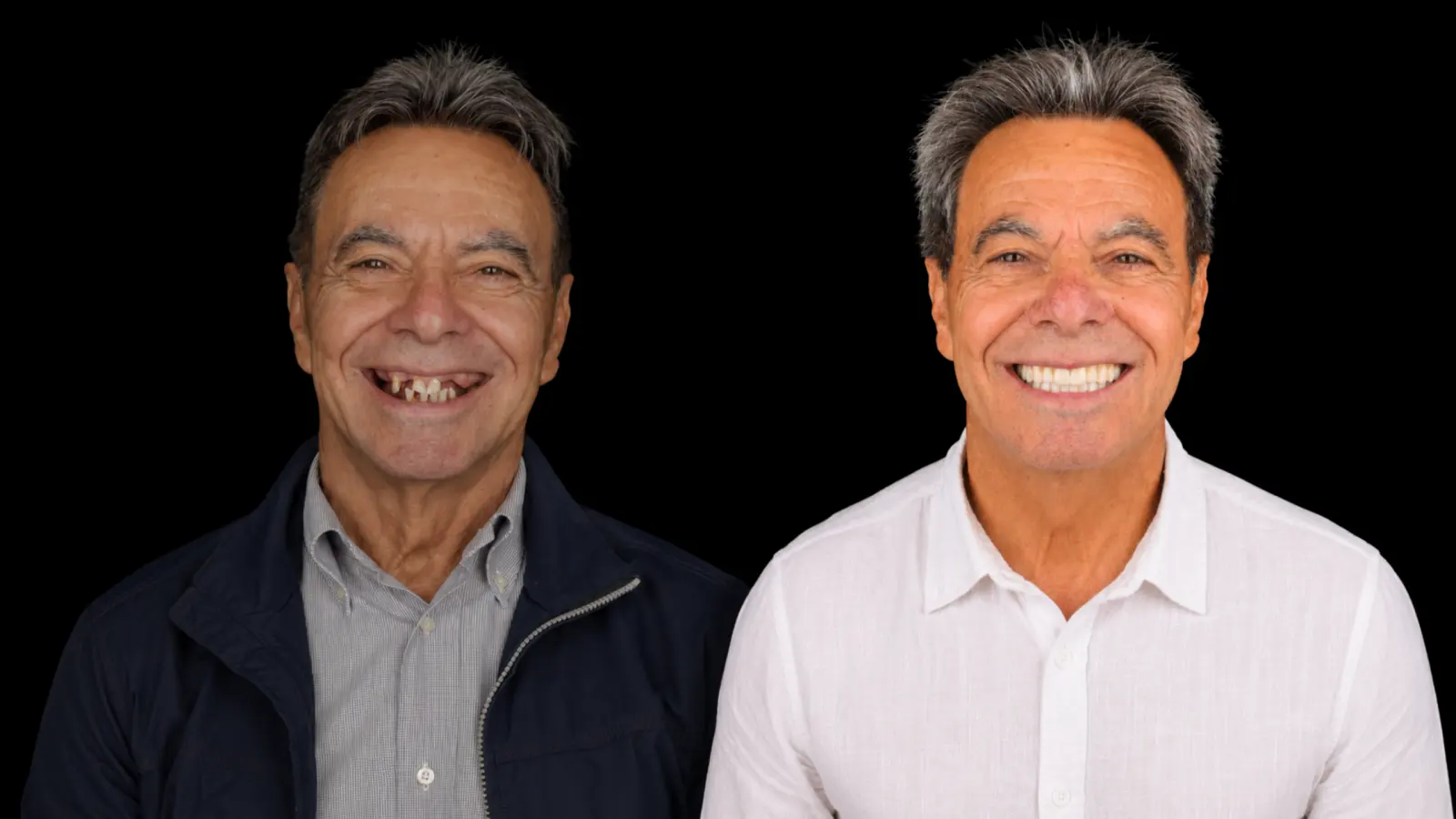
Our patients’ results

Case Study 4: Comprehensive dental restoration using crowns and veneers

Diagnosis:

Complete loss of dental function due to teeth that could not be saved. The patient required comprehensive rehabilitation of both jaws, restoring both chewing function and aesthetics.

Treatments:

All teeth that could not be saved were extracted. In the first stage, 4 implants were placed in the upper jaw and 6 in the lower jaw. During the next stage of treatment, a further 2 implants were placed in the upper jaw. As a result, the permanent prosthetic restoration will be anchored to six implants in the upper jaw and six implants in the lower jaw, providing a secure foundation for the future prosthesis.

Result:

The patient has successfully completed the surgical stages of treatment and is preparing for the final prosthetic restoration. The chosen rehabilitation approach ensures maximum stability of the restoration, even distribution of the chewing load, long-lasting results and a high level of comfort.

Case 2: Implantology. Prosthetics

Diagnosis:

The patient presented with complaints of discomfort whilst chewing, increased tooth sensitivity and dissatisfaction with the appearance of her smile.

Treatments:

The first stage involved professional hygiene, comprehensive oral rehabilitation, therapeutic and endodontic treatment, the extraction of teeth that could not be restored, and implant placement.

Immediately following the surgical stage, temporary prosthetic restorations were fitted.
Six months
later, a prototype of the future smile was fabricated in the clinic’s own dental laboratory, FrankoLab.

The final stage involved the fitting of 24 fully anatomical zirconia crowns onto the patient’s natural teeth and implants in the upper and lower jaws.

Result:

Full functional and aesthetic rehabilitation has been achieved. Tooth sensitivity has been eliminated, chewing efficiency has been fully restored, and a stable prosthetic structure and a natural, harmonious smile have been created.

Case 1: Partial tooth loss.

Diagnosis:

A patient from Italy presented with complaints of multiple missing teeth, generalised periodontitis, impaired chewing function and an unsatisfactory smile.

Treatments:

In the first stage, a full diagnosis and oral rehabilitation were carried out, followed by a sinus lift.

Straumann implants were fitted using the ‘All-on-6’ concept. The surgical procedure was carried out under medical sedation, ensuring a comfortable experience for the patient, who suffered from severe dental phobia.

The very next day, provisional restorations were fitted, allowing the patient to smile comfortably, speak and lead a normal lifestyle. These were subsequently replaced with reinforced temporary restorations.
Six months
after the completion of the osseointegration period, the permanent zirconia restorations were cemented in place.

Result:

Within a short period of time, the patient regained their ability to chew, a natural-looking smile and the chance to return to everyday life without discomfort.

Clinical Case 5

Diagnosis:

Partial edentulism, mobility of remaining teeth, severe bone atrophy and chronic periodontal inflammation. The patient complained of difficulty chewing food, discomfort whilst chewing and an unsatisfactory appearance of their smile.

Treatments:

Digital treatment planning was carried out, along with the fabrication of surgical guides, the extraction of teeth that could not be saved, the placement of six implants in each jaw, and the fixation of fixed temporary restorations reinforced with titanium bars. Following the completion of the osseointegration period, the second stage of treatment was carried out — the fabrication and fixation of permanent prosthetic restorations.

Result:

The patient has had their upper and lower dentition fully restored, regaining stable chewing function and a natural-looking smile. Discomfort whilst eating has disappeared, and their self-confidence and quality of life have been restored.

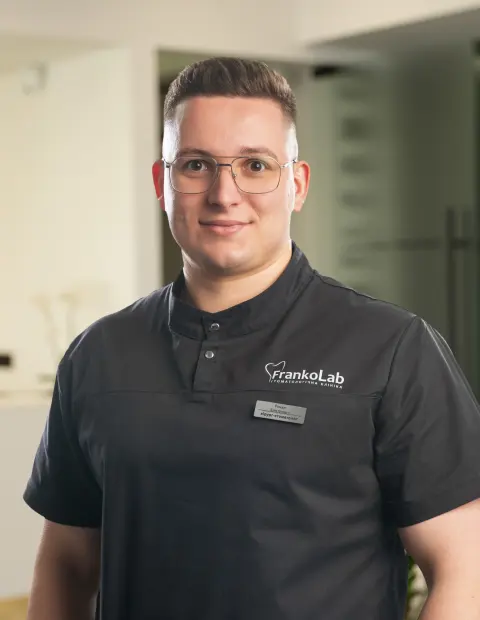
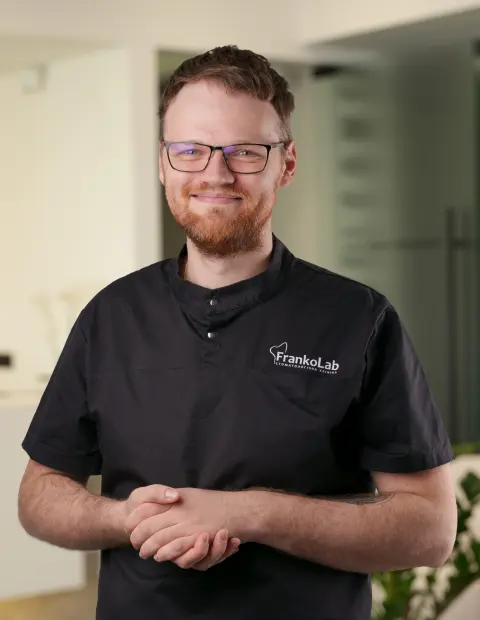
Doctors providing treatment

Patient reviews

4,9 Google rating All reviews on Google

Diana Kruk

08.07.2026

The clinic and service are of the highest standard – keep up the good work!

Ksenia Savenko

23.06.2026

I am very grateful to the whole FrankoLab team for the experience I’ve had with you. You are incredible! I wish you continued growth and prosperity, because the smiles you create are not only beautiful but also genuine, as seen on the faces of your grateful clients.

FrankoLab Dental Laboratory

Would you like to find out if there are any contraindications for you, and what the cost of dental implants would be in your specific case? Book a consultation — we’ll assess the condition of your bone tissue and draw up the best treatment plan for you.

Why people choose FrankoLab Clinic for upper jaw dental implants

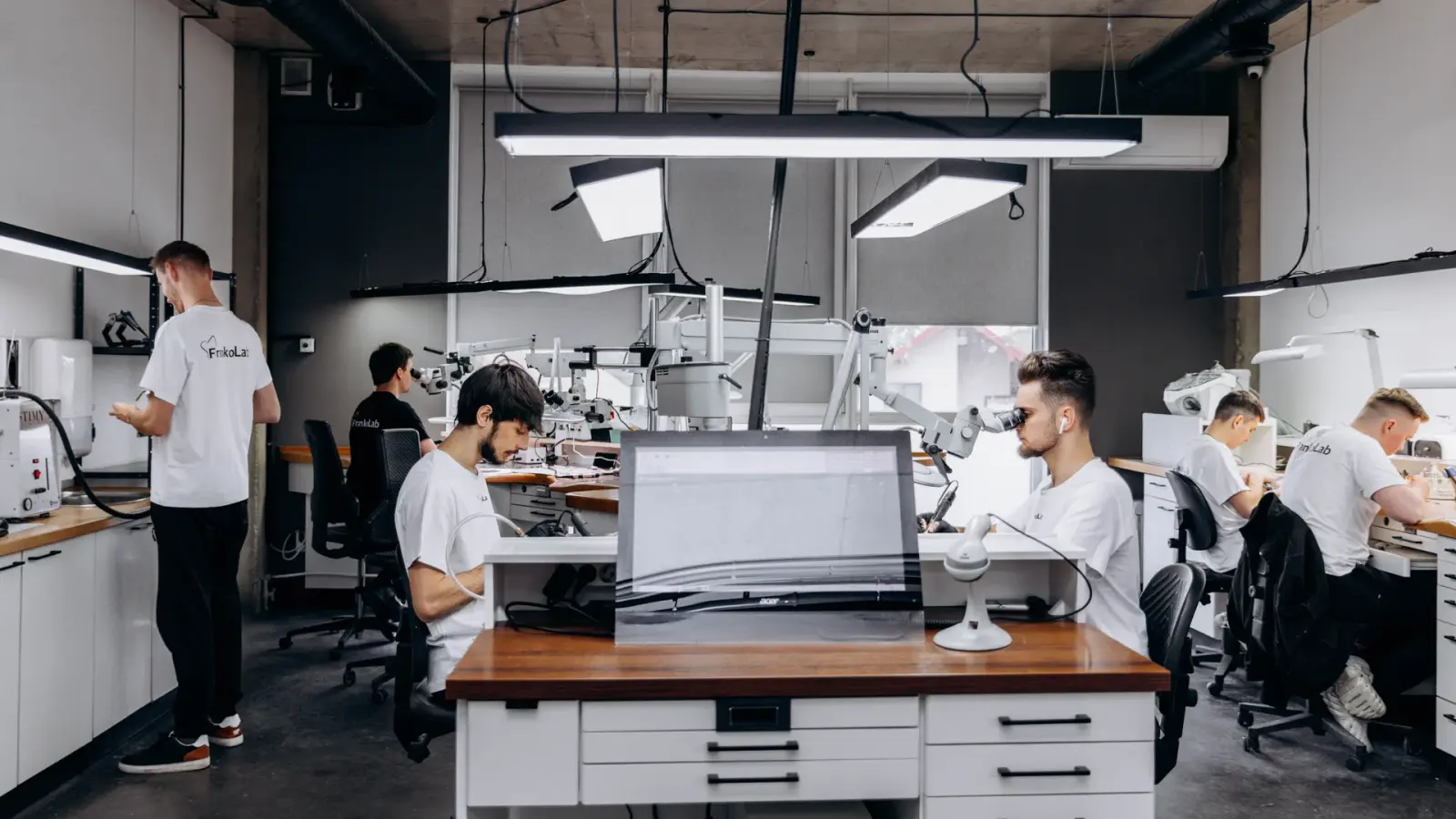
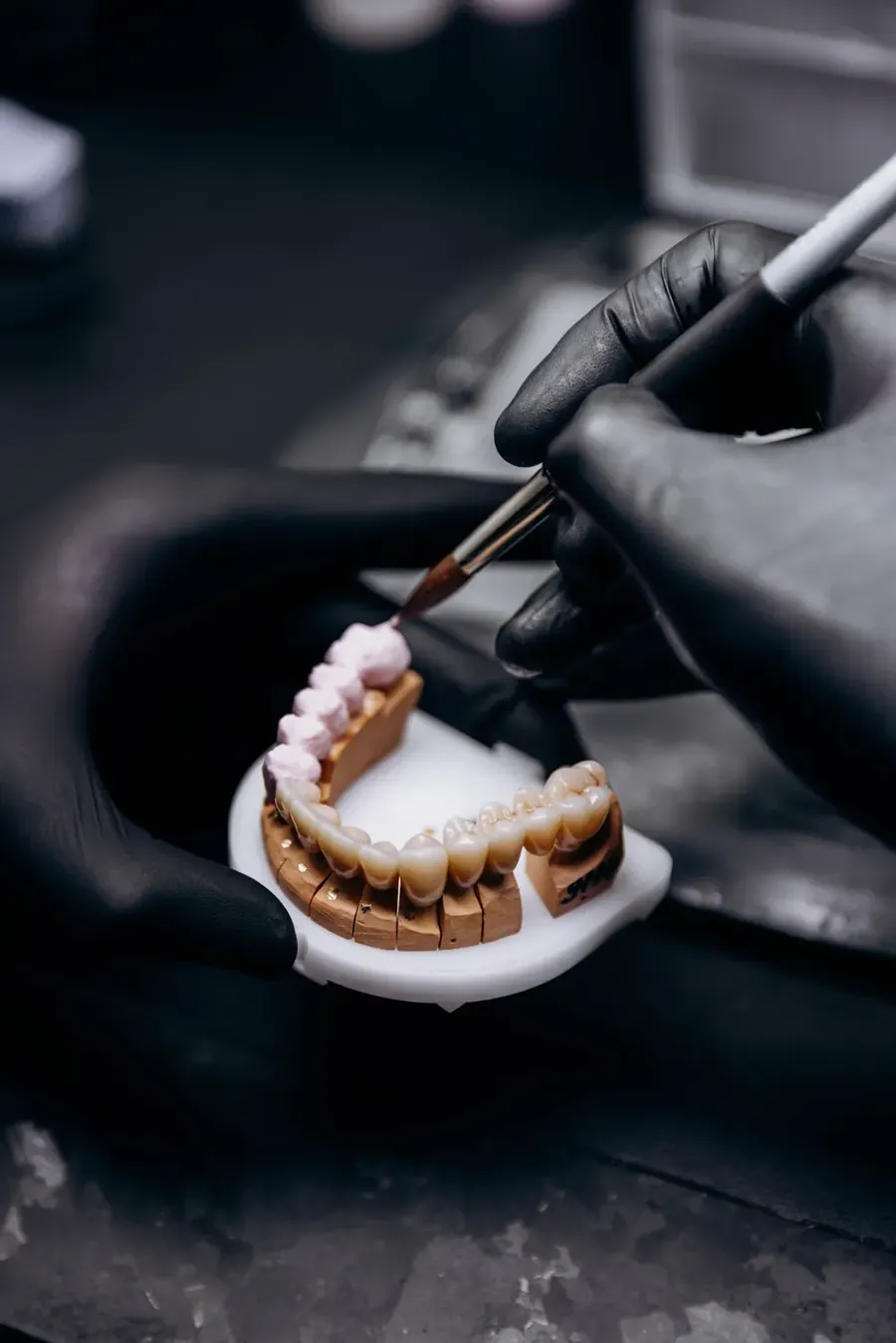
A FrankoLab dental technician is putting the finishing touches to a denture on implants in the clinic’s own laboratory
01

In-house full-service dental laboratory

All crowns, bridges and full dentures are manufactured directly in the FrankoLab dental laboratory. The implantologist and dental technician work as part of the same team. This allows us to monitor quality at every stage, ensure a perfect fit for the restoration and significantly reduce the time taken for prosthetic work, without the need for intermediaries.

02

Experience in managing a complex clinical case involving the upper jaw

We understand why placing implants in the upper jaw is more challenging and the specific nature of the procedure for upper jaw dental implants. That is why we take on the most complex cases. We specialise in cases involving insufficient bone volume and the close proximity of the maxillary sinuses; we regularly perform sinus lifts and bone grafting, amongst other procedures.

03

Modern diagnostics and digital planning

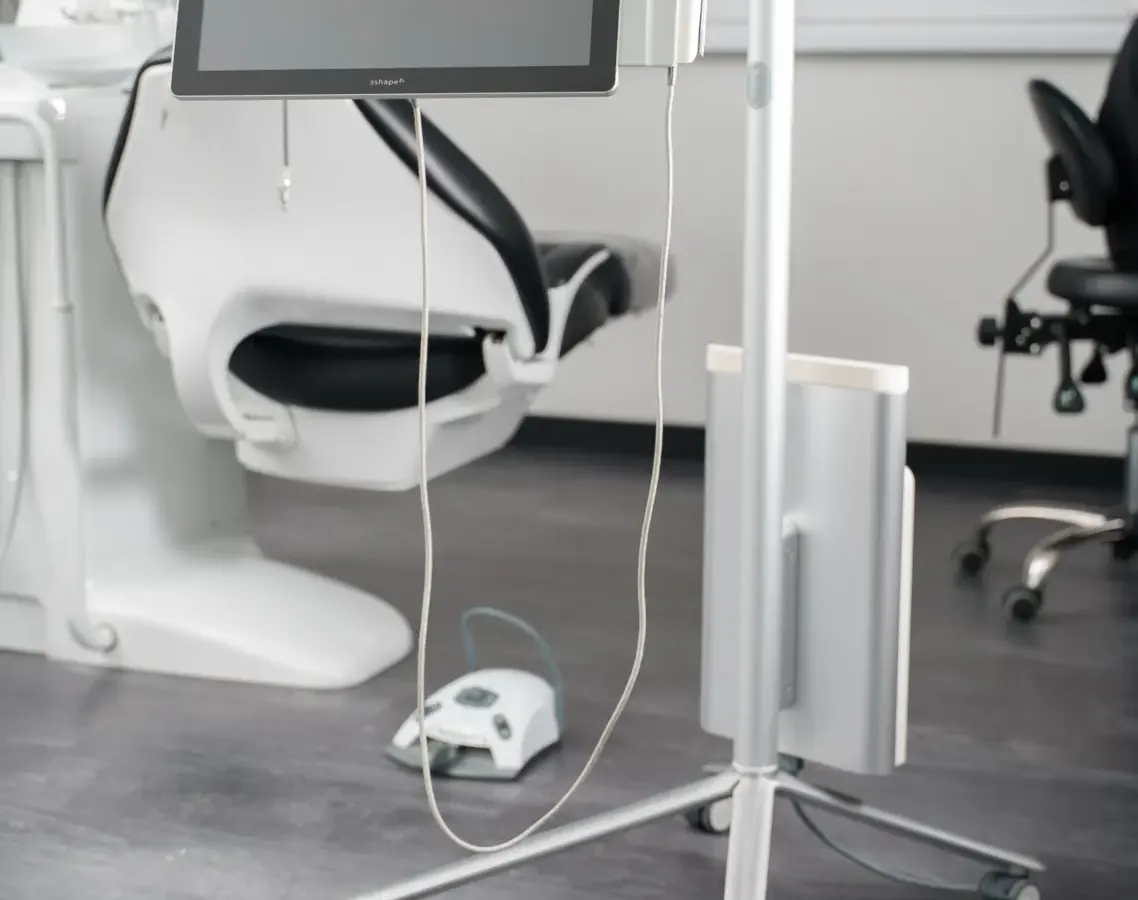
Prior to implantation, we always carry out a CT scan using the J. Morita 3D Accuitomo 170 and 3D modelling. This enables us to precisely calculate the position, angle and depth of implant placement, minimise risks and achieve a predictable aesthetic and functional outcome.

04

All-on-4 and All-on-6 procedures

In cases where all teeth are missing from the upper jaw, we offer the modern All-on-4 and All-on-6 protocols. These implant methods make it possible to secure a fixed prosthesis onto four or six implants and significantly reduce treatment time compared to traditional methods.

05

A comprehensive ‘turnkey’ approach

Patients undergo the entire process — from the initial consultation and diagnosis to the fitting of a permanent restoration — at a single dental clinic, under the professional supervision of the same team. There is no need to seek out external surgeons, prosthodontists or dental laboratories; everything is organised conveniently and seamlessly.

06

A focus on comfort and durability

We use tried-and-tested implant systems, provide high-quality pain relief and give detailed information on aftercare during the osseointegration period. This approach helps to achieve stable integration and ensure long-lasting results.

Frequently asked questions about dental implants in the upper jaw

Prior to implantation, a CT scan of the upper jaw is carried out, along with digital modelling and oral hygiene treatment; the dentist assesses whether there are any contraindications to dental implantation in the upper jaw. If necessary, bone grafting or a sinus lift is performed before the implant is placed to ensure there is sufficient bone volume.
An implant does not require the grinding down of adjacent healthy teeth, unlike a bridge, and transfers the chewing load to the bone, preventing its atrophy. Unlike removable dentures, it cannot be taken out at will, and it does not cause discomfort whilst talking, eating, etc. When there are no teeth at all, the All-on-4 or All-on-6 protocols are used, which most often allow dental implants to be placed in the upper jaw without the need for a bone graft.
In some cases, single-stage dental implant placement in the upper jaw is possible — provided there is sufficient bone tissue and no active inflammation. However, due to the more porous structure of the bone in the upper jaw, the dentist often recommends waiting.
Yes. At FrankoLab Clinic, we use implant-supported prosthetic protocols for complete edentulism of the upper jaw — classic implantation followed by prosthetics, or comprehensive All-on-4 and All-on-6 protocols, where the entire dental arch is restored using a limited number of implants.
The number depends on the volume of bone tissue and the chosen treatment protocol — usually between four and eight implants. The exact number is determined by the dentist on a case-by-case basis following a CT scan and digital modelling.
A sinus lift is required when there is insufficient bone height in the area of the posterior upper jaw due to the proximity of the maxillary sinuses. The dentist determines the need for and type of procedure (closed or open) based on the results of a CT scan. A sinus lift is not always necessary.
Contraindications include decompensated chronic conditions, acute inflammatory processes in the oral cavity, uncontrolled diabetes mellitus, certain blood and bone disorders, as well as pregnancy — treatment is often postponed until a later date. The final decision rests with the dentist.
The procedure is carried out under anaesthesia (local or general), so the patient feels no pain whilst the implant is being fitted. Minor discomfort and swelling may occur for a few days following the procedure and can usually be relieved with standard painkillers (as recommended by the dentist).
Due to the less dense bone structure, osseointegration takes longer in the upper jaw than in the lower jaw. It usually takes between four and six months, whereas in the lower jaw, three to four months are sufficient for osseointegration to take place.
The optimal implant system depends on the density and volume of bone tissue, the number of missing teeth and the patient’s individual anatomical characteristics. Our dentist selects the implant system following a diagnosis, taking these factors into account.
Thorough daily oral hygiene is required, using additional cleaning aids (oral irrigators, special brushes and interdental brushes), as well as regular check-ups and professional cleaning. In the first few months following placement, you should avoid excessive chewing pressure on the implant site.
Permanent prosthetic restoration usually begins once osseointegration is complete — approximately four to six months after the implant has been placed, when it has fully integrated into the bone tissue.

Book a consultation

Book a consultation and one of our managers will contact you shortly

+380 50 011 20 00

FrankoLab Clinic dental surgery

A healthy smile starts with the right decision

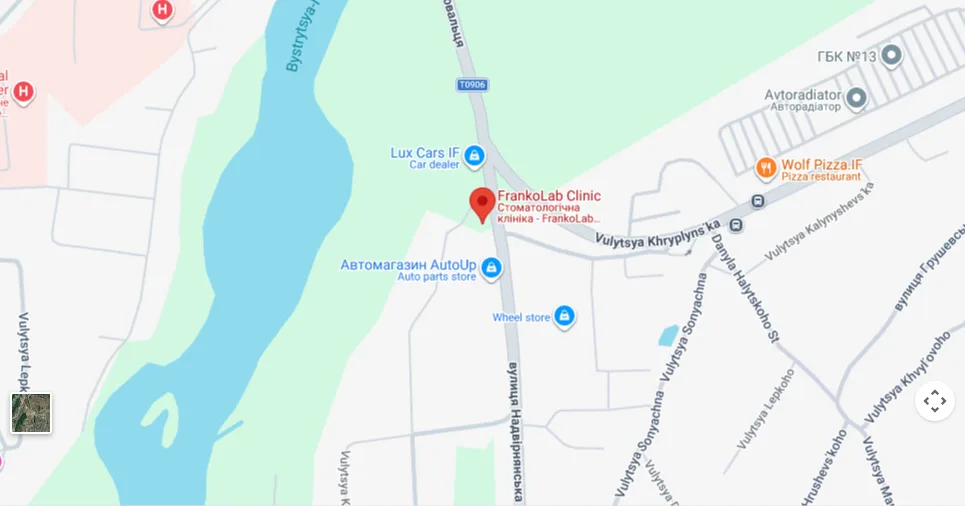
  • 77460, Ivano-Frankivsk, Cherniiv village, 2B Nadvirnianska Street
  • Mon–Sat 9.30 am–7.00 pm, Sun 10.00 am–7.00 pm
  • +380 50 011 20 00
Book a consultation
Map: 77460, Ivano-Frankivsk, village of Cherniiv, 2B Nadvirnianska Street