EN
Soft tissue augmentation

Why choose FrankoLab:

  1. 01 Restoring gum volume and health
  2. 02 Protection of tooth roots and implants
  3. 03 Improving the aesthetics and functionality of your smile

Soft tissue augmentation in Ivano-Frankivsk: Gum surgery with predictable results

Soft tissue augmentation in dentistry is a surgical procedure aimed at increasing or restoring the volume of soft tissue around teeth and implants. It is required in situations where the gums have receded, become thinner or lost volume due to periodontal disease, trauma, anatomical features or following tooth extraction.

Soft tissue augmentation in Ivano-Frankivsk not only improves the aesthetics of your smile, but also restores the protective functions of the gums — safeguarding tooth roots from sensitivity and tooth decay, and protects implants from peri-implantitis and loss of stability. If you are a candidate for soft tissue augmentation around your teeth and implants, FrankoLab Clinic will restore your gum volume using modern protocols and help you recover from the procedure as quickly as possible.

The benefits of soft tissue augmentation around teeth and implants at FrankoLab Clinic

Harmonious gum line and a natural smile

A smooth, anatomically correct gum line is formed around the teeth and implants. This conceals the prosthetic structures and creates a cohesive aesthetic result.
Biological protection of implants and teeth

A sufficient volume of dense soft tissue reduces the risk of recession, root exposure or abutment exposure. This increases the stability of the implant and reduces the likelihood of inflammatory complications in the long term.

Minimal invasiveness

Our dentists use modern gum contouring techniques that minimise tissue damage and shorten the recovery period.

A personalised approach

The method of soft tissue augmentation is chosen on a case-by-case basis — depending on the thickness of the gums, the area of intervention and the clinical objective.

Working with the patient’s own tissues and biomaterials

We use the patient’s own autotransplants (autologous tissue) or certified, modern materials that integrate well with the patient’s own soft gum tissue.

Predictable outcome planning

The procedure is planned taking into account anatomical features, bite, and future prosthetic restorations. This ensures a stable result.

Microsurgical precision

Our dentists use specialised instruments that enable them to work with precision, reduce swelling and speed up healing.

A comprehensive approach in a single treatment plan

Where indicated, soft tissue augmentation is combined with implant placement or other dental procedures. This saves time and reduces the number of operations required.

Support during the recovery period

Every patient receives clear written advice from our specialists on post-operative care and undergoes follow-up check-ups.

When is soft-tissue augmentation required in dentistry?

Gum recession

The gums recede, exposing the roots of the teeth. This causes sensitivity, increases the risk of root caries and creates a noticeable aesthetic defect.

Preparing for dental implants

Insufficient soft tissue volume in the area of the future implant increases the risk of it becoming exposed. Prior correction ensures stability and a better prognosis.

Peri-implantitis or the risk of implant exposure

Inflammation around an implant weakens the surrounding tissues. Soft tissue augmentation around the implant strengthens the gums and creates an additional barrier against infection.

Deficiency of keratinised gums

A lack of firmly attached tissue makes daily oral hygiene more difficult. This increases the likelihood of chronic inflammation and discomfort.

The consequences of periodontitis

After treatment for gum inflammation, the gums often remain thinned. They lose their protective function and require volume restoration.

Aesthetic contour irregularities

Asymmetry or the ‘long teeth’ effect can alter the appearance of a smile. Tissue correction helps to restore the natural gum line.

Preparing for prosthetics or orthodontics

Healthy, firm gums are essential for the stable attachment of crowns and veneers. They also ensure that teeth can be moved safely during treatment.

Condition following tooth extraction

Tooth loss is often accompanied by a reduction in soft tissue volume. Preserving or restoring the gums is an important process for future implant or prosthetic treatment.

Traumatic injuries to the gums

Burns, mechanical injuries or other damage can lead to a loss of soft gum tissue. Reconstructive surgery makes it possible to restore the integrity and function of the gums.

How much does soft tissue augmentation cost in dentistry?

The cost of soft tissue augmentation depends on the extent of the procedure, the number of teeth or implants requiring correction, the choice of materials (autograft or biomaterial) and the technique used. The exact price will be quoted by the dentist following diagnosis and treatment planning.

The dentist will quote the final cost following an examination and diagnosis. Payment in instalments is available. Full price list for the clinic

Stages of soft tissue augmentation in the oral cavity

01

Diagnosis and treatment planning

Our dentist assesses the condition of the gums, determines the extent of tissue loss, and analyses the bite and anatomical features. If necessary, an X-ray or CT scan is carried out. Based on the diagnosis, the optimal soft-tissue augmentation technique and source of the graft (the patient’s own tissue or biomaterial) are selected.

02

Anaesthesia

The procedure is carried out under local anaesthetic, or less commonly under general anaesthesia. The patient feels no pain during the operation, only possibly slight pressure or a sensation of touch.

03

Harvesting of donor tissue (if an autograft is used)

If the patient’s own tissue is to be used for soft tissue augmentation around teeth or implants, an autograft is taken from the palate, the alveolar ridge of the upper jaw or an edentulous area; the site is then sutured.

04

Preparation of the recipient site

The dentist carefully lifts the gum tissue in the area where soft-tissue augmentation is required, creating a ‘pocket’ or bed for the graft.

05

Fixation of the implant

The donor tissue or biomaterial is placed in the prepared area and secured with sutures. The technique depends on the clinical situation: it may be a free gingival graft, a connective tissue graft or a combined technique.

06

Stitching

The surgical site is closed with microsurgical sutures. These are removed after 7–14 days, depending on the technique, location and extent of the operation.

07

Rehabilitation and follow-up care

Patients are given clear advice on aftercare, restrictions and follow-up appointments. Full integration and soft tissue formation takes from a few weeks to 2–3 months.

08

Medication support

Anti-inflammatory medication and antiseptic mouthwashes are prescribed where indicated. This reduces the risk of infection and promotes stable healing.

09

Outcome assessment and long-term follow-up

Once the tissue has healed, the dentist assesses its volume and contour. Regular check-ups help to maintain stable results and prevent complications.

Soft tissue augmentation: protection of gums, roots and implants in Ivano-Frankivsk

Have your gums receded? Are your tooth roots exposed? Do you need preparation for dental implants? Soft tissue augmentation in dentistry helps to restore gum volume, protect tooth roots and implants, and improve the aesthetics of your smile. Book a consultation on soft tissue augmentation in Ivano-Frankivsk at FrankoLab Clinic — we will assess the condition of your gums, select the optimal technique and carry out the procedure in accordance with modern protocols.

Contraindications for soft-tissue augmentation

01

Acute inflammatory processes in the oral cavity

Gingivitis, periodontitis, stomatitis and abscesses increase the bacterial load. Surgery whilst active inflammation is present increases the risk of infection and complications. The first step is to carry out a dental rehabilitation programme — professional hygiene and treatment.

02

Poor oral hygiene

Soft plaque and tartar promote bacterial growth. This increases the risk of inflammation and implant rejection. Professional cleaning and hygiene instruction are mandatory prior to any procedure.

03

Uncontrolled diabetes mellitus

When blood glucose levels are high, the blood is less able to supply oxygen to the tissues. According to experts, diabetes increases the risk of infections and slows down healing. Surgery is only carried out once the patient’s vital signs have stabilised.

04

Blood clotting disorders or use of anticoagulants

Reduced blood clotting ability is highly likely to lead to prolonged bleeding. A consultation with a doctor and adjustment of treatment are essential.

05

Cancer in the active phase

During chemotherapy or radiotherapy, the immune system is weakened. Tissues heal more slowly, and the risk of infectious complications increases. Surgery is scheduled after active treatment has been completed.

06

Severe systemic diseases in the decompensated stage

Severe heart, kidney or liver failure increases the risk. Any procedure may worsen the patient’s overall condition. The underlying condition must first be stabilised.

07

Smoking (relative contraindication)

Nicotine constricts blood vessels and reduces blood flow to the gums. This impairs the success of grafts. It is recommended that you stop smoking at least two weeks before surgery and throughout the healing period.

08

Pregnancy

It is best to postpone elective surgery. Any surgical stress is undesirable during pregnancy. It is best to carry out soft tissue augmentation in the oral cavity after giving birth, unless there are urgent medical reasons.

Payment in instalments

Cosmetic dental procedures — an investment in your health and appearance. At FrankoLab Clinic, we offer the option of paying in instalments with no extra charges or at minimal interest rates. We work with partner banks to make treatment more affordable. Our receptionist will explain the terms and conditions in more detail when you book your appointment.

A question that often concerns patients: is it possible to avoid augmentation if the gums have already receded or thinned? Technically, this is possible. And in some cases (if the recession is minor and does not compromise the function of the tooth), it may be sufficient simply to monitor the situation. However, if the roots are already exposed, your teeth are sensitive to cold, or you are planning to have implants, augmentation significantly improves the long-term prognosis. Restored soft tissues protect the tooth, create a natural gum line and ensure the stability of implants. It is also important to understand that soft tissues do not regrow on their own. If recession is already present, it will not disappear by itself, but will worsen over time.

Soft tissue augmentation is the only way to effectively restore lost gum volume.

Another point to note: the outcome of soft tissue augmentation depends not only on the surgeon’s skill, but also on the patient’s adherence to recommendations during the recovery phase. If restrictions are ignored (brushing teeth in the area of the operation, smoking, eating hard foods), the graft is highly unlikely to take, or the result will be worse than anticipated.

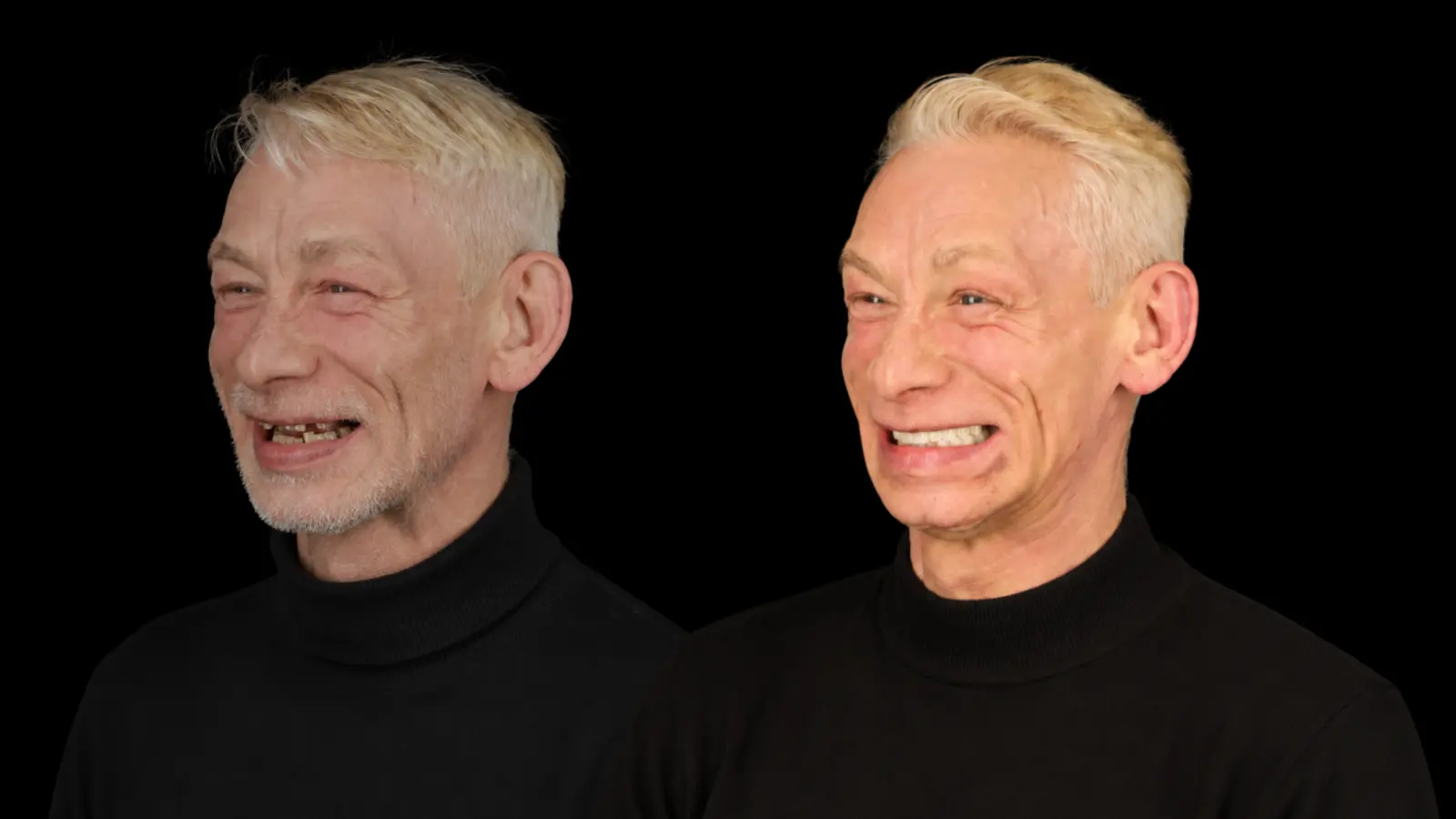
Our patients’ results

Case Study 4: Comprehensive dental restoration using crowns and veneers

Diagnosis:

Complete loss of dental function due to teeth that could not be saved. The patient required comprehensive rehabilitation of both jaws, restoring both chewing function and aesthetics.

Treatments:

All teeth that could not be saved were extracted. In the first stage, 4 implants were placed in the upper jaw and 6 in the lower jaw. During the next stage of treatment, a further 2 implants were placed in the upper jaw. As a result, the permanent prosthetic restoration will be anchored to six implants in the upper jaw and six implants in the lower jaw, providing a secure foundation for the future prosthesis.

Result:

The patient has successfully completed the surgical stages of treatment and is preparing for the final prosthetic restoration. The chosen rehabilitation approach ensures maximum stability of the restoration, even distribution of the chewing load, long-lasting results and a high level of comfort.

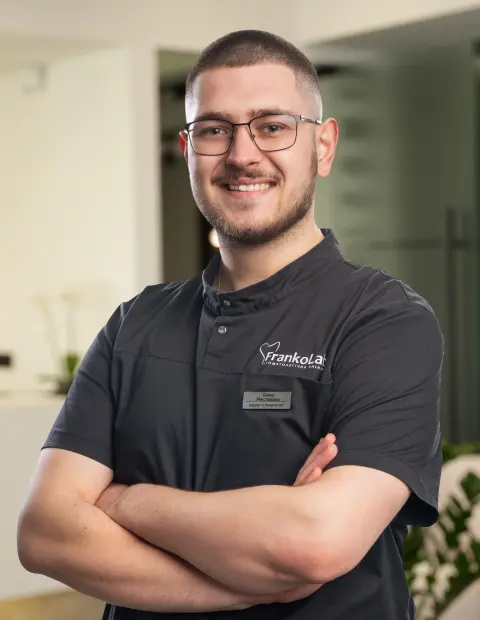
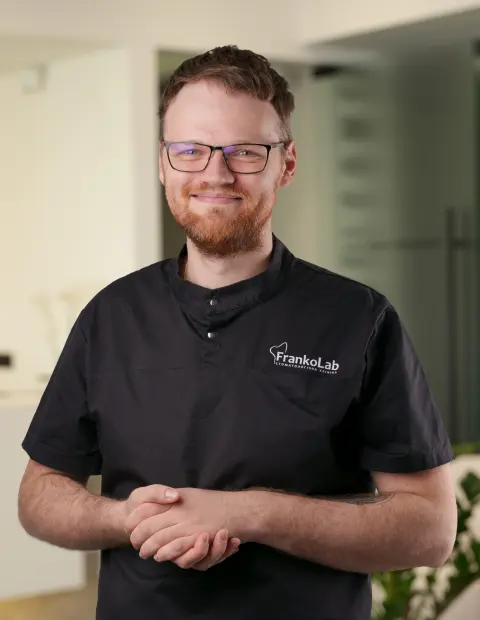
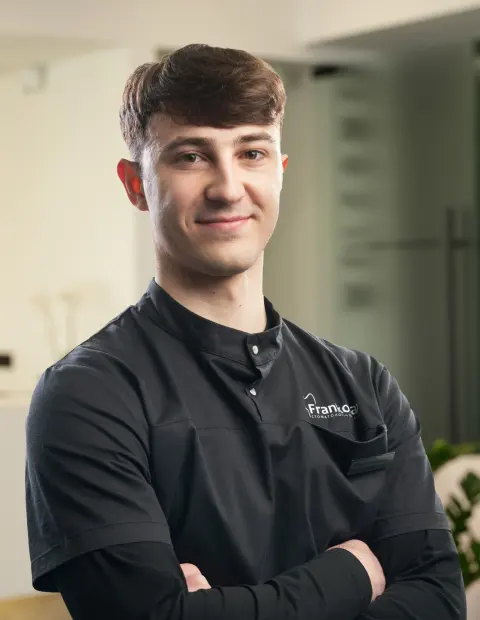
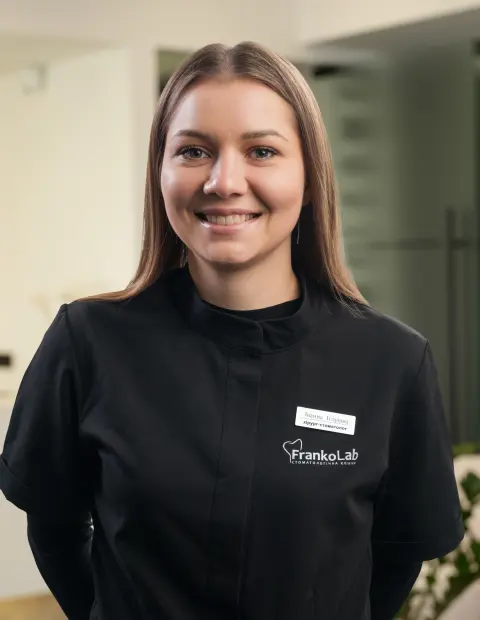
Doctors providing treatment

Patient reviews

4,9 Google rating All reviews on Google

Diana Kruk

08.07.2026

The clinic and service are of the highest standard – keep up the good work!

Ksenia Savenko

23.06.2026

I am very grateful to the whole FrankoLab team for the experience I’ve had with you. You are incredible! I wish you continued growth and prosperity, because the smiles you create are not only beautiful but also genuine, as seen on the faces of your grateful clients.

FrankoLab Dental Laboratory

Are your tooth roots exposed? Protect your gums and teeth – book a consultation on soft tissue augmentation in Ivano-Frankivsk.

Why choose FrankoLab Clinic for soft tissue augmentation in the oral cavity?

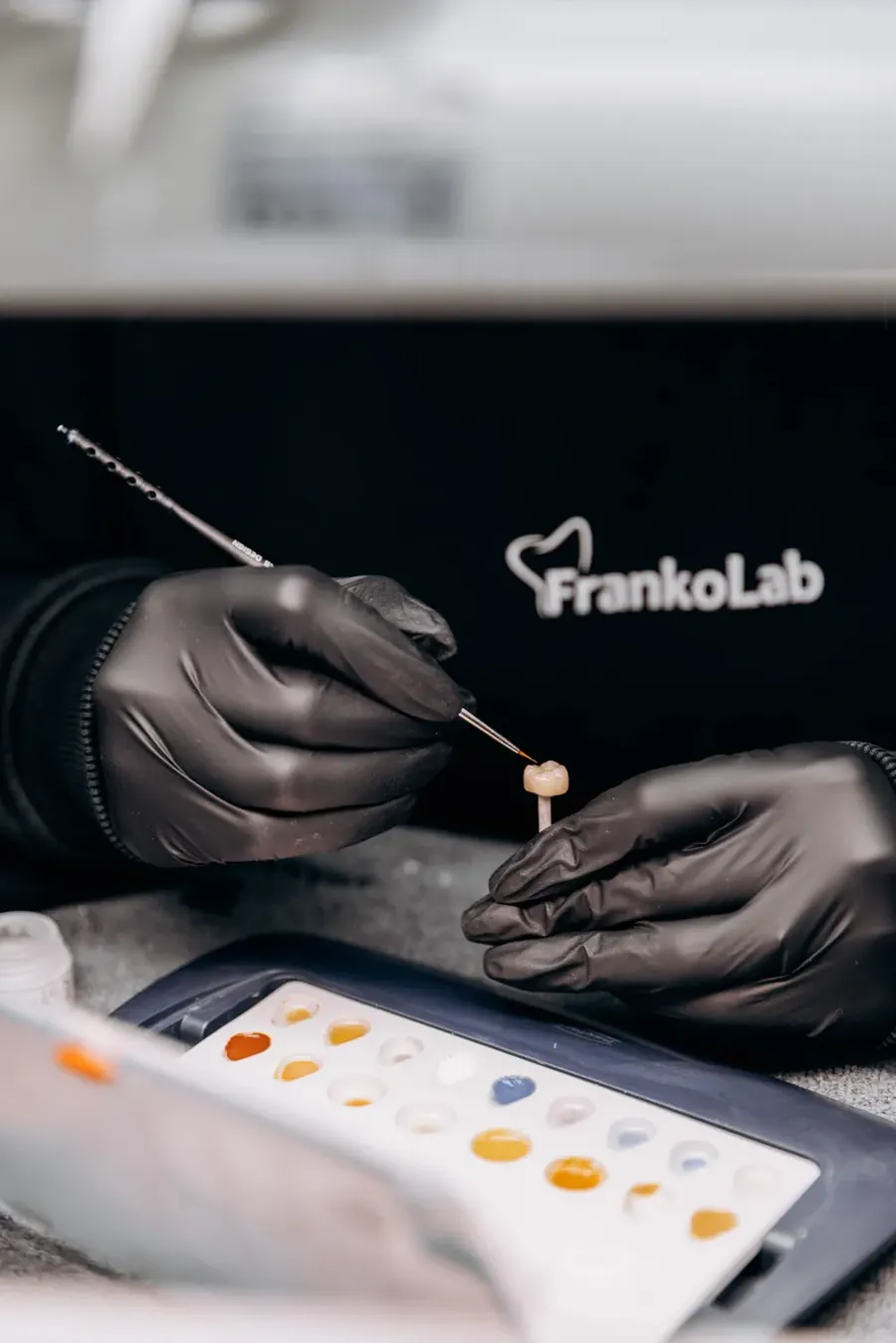
A FrankoLab dental technician works on a crown in the clinic’s in-house laboratory
01

Experts with extensive experience

Surgeries are performed by a dentist specialising in soft tissue plastic surgery. This reduces the risk of complications and improves the prognosis for healing.

02

Microsurgical approach

Specialised instruments and fine sutures are used. Tissue trauma is kept to a minimum, and recovery is faster.

03

Personalised choice of treatment method

The augmentation technique is selected following a detailed diagnostic assessment, which can be carried out in full at our clinic. The treatment plan is approved taking into account the extent of tissue loss, occlusion and anatomical features.

04

Comprehensive patient care

The dentist oversees every stage: from the initial examination through to the completion of the healing process. The patient receives clear recommendations for recovery.

05

Transparent treatment costs

The treatment plan and price are agreed upon before the procedure begins. The patient understands the scope of work and the costs involved. No surprises. You know exactly how much you are paying and what you are paying for, even before treatment begins.

06

Modern tissue management protocols

We use only proven techniques involving biomaterials and the patient’s own tissues. This ensures long-term stability of the results.

Frequently asked questions about ‘soft tissue augmentation’ procedures in dentistry

The procedure itself is carried out under local anaesthetic, so you will not feel any pain during the operation — only slight pressure or a sensation of touch. Once the anaesthetic has worn off, you may experience moderate discomfort or a dull ache in the area of the procedure and at the site where the graft was taken (if an autograft is used). The dentist will prescribe painkillers, which effectively alleviate these sensations. The most intense discomfort usually lasts for 2–3 days, after which it gradually subsides. In most cases, by the 7th–10th day, patients no longer require painkillers.
Initial healing takes 7–14 days. The stitches are removed during this period. Full integration of the implant and soft tissue formation takes 4–8 weeks. Throughout this time, you must adhere to the following restrictions:
  • Do not brush your teeth in the area where the operation took place (only gentle rinsing or antiseptic mouthwashes).
  • Avoid hard, hot and spicy foods.
  • Do not smoke (smoking significantly reduces the chances of the implant taking root).
  • Do not touch the treated area with your tongue or fingers.
  • Avoid strenuous physical activity and overheating (sauna, steam room).
  • Take the prescribed medication and attend follow-up appointments.
Once the stitches have been removed, restrictions are gradually eased, but the tissues do not fully stabilise until 2–3 months later.
Soft tissue augmentation is the process of increasing the volume of the gums and oral mucosa. Bone augmentation (or osteoplasty) is the building up of jawbone tissue, which is necessary for the stable fixation of implants. These procedures can complement one another: for example, bone augmentation is carried out first to create sufficient bone volume, followed by soft tissue augmentation to form healthy gums around the future implant. However, these are different surgical procedures, involving different materials, techniques and healing times.
An autograft is the patient’s own tissue, usually taken from the palate or the alveolar ridge of the upper jaw. This is the ‘gold standard’, as such tissue has the highest survival rate and is fully compatible with the body.

Allografts — human donor tissue that has been specially processed (decellularised, sterilised). They are used less frequently, but have the advantage of not requiring an additional site for tissue harvesting.

Xenografts are collagen matrices of animal origin (usually porcine or bovine) that stimulate the regeneration of the patient’s own tissues.

Synthetic materials — collagen or resorbable membranes that support the growth of the patient’s own tissues and are subsequently absorbed.

The choice depends on the clinical situation and the required extent of gum augmentation.
Provided that protocols and recommendations are followed, complications are rare. However, they are still possible. For example, there is a risk that the following may occur:
  • partial or complete rejection of the graft;
  • infection;
  • bleeding (rare, mainly in patients with blood clotting disorders);
  • swelling and discomfort (usually subsides within a week);
  • gap between sutures;
  • asymmetry or a less-than-ideal aesthetic result.
Most complications can be avoided by following the dentist’s advice.
No, not for everyone. Soft tissue augmentation is required when the volume or quality of the soft tissue is insufficient to form a healthy gum line around the future implant. If the bone and gums are in good condition, the implant can be placed without additional surgery. The decision is made by the dentist following a diagnosis: they assess the thickness of the gums, the presence of keratinised tissue, the aesthetic prognosis, and so on. In the aesthetic zone (front teeth), soft tissue augmentation is required more often than on the posterior teeth, where function is more important than appearance.

Book a consultation

Book a consultation and one of our managers will contact you shortly

+380 50 011 20 00

FrankoLab Clinic dental surgery

A healthy smile starts with the right decision

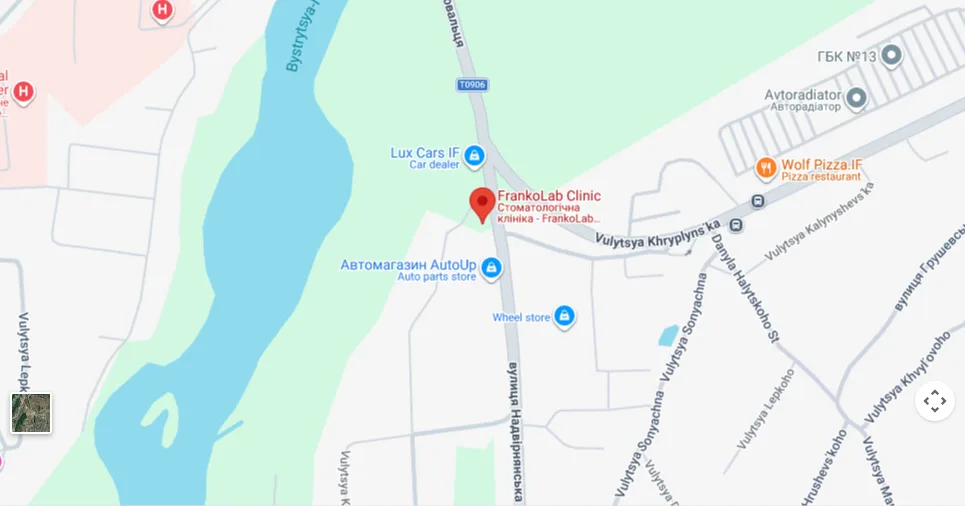
  • 77460, Ivano-Frankivsk, Cherniiv village, 2B Nadvirnianska Street
  • Mon–Sat 9.30 am–7.00 pm, Sun 10.00 am–7.00 pm
  • +380 50 011 20 00
Book a consultation
Map: 77460, Ivano-Frankivsk, village of Cherniiv, 2B Nadvirnianska Street