
















Deep caries is the final and most severe form of tooth decay. In this case, the layers of dentine are deeply affected. The dentine becomes soft and changes colour. The decay penetrates deep beneath the enamel and affects a significant portion of the tooth. The causes of deep caries may include:
- Advanced superficial or moderate caries that has not been treated;
- A filling has been fitted incorrectly;
- Dental defects and chips.
Symptoms of deep caries include pain when probing the carious surface. During meals, when food comes into contact with the affected area, prolonged, sharp pain may occur.
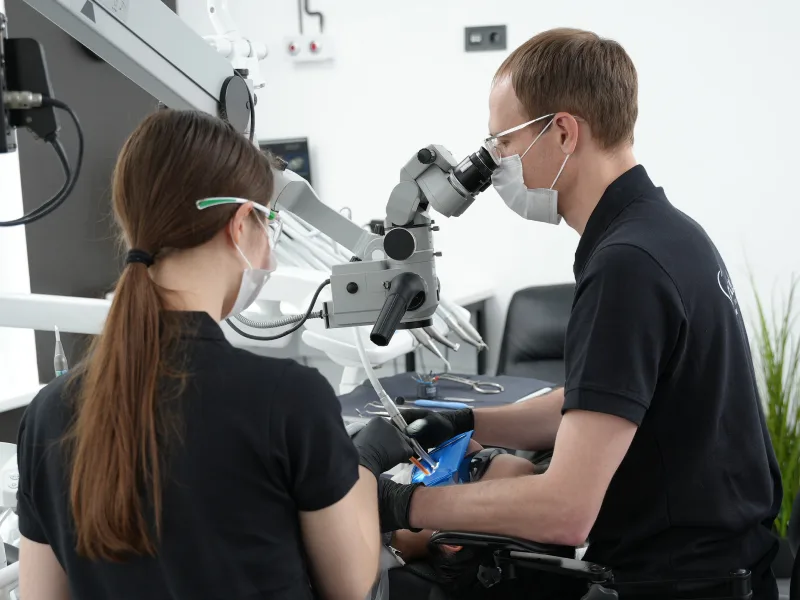
Treatment for deep caries is carried out after anaesthesia has been administered. The affected surface of the tooth is cleaned of soft dentine. The tooth is then filled. If the treatment is carried out correctly and successfully, the tooth remains intact even after serious damage. However, if the condition is left untreated for a long time and becomes very advanced, caries can affect the dental pulp. In such cases, it may be necessary to remove the soft pulp tissues along with the dental nerve. If the condition is very advanced, extraction of the tooth may be required.